
Code-enforcement supervisors describe field-app mistakes the vendor outline never mentions. How should the instructor use that information?
Select an answer to reveal the explanation.
Short Explanation
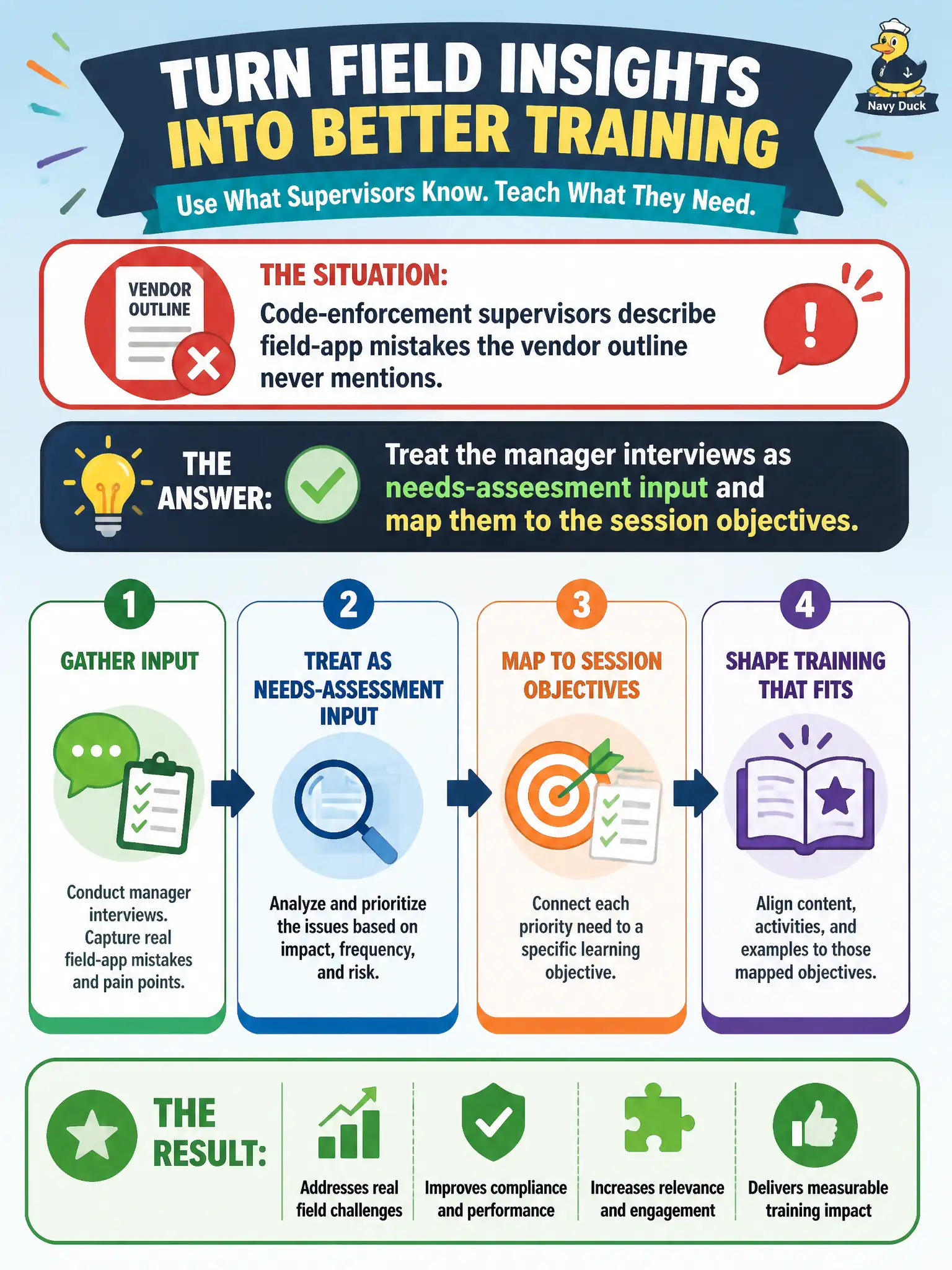
Supervisors just handed you a needs assessment—use it. Map those field-app mistakes to the objectives you already have. Don't throw the outline away, and don't wait until the class is over to aim.
Full Explanation
Manager interviews are needs-assessment data. When code-enforcement supervisors describe field-app mistakes the vendor outline never mentions, the instructor should treat those interviews as needs-assessment input and map them to session objectives—reinforcing, emphasizing, or adding examples—without discarding the published design. Ignoring supervisors because “only vendor outlines count” wastes authentic task evidence. Replacing published objectives with a complaint log from the field turns anecdotes into a new course. Waiting until after class to mention the mistakes in email wastes the instructional window. Exam caveat: CTT+ needs assessment can include interviews, surveys, and observation; vendor outlines are inputs, not the sole source of truth. Operational check: list supervisor-reported mistakes, map each to a published objective or a justified within-design example, and update the session plan before delivery. Field supervisors see failure modes vendors never screenshot—offline sync bugs, photo-size rejects, wrong violation codes. Mapping those interview findings onto existing objectives sharpens emphasis without turning the class into a complaint dump. CTT+ needs assessment treats interviews as first-class evidence. Produce a one-page map from each supervisor theme to an objective or example, and share it back so supervisors see their input used.