
Animal-licensing staff will attend a vendor class virtually from shelter desks. What should the instructor confirm before promising the same labs as the classroom version?
Select an answer to reveal the explanation.
Short Explanation
A virtual lab is only a lab if the shelter PC can actually open the file. Check the room, the demos, and the desktops before you promise the same exercises as the classroom. Hope is not a load test.
Full Explanation
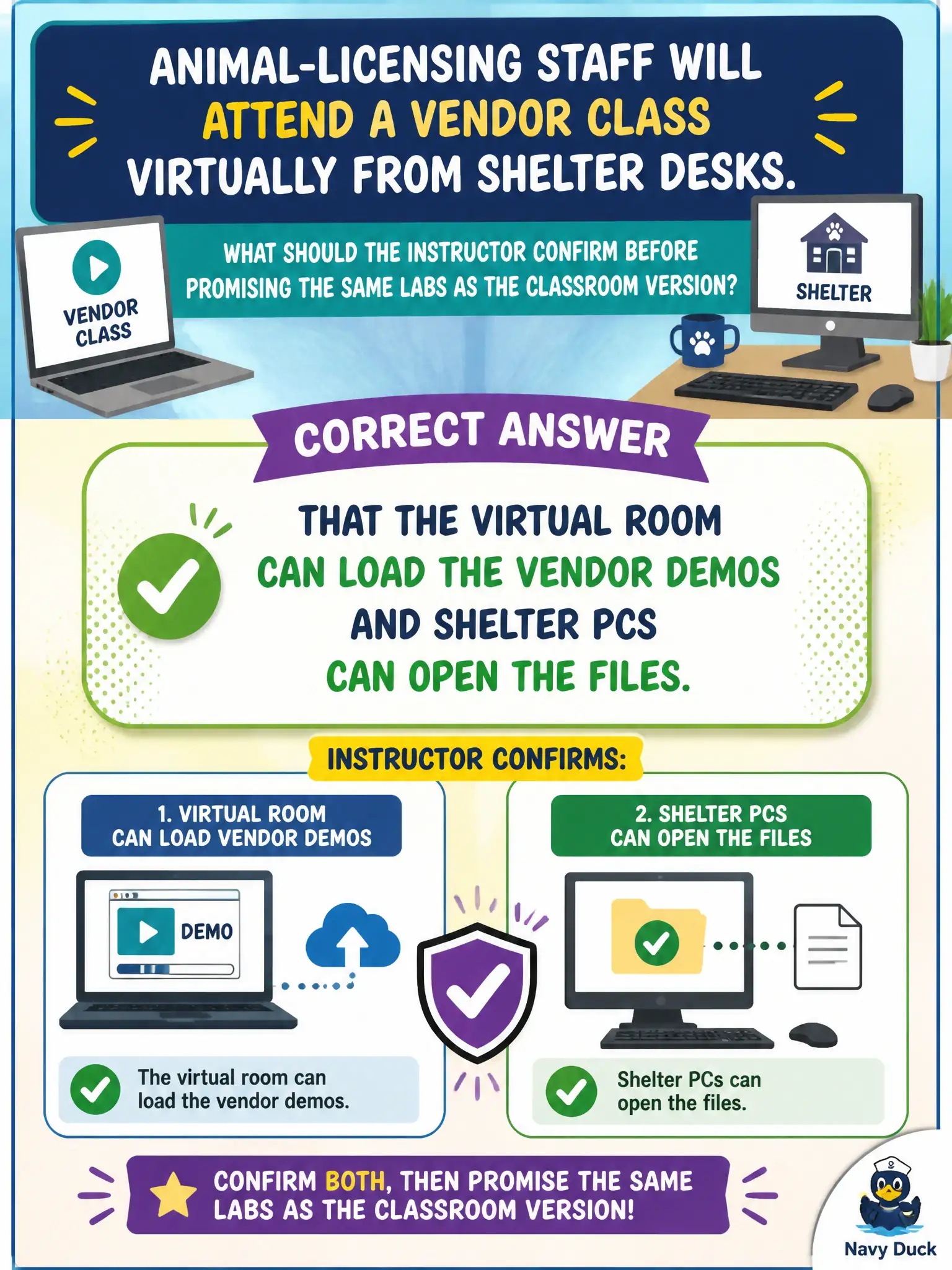
Virtual delivery promises the same labs as classroom versions only when the environment can load the work. Before promising identical labs to animal-licensing staff joining from shelter desks, the instructor must confirm the virtual room can load vendor demos and shelter PCs can open the files. Logistics verification is part of planning, not an afterthought. Requiring shelters to install a commercial LMS brand the city does not use invents unsupported technology. Skipping demos if bandwidth is unknown abandons designed practice instead of testing capacity. Shipping everyone downtown so virtual delivery is unnecessary dodges the modality the offering committed to. Exam caveat: CTT+ virtual planning includes confirming client capability and file access before guaranteeing parity with classroom labs. Operational check: join from a representative shelter PC, open each demo file, time load under typical bandwidth, and revise promises or provide alternatives before the roster receives lab guarantees. Shelter desks vary wildly in browser versions, locked-down USB ports, and uplink quality. Promising classroom-parity labs without a client-side proof is a logistics failure waiting to happen. CTT+ virtual planning includes file-open and demo-load checks from representative endpoints. Record which shelter PC images passed the check and which need an alternate packet so promises to animal-licensing staff stay honest.