
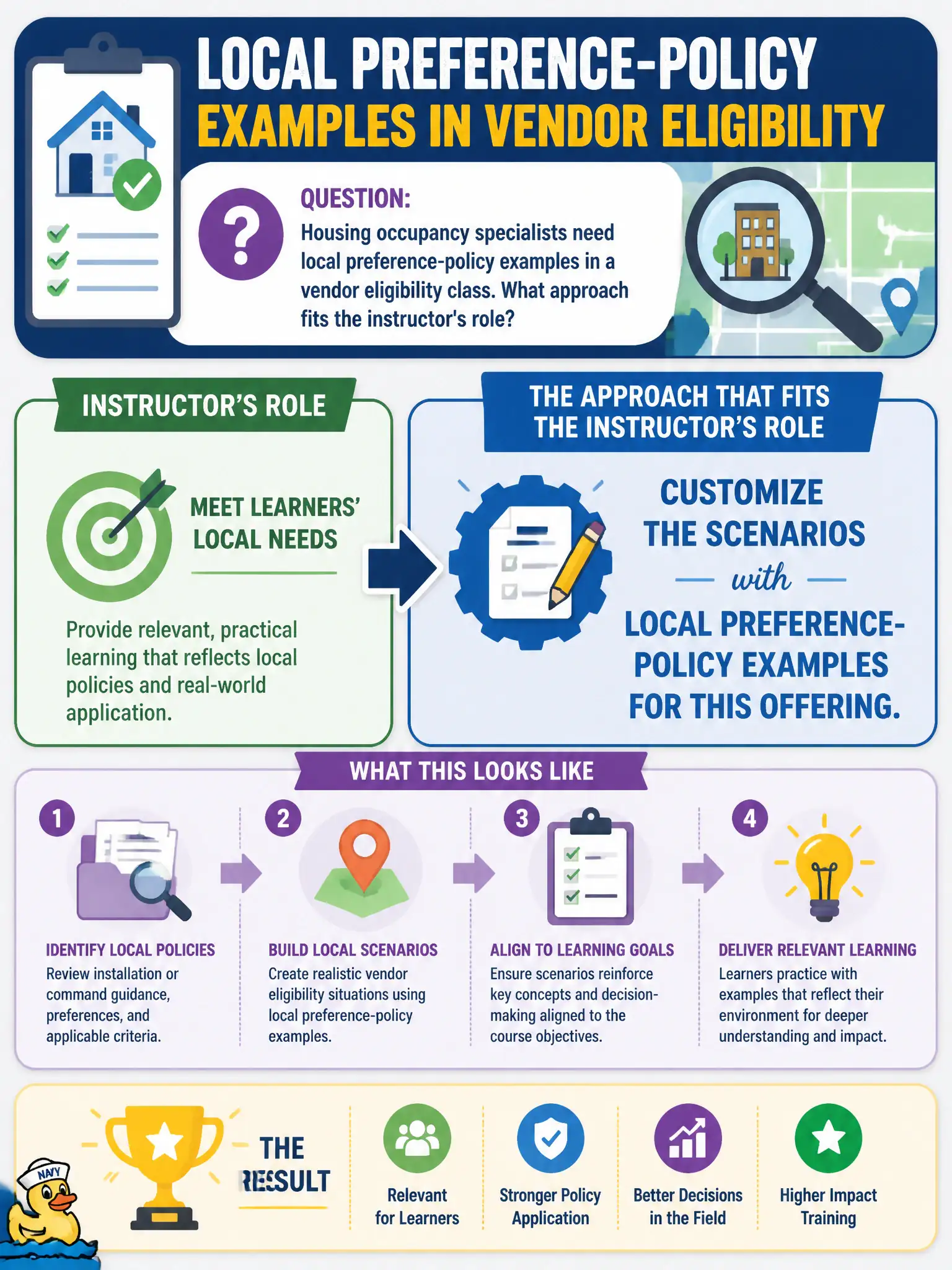
Housing occupancy specialists need local preference-policy examples in a vendor eligibility class. What approach fits the instructor's role?
Select an answer to reveal the explanation.
Short Explanation
This is a spice-rack job, not a new restaurant. Drop local preference examples into the vendor scenarios so occupancy specialists recognize Tuesday's work. You are customizing this offering, not building a new curriculum career project.
Full Explanation
Customizing scenarios with local preference-policy examples for a housing eligibility vendor class fits the instructor’s role: adapt this offering so occupancy specialists recognize Tuesday’s work without launching a multi-year instructional-systems-design replacement. Local policy color is classic within-design customization when objectives remain eligibility skills. A full ISD project to replace the vendor course overbuilds for an example swap. Teaching only generic vendor examples so local policy is never mentioned leaves specialists translating alone after class. Transferring the class to housing HR as a compensation-policy course changes the domain and abandons eligibility training. Exam caveat: CTT+ separates customizing an existing design from designing a new course; local scenario swaps sit on the customize side when objectives hold. Operational check: insert approved local preference examples into vendor scenarios, verify each still maps to published eligibility objectives, and keep assessment criteria unchanged. Housing preference rules are jurisdiction-specific; generic vendor scenarios leave occupancy specialists translating alone after class. Scenario swaps are offering-level customization, not a multi-year ISD reboot. CTT+ distinguishes spice-rack adaptation from restaurant rebuilds. Have housing policy staff approve the local examples for accuracy, then keep assessment rubrics tied to eligibility skills rather than to memorizing every preference nuance.