
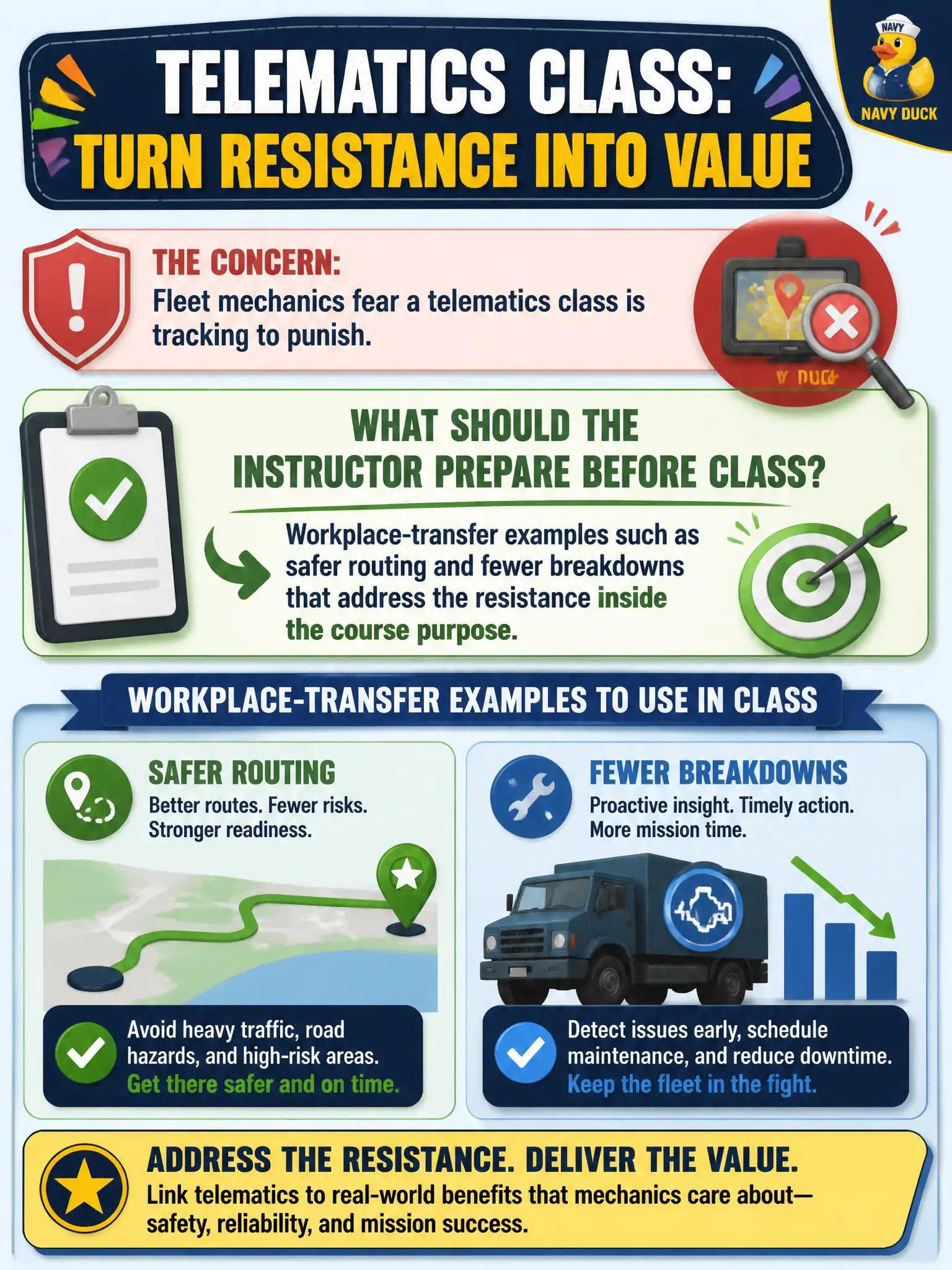
Fleet mechanics fear a telematics class is tracking to punish. What should the instructor prepare before class?
Select an answer to reveal the explanation.
Short Explanation
Nobody likes a class that feels like a spy cam. Show how the same telematics data helps routing and breakdowns, which is the job story. Arguing policy from the podium just confirms the fear.
Full Explanation
Anticipated resistance should be answered with workplace-transfer content inside the course purpose. Fleet mechanics who fear a telematics class is tracking to punish need planned examples—safer routing, fewer breakdowns, clearer preventive maintenance—that address the fear without abandoning telematics objectives. A podium argument that city policy is final and questions are out of scope models authority without learning and confirms the surveillance narrative. Rewriting to drop telematics objectives so mechanics will enroll surrenders the operational capability the city needs. Referring the whole class to labor-relations bargaining before any instruction confuses training delivery with collective bargaining and stalls skill transfer. Exam caveat: CTT+ expects instructors to plan for known affective barriers using content and examples, not to delete objectives or litigate policy from the lectern. Operational check: draft two transfer stories tied to telematics benefits mechanics already value, place them early in the plan, and confirm with fleet supervision that discipline messaging stays out of the classroom. Telematics fear in fleet shops is usually about discipline narratives, not GPS physics. Transfer examples that show routing savings and breakdown prevention keep the conversation inside the course purpose. CTT+ wants affective barriers planned as content, not litigated as podium policy or bargained away as deleted objectives. Align messaging with fleet leadership so classroom stories match how the city actually uses telematics data.