
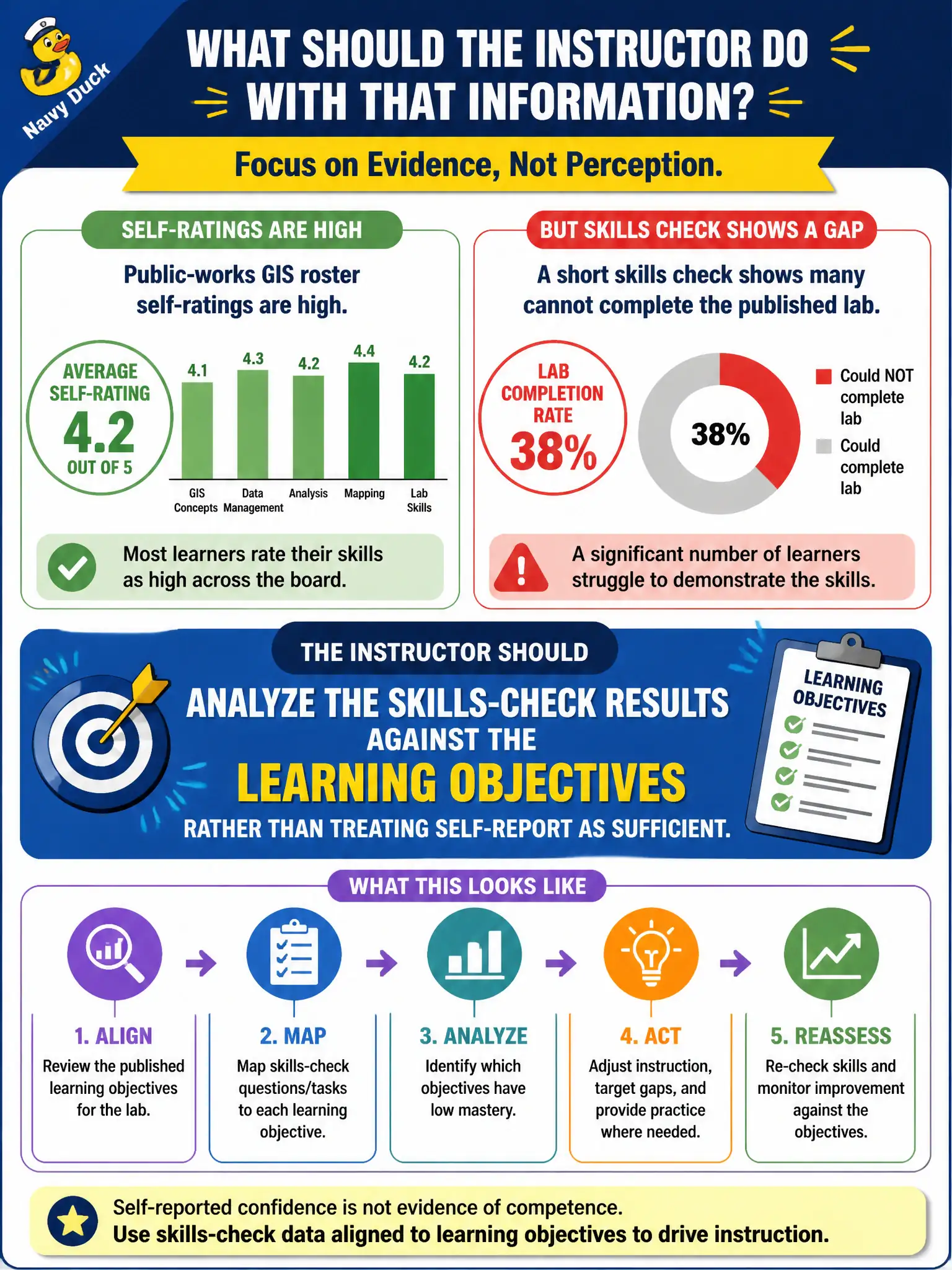
Public-works GIS roster self-ratings are high, but a short skills check shows many cannot complete the published lab. What should the instructor do with that information?
Select an answer to reveal the explanation.
Short Explanation
Self-ratings are like asking who is a good driver—everyone says yes. The skills check is the road test. Line that evidence up against the lab objectives instead of believing the roster's confidence.
Full Explanation
Self-ratings are weak evidence of readiness. When public-works GIS roster self-ratings are high but a short skills check shows many cannot complete the published lab, the instructor must analyze the skills-check results against the learning objectives rather than treating self-report as sufficient. Objective performance data drives planning adjustments—remediation, pairing, or pacing—before live delivery. Trusting self-ratings because “staff know their own skill” ignores contradictory performance evidence. Canceling lab objectives so no one fails in front of peers removes the very practice the course exists to deliver. Publishing raw scores to the public-works director as a personnel action weaponizes assessment data and confuses instructional diagnosis with HR discipline. Exam caveat: CTT+ planning privileges validated skill evidence over confidence ratings when the two conflict. Operational check: score the skills check against each lab objective, identify which steps fail most often, plan scaffolds or pre-labs, and brief the supervisor on readiness without turning results into a public personnel file. Public-works confidence inflation is common after informal on-the-job GIS use; skills checks expose gaps self-ratings hide. CTT+ planning privileges performance evidence when it conflicts with self-report, then adjusts scaffolding—not personnel punishment. Share aggregated gap themes with the supervisor for support planning, keep individual raw scores out of public shaming channels, and revise the lab warm-up to hit the failing steps first.