
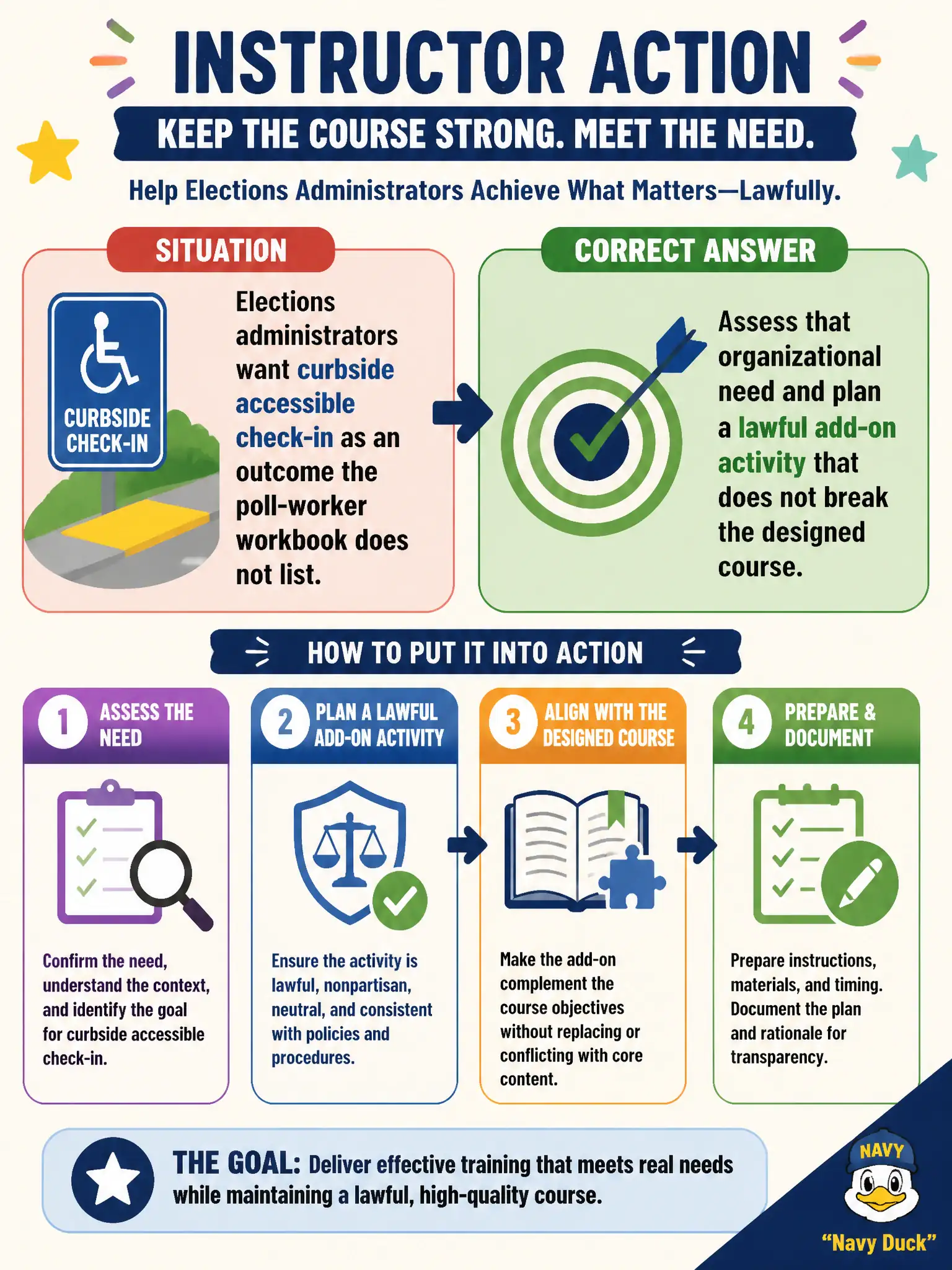
Elections administrators want curbside accessible check-in as an outcome the poll-worker workbook does not list. What should the instructor do?
Select an answer to reveal the explanation.
Short Explanation
If the city needs curbside check-in and the workbook is silent, that is an extra organizational outcome—not a reason to trash the book. Plan a short, lawful add-on and keep the designed poll-worker course standing.
Full Explanation
When elections administrators want curbside accessible check-in as an outcome the poll-worker workbook does not list, the instructor should assess that organizational need and plan a lawful add-on activity that does not break the designed course. Extra civic accessibility outcomes can be accommodated when they supplement rather than replace published poll-worker objectives. Ignoring the request because unpublished outcomes are “never allowed” misreads planning flexibility and may leave the city short of accessibility practice. Replacing the entire workbook with a new accessibility curriculum discards required poll-worker content. Deferring accessibility entirely to a later HR policy class abandons a timely, role-specific practice opportunity during the poll-worker session. Exam caveat: CTT+ treats additional organizational outcomes as plan-for items when they preserve original design integrity. Operational check: document the curbside check-in need with elections leadership, design a short lawful add-on, verify it does not displace core workbook objectives, and include both on the agenda. Accessibility add-ons in election training are often lawful organizational mandates that arrive after workbooks freeze. Planning a short add-on that preserves poll-worker design is the CTT+ move; discarding the workbook or parking accessibility in a distant HR class is not. Route the add-on language past the elections attorney or ADA coordinator so the activity is accurate before workers practice curbside check-in.