
A parks seasonal onboarding class mixes first-job teens and returning leads. What should audience analysis lead the instructor to do?
Select an answer to reveal the explanation.
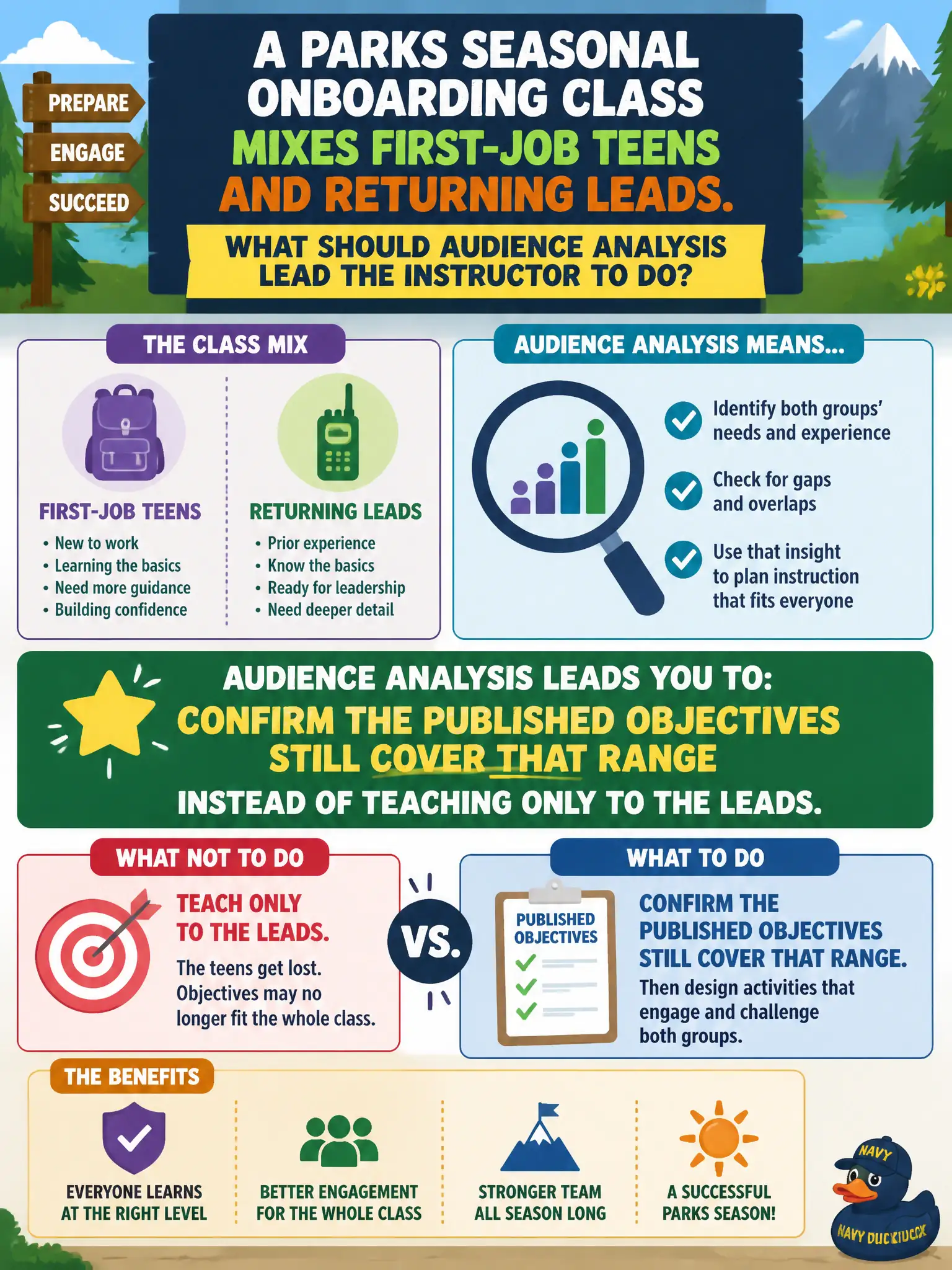
Short Explanation
A mixed parks crew is a minivan, not a sports car. The published objectives have to work for the teen on day one and the lead who came back. Teaching only to the leads leaves half the van behind.
Full Explanation
Audience analysis for a mixed parks seasonal onboarding class—first-job teens and returning leads—should confirm that published objectives still cover that range rather than teaching only to the leads. The designed outcomes must remain reachable for both ends of the experience spectrum through scaffolding, examples, and pacing. Teaching exclusively at lead depth so teens “stretch” leaves novices behind and violates learner-characteristic matching. Splitting into two new courses and discarding the purchased design is redesign, not analysis-driven facilitation of one offering. Dropping coaching objectives because teens will not supervise this season may discard outcomes returning leads still need and that the design intentionally included for mixed crews. Exam caveat: mixed audiences are common in municipal onboarding; CTT+ expects instructors to serve the published range, not silently retarget the course to the strongest subgroup. Operational check: review objectives against both teen and lead job tasks, add scaffolded examples for novices without removing lead-relevant coaching practice, and note differentiation tactics in the session plan. Seasonal parks hiring creates deliberately heterogeneous rooms; published objectives usually already span that range if the instructor scaffolds rather than retargets. CTT+ audience analysis is about serving the designed span, not silently converting the class into lead-only development. Prepare extension tasks for returning leads and guided checklists for teens, then verify both still assess the same published outcomes.