
A public-health clinic EHR class uses national screenshots that do not match the clinic's status board. What customization is appropriate?
Select an answer to reveal the explanation.
Short Explanation
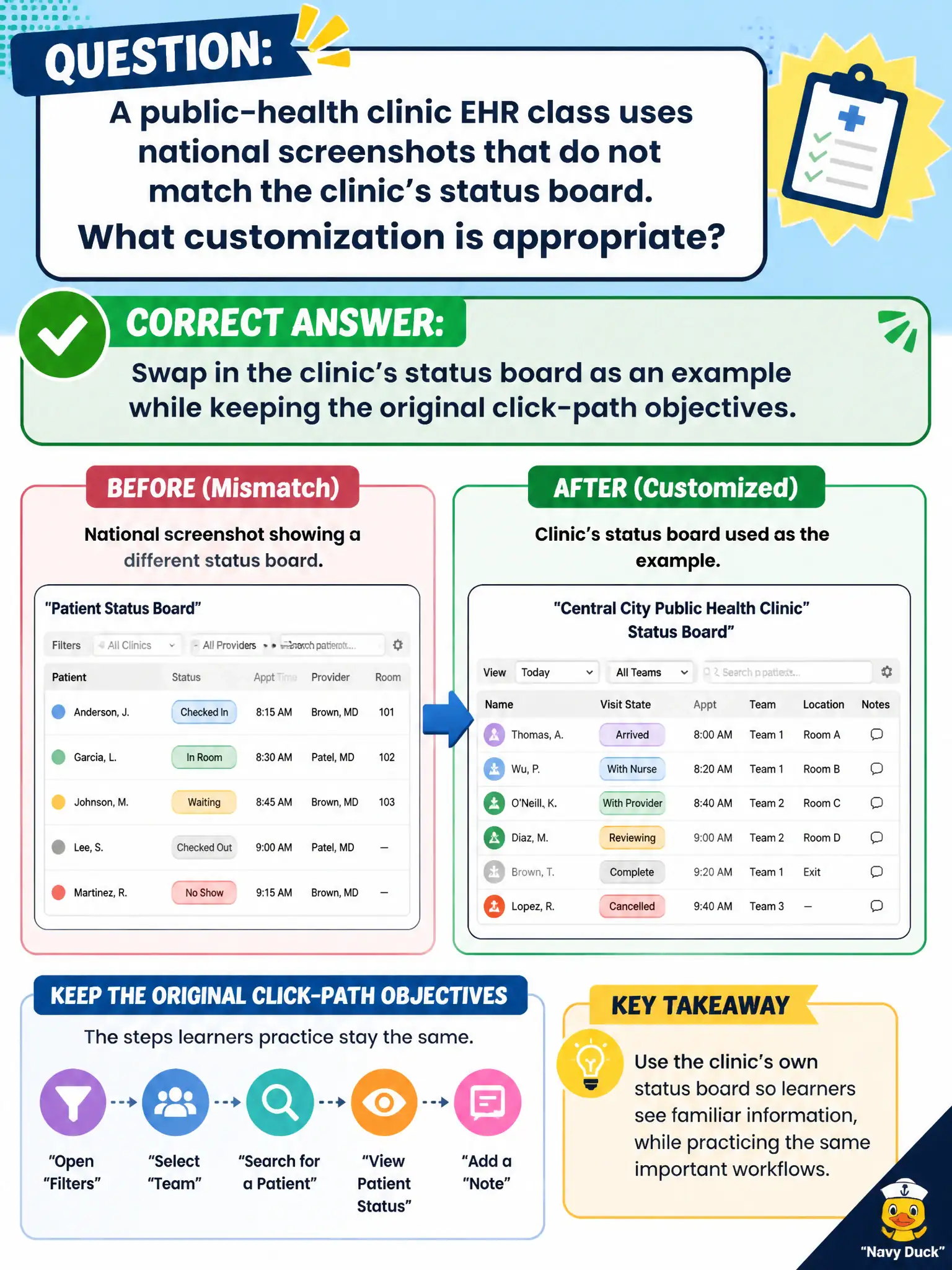
Swap the picture, not the destination. The clinic's status board makes the clicks feel like Tuesday at the front desk, but the original click-path objectives stay. New screenshots are customization; a brand-new curriculum is a different job.
Full Explanation
Appropriate customization swaps examples and media while preserving original objectives. When national EHR screenshots do not match a public-health clinic’s status board, the instructor should swap in the clinic’s status board as an example while keeping the original click-path objectives. Learners then practice the same skills on visuals that look like Tuesday at the front desk. Replacing course objectives with a clinic-authored EHR curriculum turns customization into a new design project. Keeping mismatched national art and telling clinicians to ignore the mismatch creates cognitive friction that planning should remove. Canceling click-path labs because local screens never match vendor art abandons practice instead of adapting media. Exam caveat: CTT+ distinguishes customization within design from redesign; screenshot swaps are classic within-design adaptations. Operational check: capture the clinic status board, replace only the mismatched visuals, walk the click-path against the new images, and confirm objectives and assessment criteria are unchanged before class. Clinicians disengage quickly when screenshots look like another agency’s build; local visuals restore credibility without rewriting EHR competencies. That is the customization boundary CTT+ rewards: change the example, keep the click-path objective and assessment. Have a clinic super-user validate the swapped status-board image against the live board the morning of class so the media still match Tuesday’s reality.