
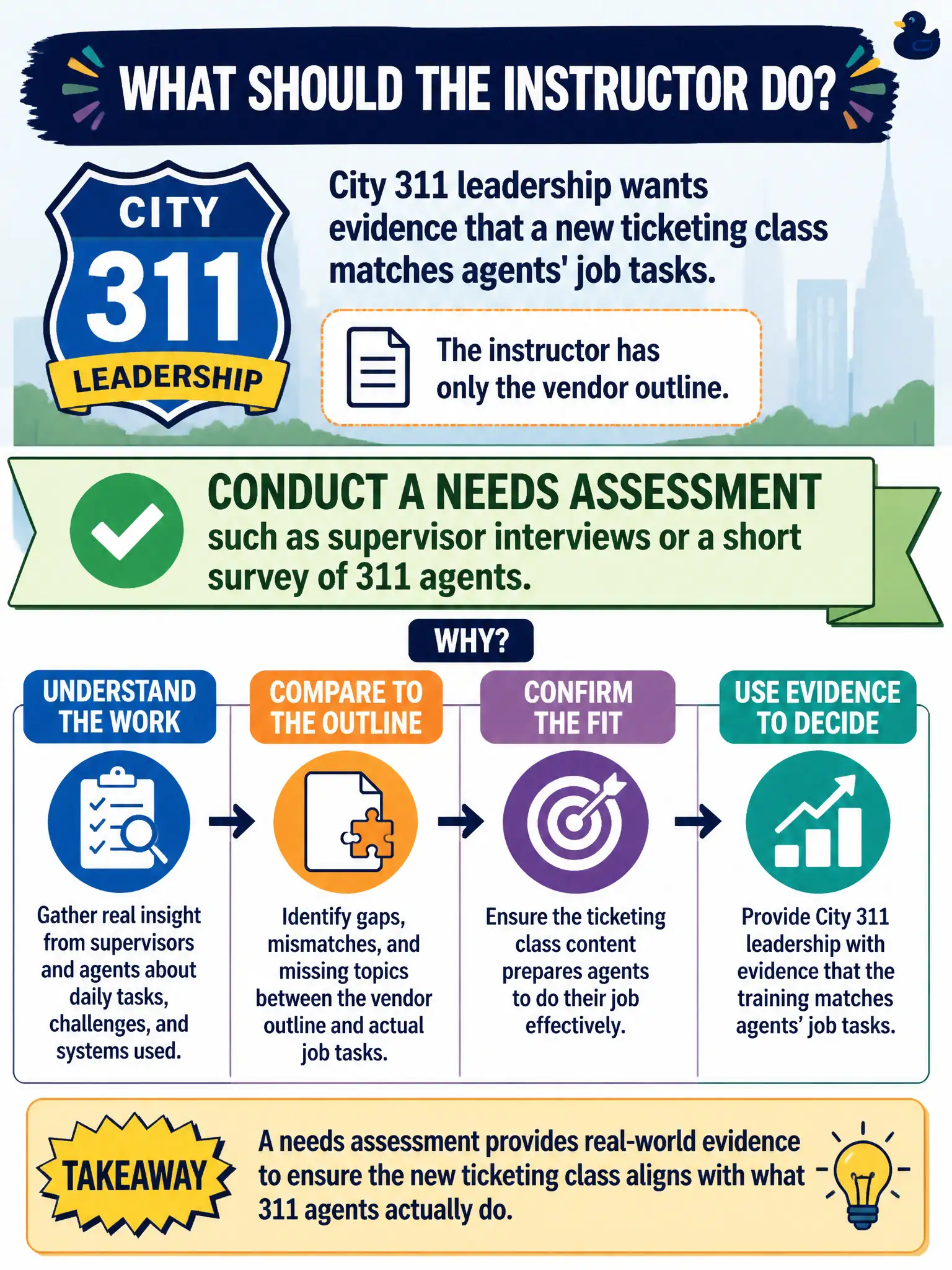
City 311 leadership wants evidence that a new ticketing class matches agents' job tasks. The instructor has only the vendor outline. What should the instructor do?
Select an answer to reveal the explanation.
Short Explanation
A vendor outline is a map of the product, not a map of 311's job. Ask supervisors or run a short survey so the class is grounded in real tickets, not guesses. Waiting until day one is too late to aim.
Full Explanation
A vendor outline describes a product’s features; it does not prove those features match 311 agents’ job tasks. When city 311 leadership wants evidence of job alignment and the instructor has only the vendor outline, the correct move is a needs assessment—supervisor interviews or a short agent survey—so objectives and examples map to real tickets. Guessing job tasks from the outline alone builds slides on speculation and risks teaching unused screens. Waiting until the first live class to ask what agents wish they had learned postpones analysis until change is expensive and learners are already frustrated. Substituting a technical-cert practice bank because ticketing “is an IT skill” replaces municipal customer-service outcomes with an unrelated credential path. Exam caveat: needs assessment precedes content build; vendor materials inform but do not replace learner and task analysis on CTT+. Operational check: schedule brief supervisor interviews, field a short agent survey on top ticket types and pain points, and annotate the vendor outline with which modules map to those tasks before building any new slides. Municipal contact-center work is ticket-shaped: status codes, escalation paths, and citizen-facing tone matter more than a generic product tour. Needs assessment evidence lets the instructor annotate which vendor modules earn class time and which become optional references. CTT+ treats guessing from a brochure as failed planning. Archive the survey themes with the session plan so leadership can see the job-task link they requested.