
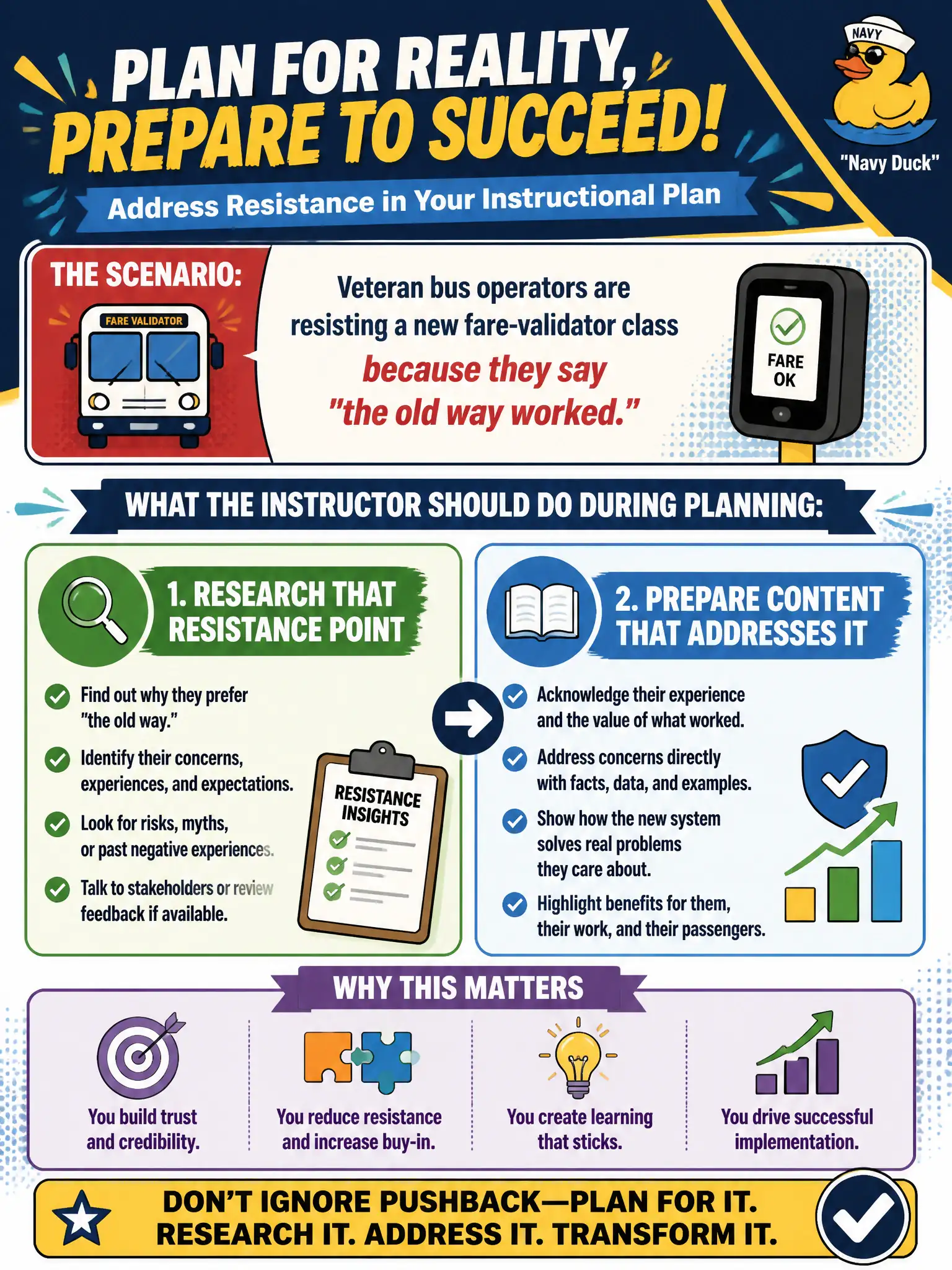
Veteran bus operators are resisting a new fare-validator class because they say the old way worked. What should the instructor do during planning?
Select an answer to reveal the explanation.
Short Explanation
If veterans think the old validator was fine, pretending otherwise just builds a wall. Dig into why the change matters—safer boarding, fewer fare disputes—and bake that into the plan. Don't scold, skip the objective, or talk faster.
Full Explanation
Resistance is a planning input, not an inconvenience to ignore. When veteran bus operators resist a new fare-validator class because the old way “worked,” the instructor should research that resistance point and prepare content that addresses it—safer boarding, fewer fare disputes, clearer audit trails—inside the course purpose rather than pretending pushback does not exist. Removing fare-validator objectives so veterans feel unchallenged abandons the operational change the transit agency needs. Opening by criticizing operators who prefer the old validators weaponizes the classroom and hardens resistance instead of teaching transfer. Ignoring resistance while speeding lecture removes time for legitimate concerns and models poor adult-learning practice. Exam caveat: CTT+ planning expects proactive treatment of known resistance; content that acknowledges the “why change” story is still customization within design, not a redesign. Operational check: interview a few veteran operators or supervisors about validator concerns, draft one transfer example that answers each major objection, and place those examples in the plan before day one. Seasoned transit crews often equate familiarity with safety; planning that surfaces the operational why—accuracy, boarding flow, dispute reduction—turns resistance into transferable rationale. CTT+ scores the instructor who prepares that content early, not the one who scolds or deletes objectives under pressure. Confirm with dispatch that the resistance themes you researched match current yard talk, then place those transfer examples before the first validator demo.