
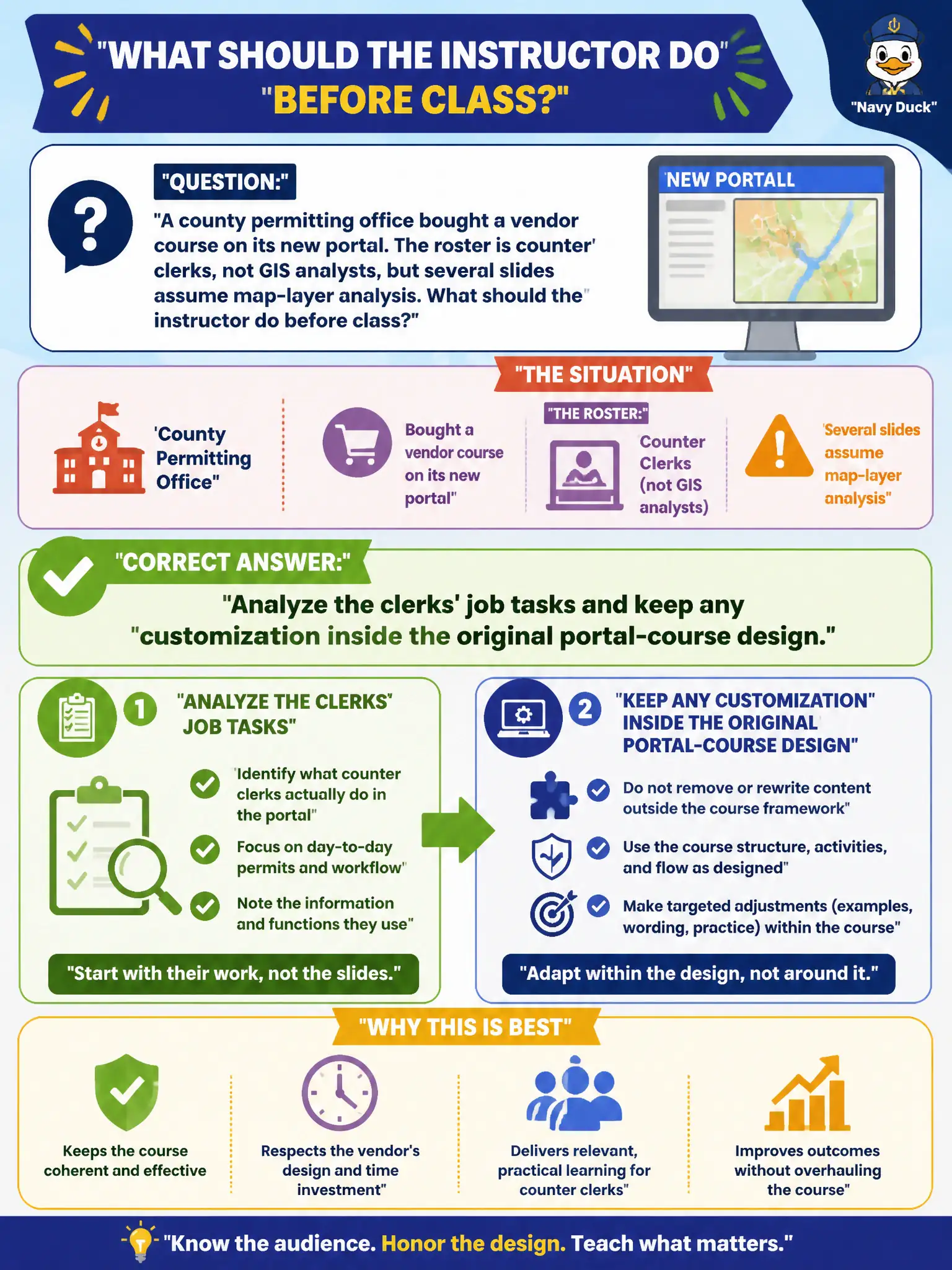
A county permitting office bought a vendor course on its new portal. The roster is counter clerks, not GIS analysts, but several slides assume map-layer analysis. What should the instructor do before class?
Select an answer to reveal the explanation.
Short Explanation
Counter clerks are not GIS analysts just because the county bought a portal class. Check who is actually in the seats, then tweak examples inside the course you already have. Don't throw the design out and start a bootcamp.
Full Explanation
CTT+ planning requires matching learning objectives to learner characteristics through audience analysis before delivery. Counter clerks in a county permitting office need portal tasks they will perform on the job, not a GIS career path assumed by a few map-layer slides. Analyzing those job tasks and keeping customization inside the original portal-course design preserves the purchased intent while making examples usable for the people actually on the roster. Rewriting the offering as a GIS bootcamp so clerks become analysts abandons audience fit and invents a different course under the same purchase order. Teaching every GIS module unchanged because vendor design supposedly can never be adapted freezes a mismatch that planning is meant to catch. Asking civil-service HR to reclassify clerks as GIS technicians before session one substitutes bureaucracy for instructional analysis and still leaves the wrong skill profile in the seats. Exam caveat: CompTIA CTT+ expects customization that respects the original design—audience-driven tweaks are not a license to discard objectives or invent a new curriculum. Operational check: list the clerks’ daily portal tasks, mark which vendor activities map to those tasks, note which map-layer slides need example swaps, and confirm with the permitting supervisor that no redesign into analyst training is required before the first class.