
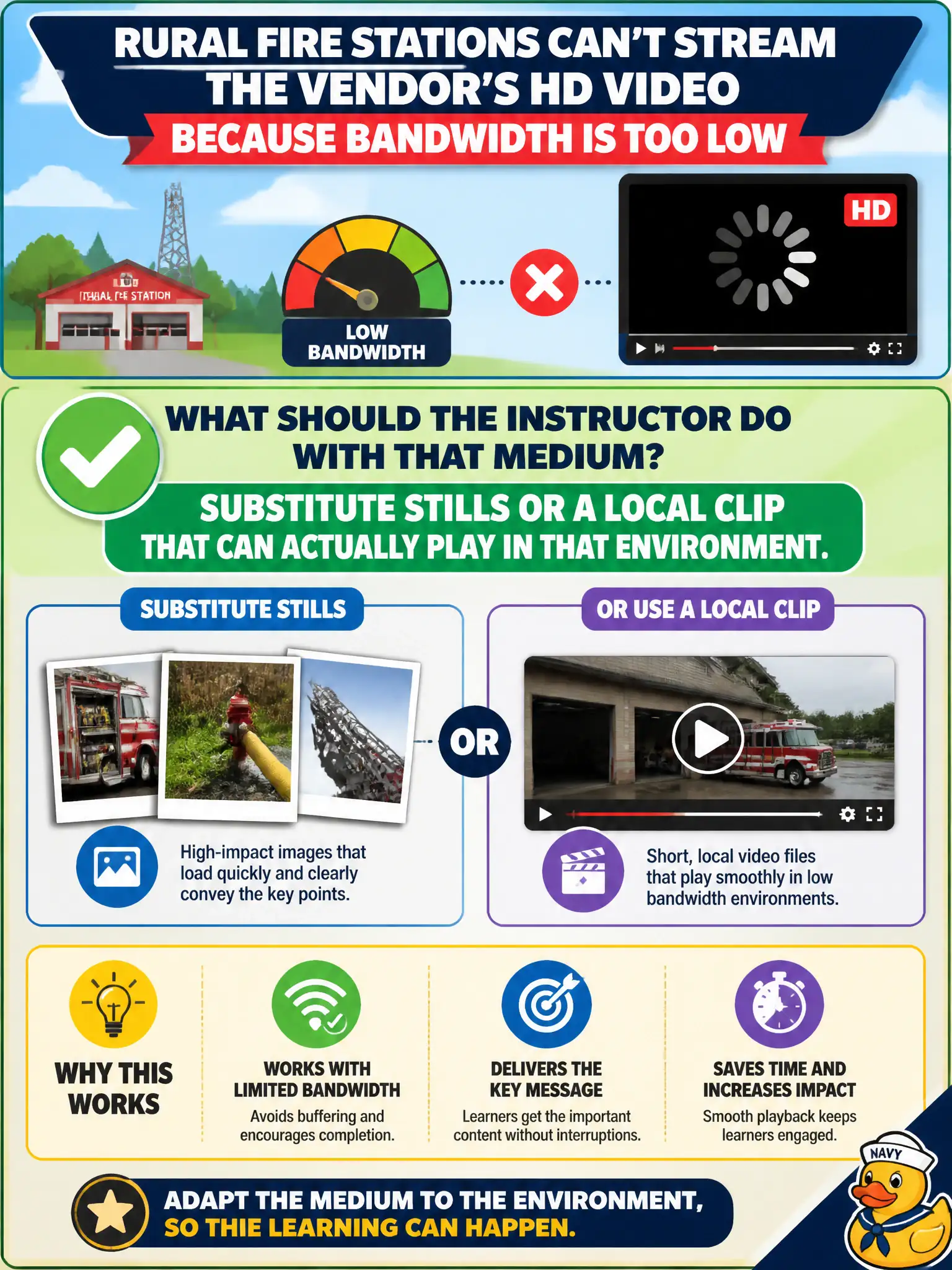
Rural fire stations cannot stream the vendor's HD video because bandwidth is too low. What should the instructor do with that medium?
Select an answer to reveal the explanation.
Short Explanation
Buffering is not a teaching strategy. If the pipe cannot carry HD, show stills or a local clip. The objective is the tactic on the screen, not the vendor's bitrate.
Full Explanation
Media that cannot play in the environment must be substituted. Rural fire stations that cannot stream the vendor’s HD video because bandwidth is too low need stills or a local clip that can actually play. Forcing the HD stream and waiting through buffering preserves vendor media at the cost of learning time. Canceling the module because video is the “only” acceptable medium confuses one file with the objective. Assigning the HD video as required homework on the same failing connections repeats the barrier. Exam caveat: CTT+ media decisions include environmental constraints; unusable media are replaced, not worshipped. Operational check: test stream speed at a representative station, prepare stills or a compressed local clip, and switch without pausing instruction for endless buffering. Bandwidth reality at rural stations overrides vendor HD preferences. Substitute playable stills or local clips. CTT+ media selection includes environmental feasibility. Measure throughput once per station type and keep the substitute pack in the same folder as the session plan so facilitators do not rediscover the limit live. Maintain that civic standard in the session file so auditors and future instructors can see how design integrity was preserved under real municipal constraints.