
After teaching a five-step permit completeness check, how should the instructor have clerks apply the content during delivery rather than only on a later exam?
Select an answer to reveal the explanation.
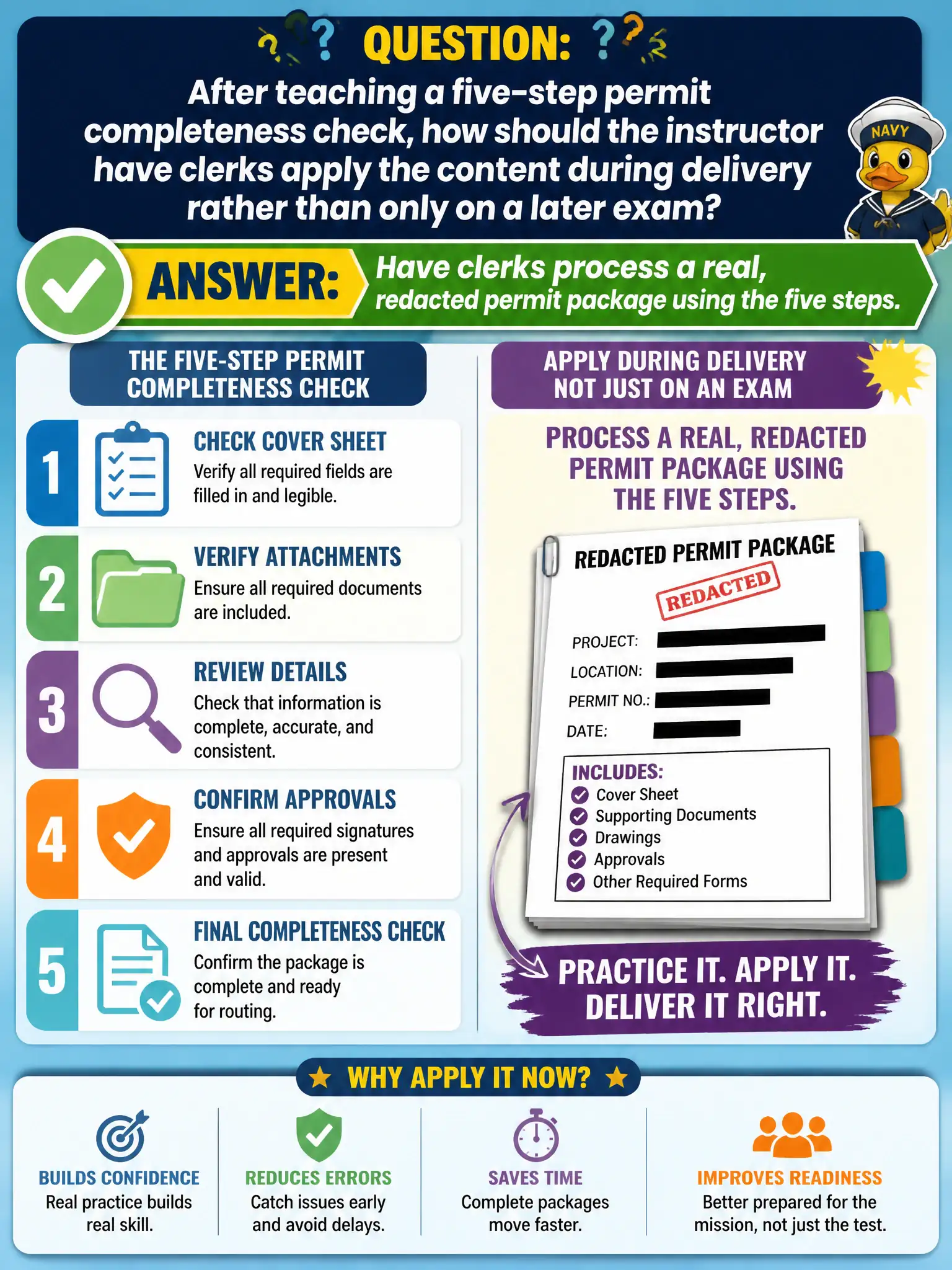
Short Explanation
Hearing five steps is not doing five steps. Hand over a redacted package and watch the completeness check happen. Application belongs in the room, not only on next week's test.
Full Explanation
Application during delivery means doing the work, not rereading slides. After teaching a five-step permit completeness check, clerks should process a real, redacted permit package using those five steps. Reading the steps a second time and moving on is repetition, not application. Promising a quiz at week’s end with no in-class package delays practice past coaching. Asking who liked the steps and treating opinion as application confuses affect with performance. Exam caveat: CTT+ application activities require learners to use the content on authentic or realistic civic artifacts during instruction. Operational check: distribute a redacted package, time the five-step check, coach errors, and verify each clerk completes the sequence before new content. Permit completeness is proven on packages, not on slide rereads or opinion polls. In-class application with redacted real work is the standard. CTT+ application items expect authentic artifacts during delivery. Rotate packages so clerks see incomplete, complete, and borderline examples under the same five steps. Maintain that civic standard in the session file so auditors and future instructors can see how design integrity was preserved under real municipal constraints.