
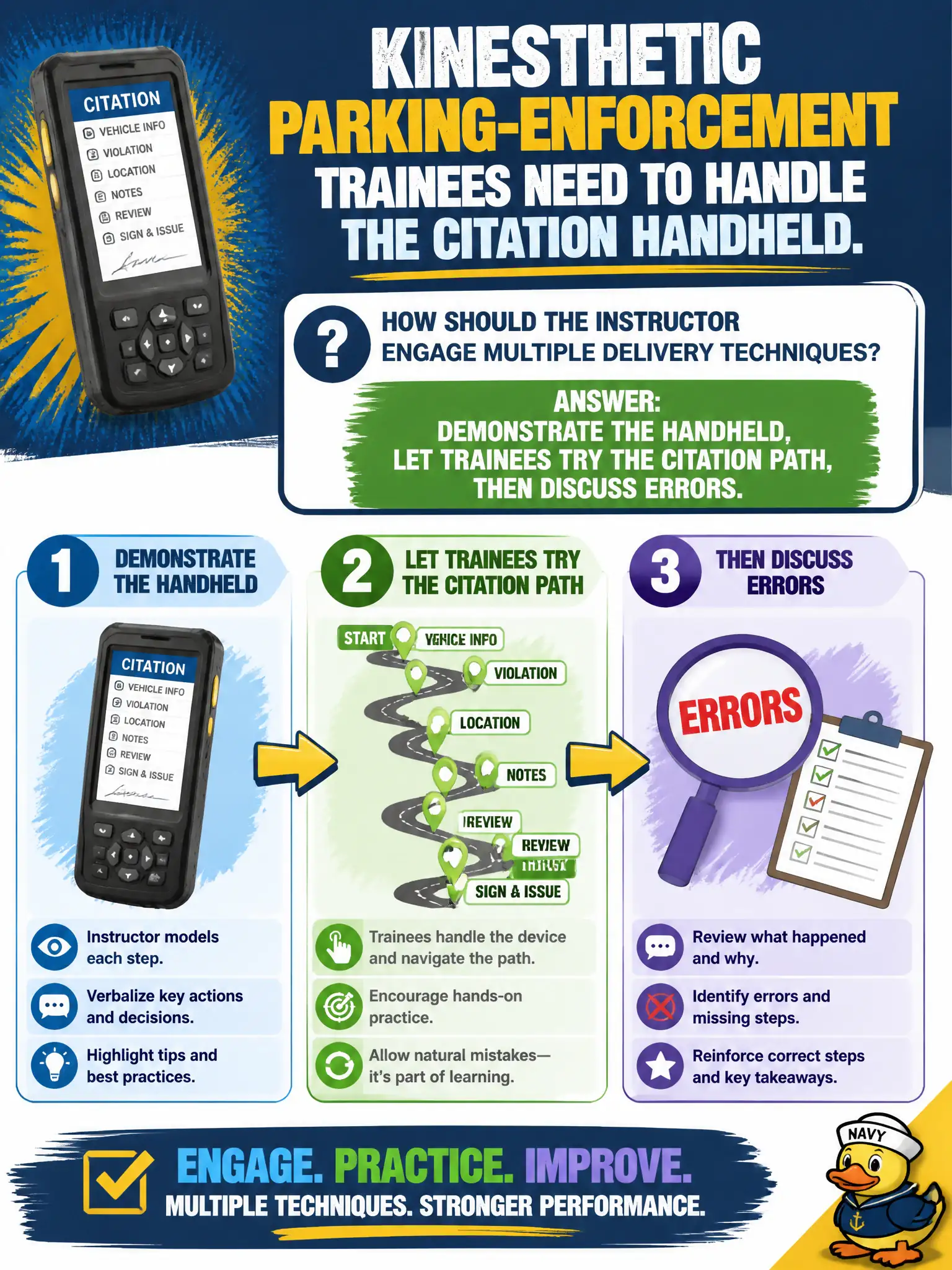
Kinesthetic parking-enforcement trainees need to handle the citation handheld. How should the instructor engage multiple delivery techniques?
Select an answer to reveal the explanation.
Short Explanation
A handheld is not a TED talk. Show it, let them try it, then talk through the misses. Lecture-only leaves parking officers watching a brick they still cannot operate.
Full Explanation
Kinesthetic citation work needs multiple techniques in sequence. Parking-enforcement trainees who must handle the handheld should see a demonstration, try the citation path themselves, then discuss errors—engaging demo, practice, and discussion together. Lecturing the menu tree for the full block and skipping device handling denies psychomotor practice. Handing out devices with no demonstration forces inefficient trial and error. Showing a single recorded demo and dismissing without discussion removes feedback and peer learning. Exam caveat: CTT+ often expects combined techniques when objectives span seeing, doing, and reflecting. Operational check: demo the citation path, release devices for guided tries, collect common errors on a board, and discuss corrections before independent practice. Handheld citation skills need eyes-on demo, hands-on tries, and error discussion as a deliberate trio. Single-channel approaches leave gaps. CTT+ multi-technique engagement fits psychomotor plus cognitive error analysis. Track error themes on a board and turn the top three into a closing drill before devices are collected. Maintain that civic standard in the session file so auditors and future instructors can see how design integrity was preserved under real municipal constraints.