
A sanitation-route trainer wants the new app's photo step to stick. Which use of a story or humor is appropriate?
Select an answer to reveal the explanation.
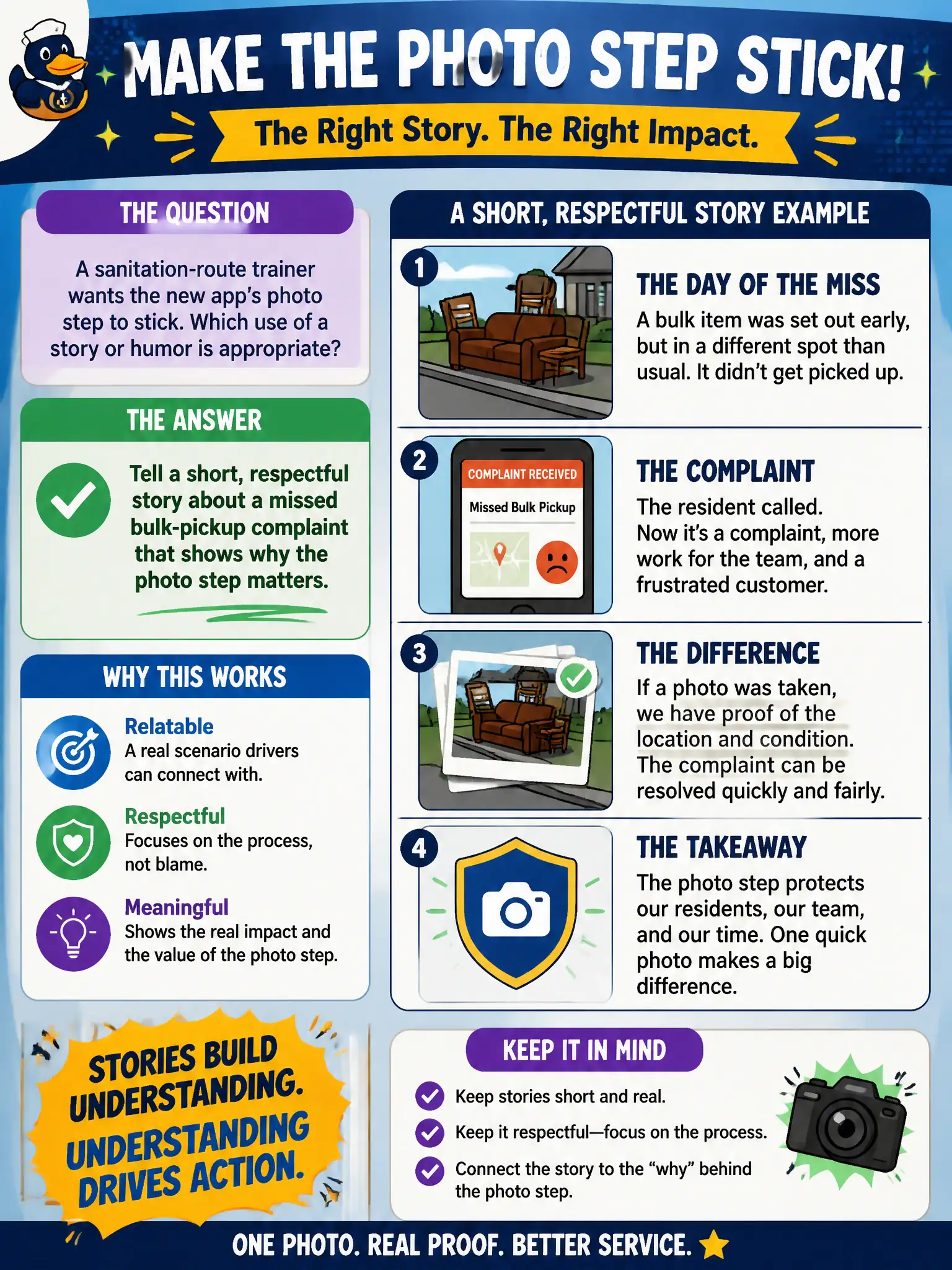
Short Explanation
A story is a hook, not a roast. A missed bulk-pickup tale that stays respectful makes the photo step memorable. Mocking a resident or the last crew just teaches people to duck.
Full Explanation
Stories and humor should illuminate the objective respectfully. A sanitation-route trainer who wants the new app’s photo step to stick should tell a short, respectful story about a missed bulk-pickup complaint that shows why the photo matters—not joke about a named resident or mock prior crews. Named-resident humor risks privacy, dignity, and public trust. Skipping stories entirely because humor “never belongs” in municipal operations training discards a useful memory aid when used carefully. Playing a sarcastic clip mocking the previous crew for missed pickups models contempt rather than procedure. Exam caveat: CTT+ allows appropriate humor and stories when they support objectives and respect people. Operational check: draft a de-identified complaint story tied to the photo step, remove names and ridicule, pilot it once, and keep it only if learners connect the story to the required tap. Sanitation stories stick when they are respectful and causal—missed photo, missed pickup, citizen complaint—not when they punch down at residents or prior crews. CTT+ humor rules center dignity and objective support. Legal/comms review of any recorded clip is wise before it becomes standing curriculum.