
A city open-data portal class debates bulk download versus a live API for neighborhood groups. How should the instructor frame that content?
Select an answer to reveal the explanation.
Short Explanation
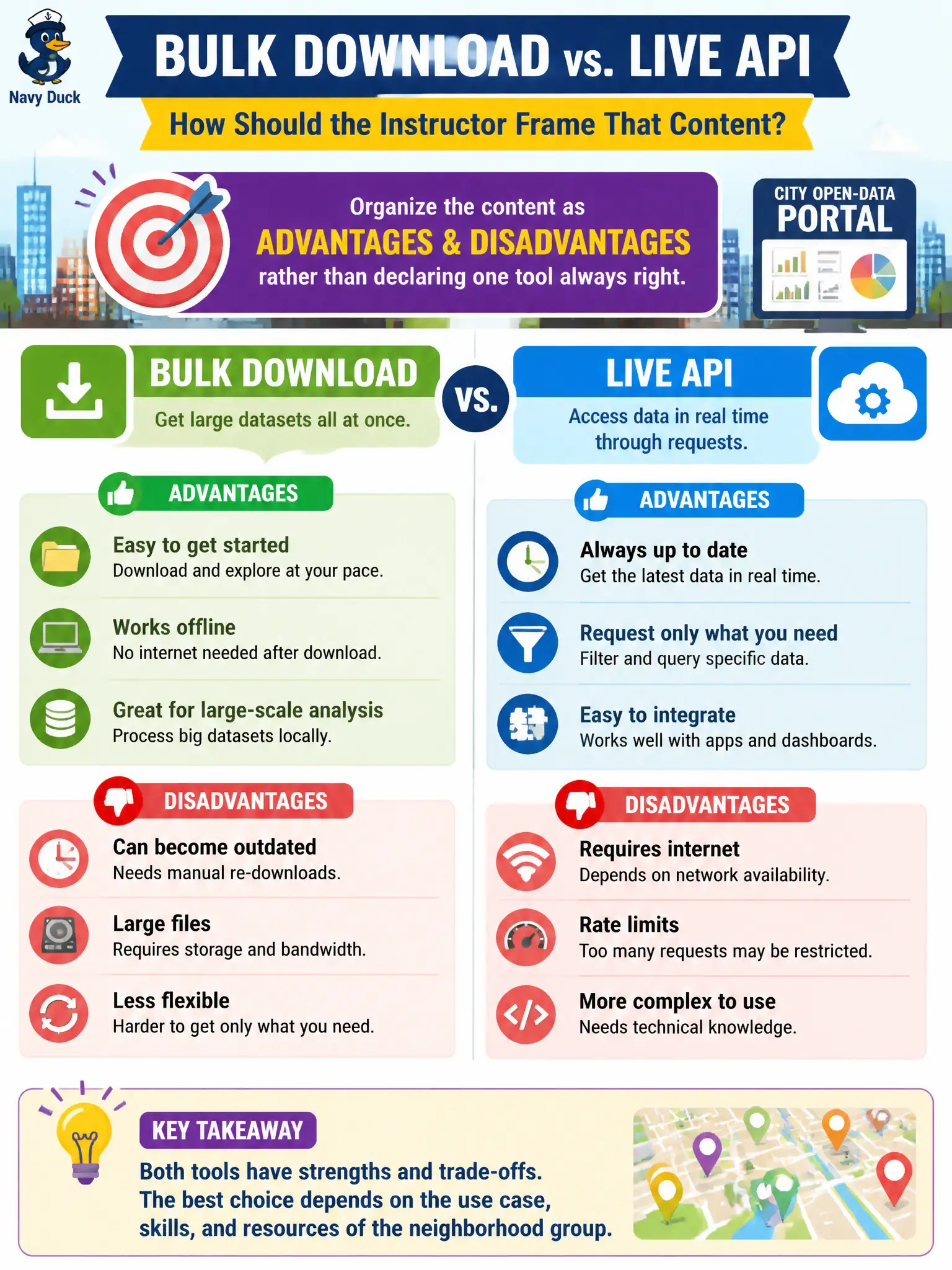
Neighborhood groups do not need a preacher; they need a scorecard. Lay out advantages and disadvantages of bulk download versus a live API so they can pick the fit—not hear that one tool is always the winner.
Full Explanation
Tool-choice content often fits advantages-and-disadvantages organization. A city open-data portal class debating bulk download versus a live API for neighborhood groups should frame advantages and disadvantages rather than declaring one tool always right. Declaring the API always correct so learners do not “waste time” on download short-circuits analysis the objective requires. Avoiding comparison to teach only the instructor’s preferred tool hides trade-offs civic partners must understand. Assigning each group one tool at random so choice is not part of the objective may be a practice split, but it does not teach comparative evaluation when that is the instructional goal. Exam caveat: CTT+ content organization should match whether learners must evaluate options. Operational check: build a two-sided chart for download versus API, facilitate evidence-based discussion, and assess whether groups can justify a fit-for-purpose choice. Neighborhood groups need principled tool choice between bulk download and APIs; advantages/disadvantages organization teaches judgment. Declaring a single winner teaches dogma. CTT+ organization items often test comparative framing. Capture the class chart and publish it on the open-data portal docs so community partners reuse the same trade-off language.