
A building-inspectors' code-update class mixes field stories and a statute table. How should the instructor organize the content?
Select an answer to reveal the explanation.
Short Explanation
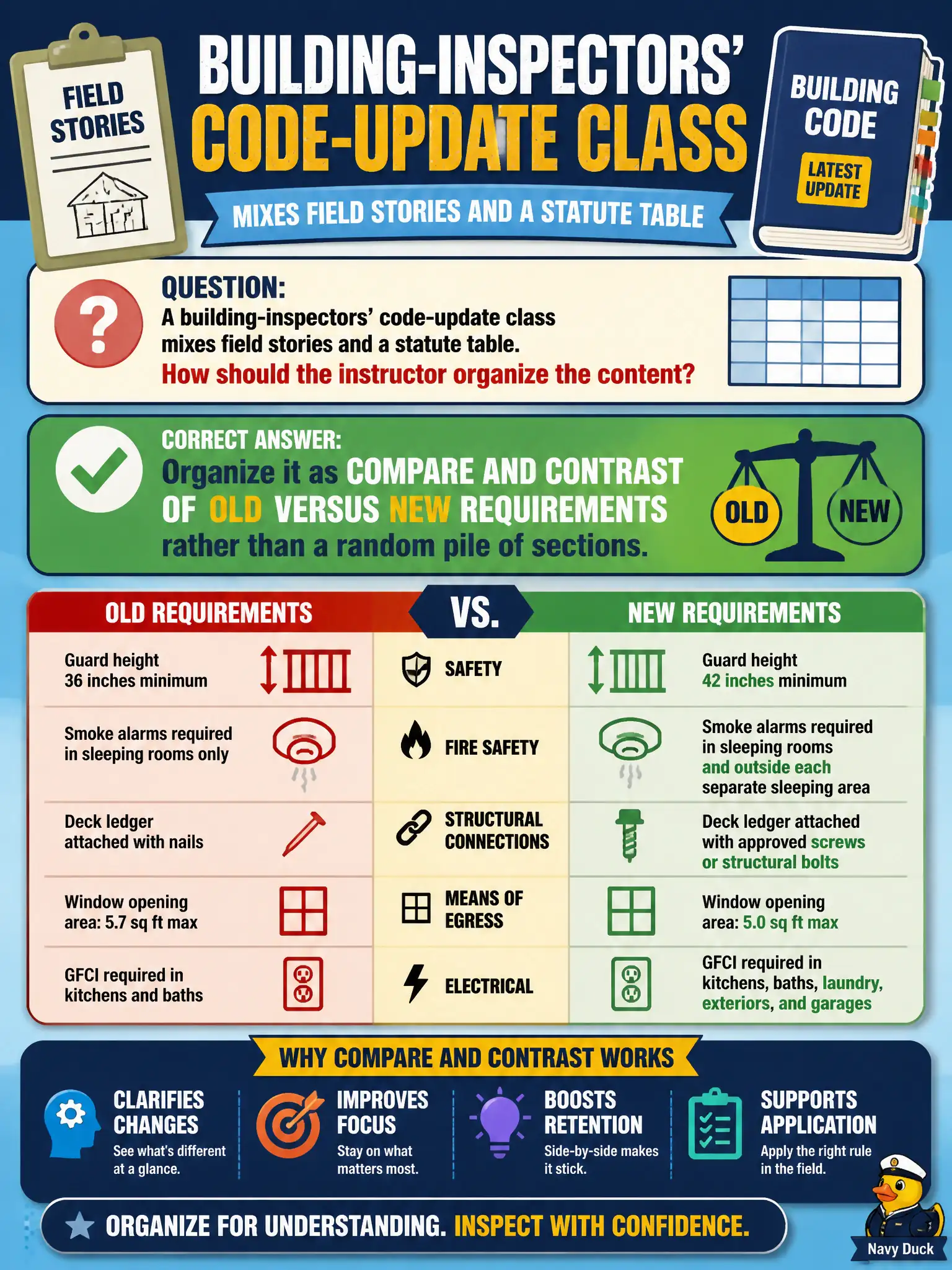
When the code changes, inspectors need a was-versus-now picture, not a junk drawer of sections. Compare and contrast old versus new is how that pile becomes usable.
Full Explanation
Content organization should match the learning task. A building-inspectors’ code-update class that mixes field stories and a statute table should be organized as compare-and-contrast of old versus new requirements rather than a random pile of sections. Presenting every section in numeric code order without highlighting what changed buries the update objective in encyclopedic sequence. Telling only field stories and skipping the statute table keeps energy high but loses legal precision. Shuffling old and new rules into trivia so organization is “unnecessary” confuses engagement with structure. Exam caveat: CTT+ content organization patterns (compare/contrast, process, advantages/disadvantages) are deliberate choices tied to objectives. Operational check: build a two-column old-versus-new outline, attach one field story to each major change, and teach from that structure. Code updates are inherently comparative; organization as old-versus-new makes change visible. Numeric dumps and trivia shuffles hide the learning target. CTT+ content organization patterns should mirror the cognitive task. Produce a one-page change matrix inspectors can take to the field as the enduring job aid. Maintain that civic standard in the session file so auditors and future instructors can see how design integrity was preserved under real municipal constraints.