
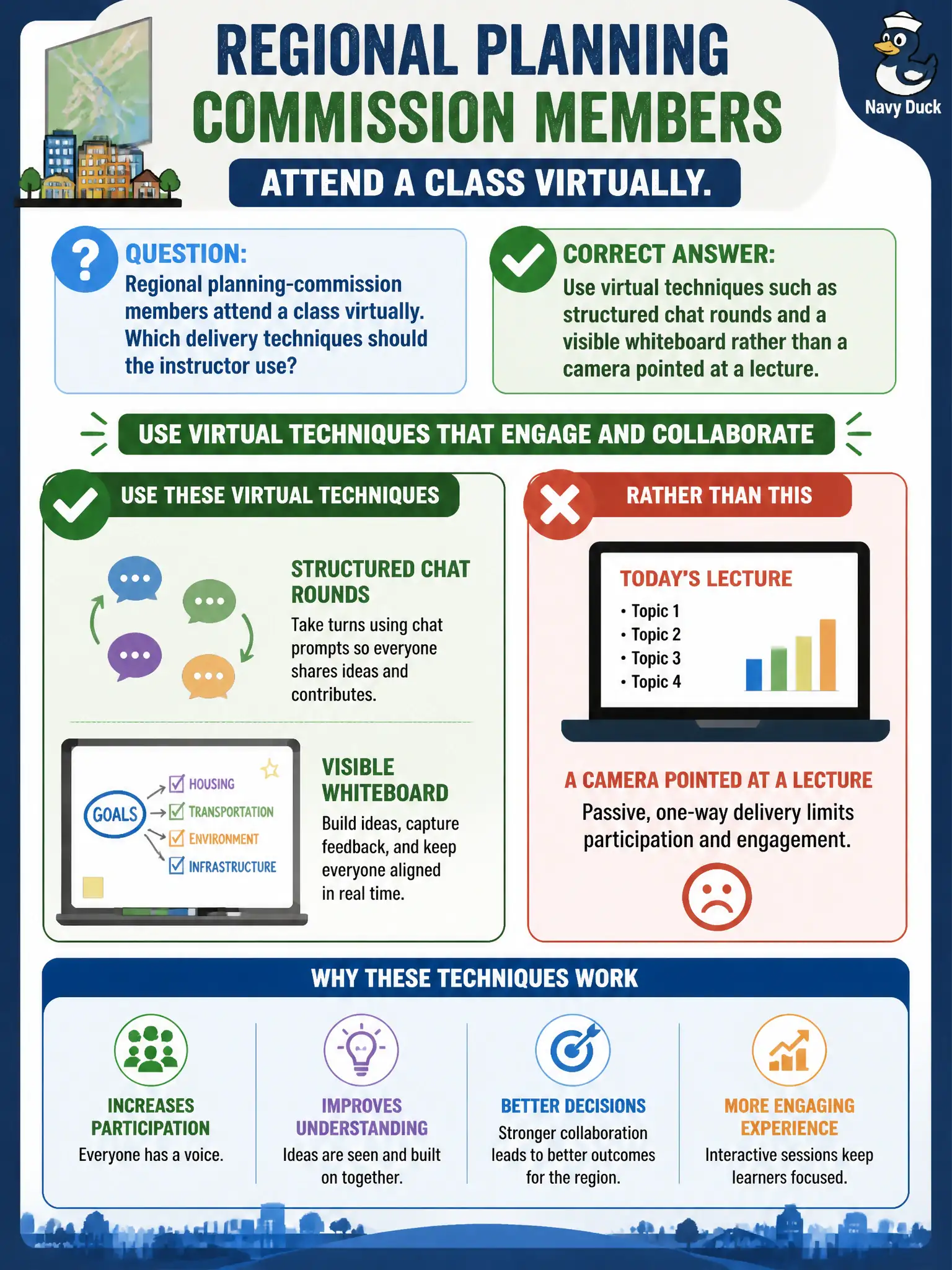
Regional planning-commission members attend a class virtually. Which delivery techniques should the instructor use?
Select an answer to reveal the explanation.
Short Explanation
A webcam on a talking head is a classroom with the desks in another county. Use the virtual tools—structured chat rounds, a shared whiteboard—so remote commissioners can actually work the material.
Full Explanation
Virtual civic cohorts need virtual techniques, not a camera aimed at a headquarters lecture. Regional planning-commission members attending virtually should experience structured chat rounds and a visible whiteboard rather than passive audience treatment. Pointing a camera at a lecture treats remotes as spectators. Disabling chat so the room stays as quiet as a chamber removes the primary remote participation channel. Lecturing continuously to avoid “delays” from polls and whiteboards prioritizes coverage speed over engagement methods the modality requires. Exam caveat: CTT+ virtual delivery techniques are distinct from physical lecture broadcast. Operational check: open a structured chat prompt, use a shared whiteboard for one planning decision, and confirm remote members contribute before continuing. Planning commissioners on video links need structured participation channels—chat rounds, visible boards—not a webcam aimed at a dais lecture. CTT+ virtual techniques differ from broadcasting in-person talk. Assign rotating chat leads per jurisdiction so quieter remote members still contribute decisions to the board. Maintain that civic standard in the session file so auditors and future instructors can see how design integrity was preserved under real municipal constraints.