
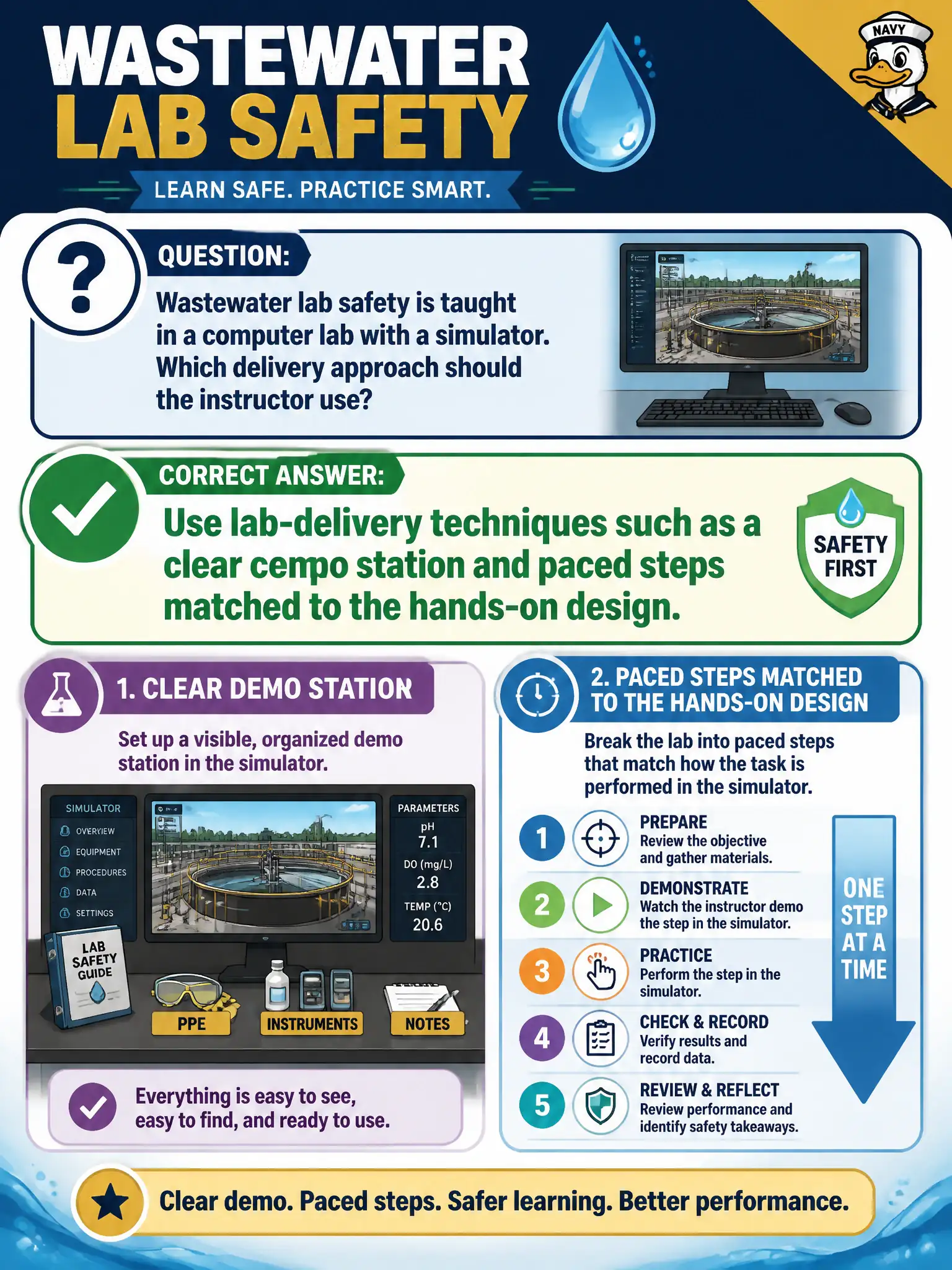
Wastewater lab safety is taught in a computer lab with a simulator. Which delivery approach should the instructor use?
Select an answer to reveal the explanation.
Short Explanation
A computer lab is a workshop, not a TED stage. Demo at a visible station, then pace the simulator steps—do not give a conference-room speech while the machines sit dark.
Full Explanation
Hands-on lab designs need lab-delivery techniques, not conference-room lecture habits. Wastewater lab safety taught in a computer lab with a simulator should use a clear demo station and paced steps matched to the hands-on design. Standing at the front lecturing while simulators stay idle wastes the environment. Letting learners explore with no demo so the lab “feels self-paced” can create unsafe or unfocused practice without a model. Moving to a meeting room because simulators are “enrichment” abandons the designed medium. Exam caveat: CTT+ method-environment congruence requires lab facilitation techniques when the design is hands-on. Operational check: set a visible demo station, demonstrate the first safe sequence, release learners in paced waves, and circulate to coach simulator steps. Simulators only teach when facilitation uses demo stations and paced release; idle boxes during conference-style lecture waste the lab. CTT+ lab-delivery techniques are method-environment matches. Script the first three safety actions as a locked sequence before free exploration so wastewater safety habits form correctly. Maintain that civic standard in the session file so auditors and future instructors can see how design integrity was preserved under real municipal constraints.