
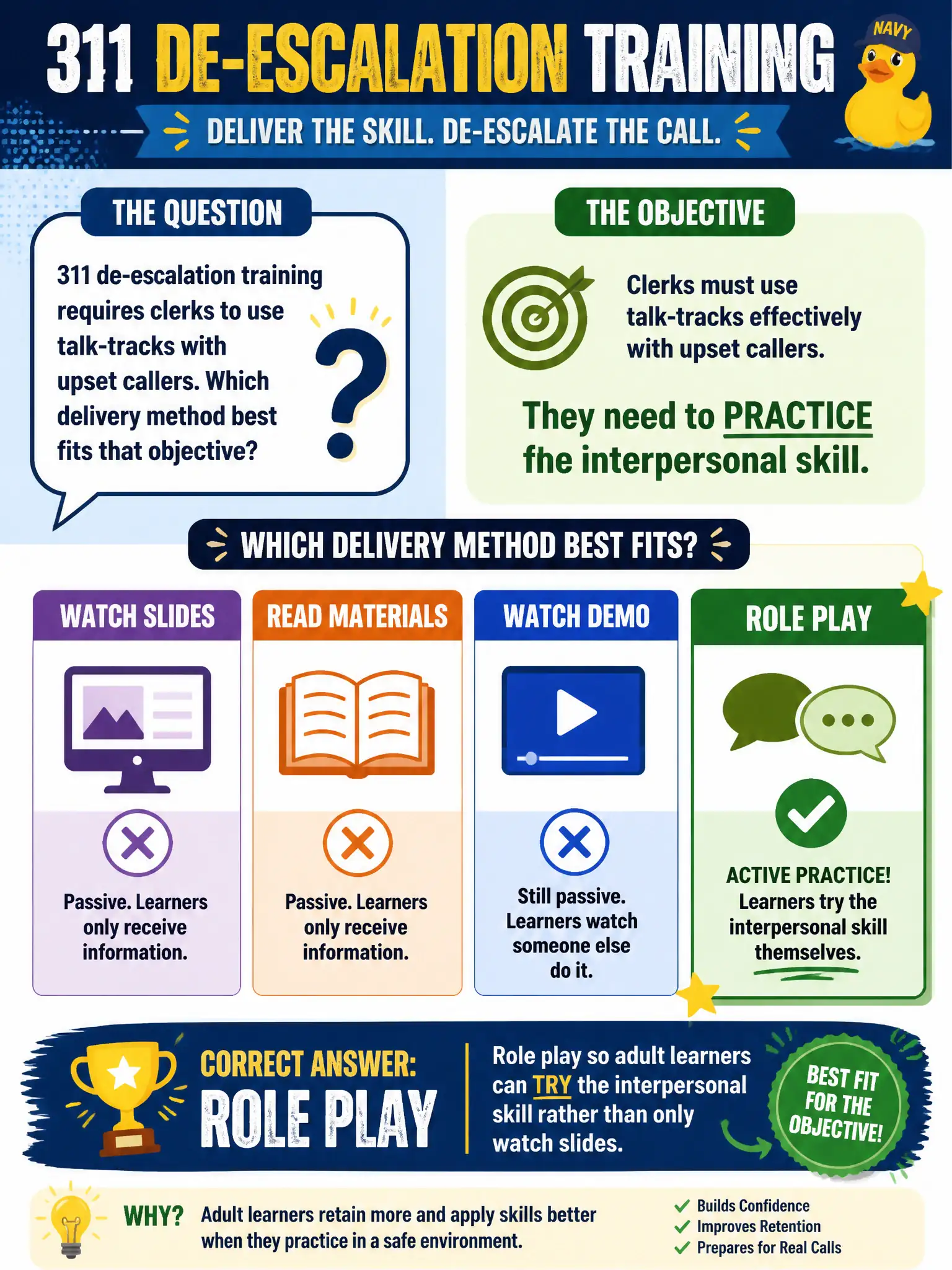
311 de-escalation training requires clerks to use talk-tracks with upset callers. Which delivery method best fits that objective?
Select an answer to reveal the explanation.
Short Explanation
De-escalation is a conversation, not a poster. Role play is the practice court—adults need to say the talk-track out loud, not admire it on a slide.
Full Explanation
Interpersonal talk-tracks require rehearsal, not silent reading. 311 de-escalation training that requires clerks to use talk-tracks with upset callers fits role play so adult learners can try the skill rather than only watch slides. A slide lecture that displays the script for silent reading provides awareness without performance. Brainstorming past difficult callers without rehearsing the talk-track surfaces stories but skips skill practice. A take-home reading packet so practice happens after class removes coaching and feedback from the instructional window. Exam caveat: CTT+ matches participatory methods to interpersonal objectives; role play is the expected fit when learners must perform talk-tracks. Operational check: pair clerks, run timed role plays with the approved talk-track, rotate roles, and debrief against observable behaviors before closing. De-escalation talk-tracks atrophy without rehearsal under mild stress. Role play supplies that rehearsal with feedback. CTT+ interpersonal objectives map to participatory methods. Provide a short rubric—tone, prohibited phrases, escalation trigger—and score pairs against it so practice is assessed, not merely performed. Maintain that civic standard in the session file so auditors and future instructors can see how design integrity was preserved under real municipal constraints.