
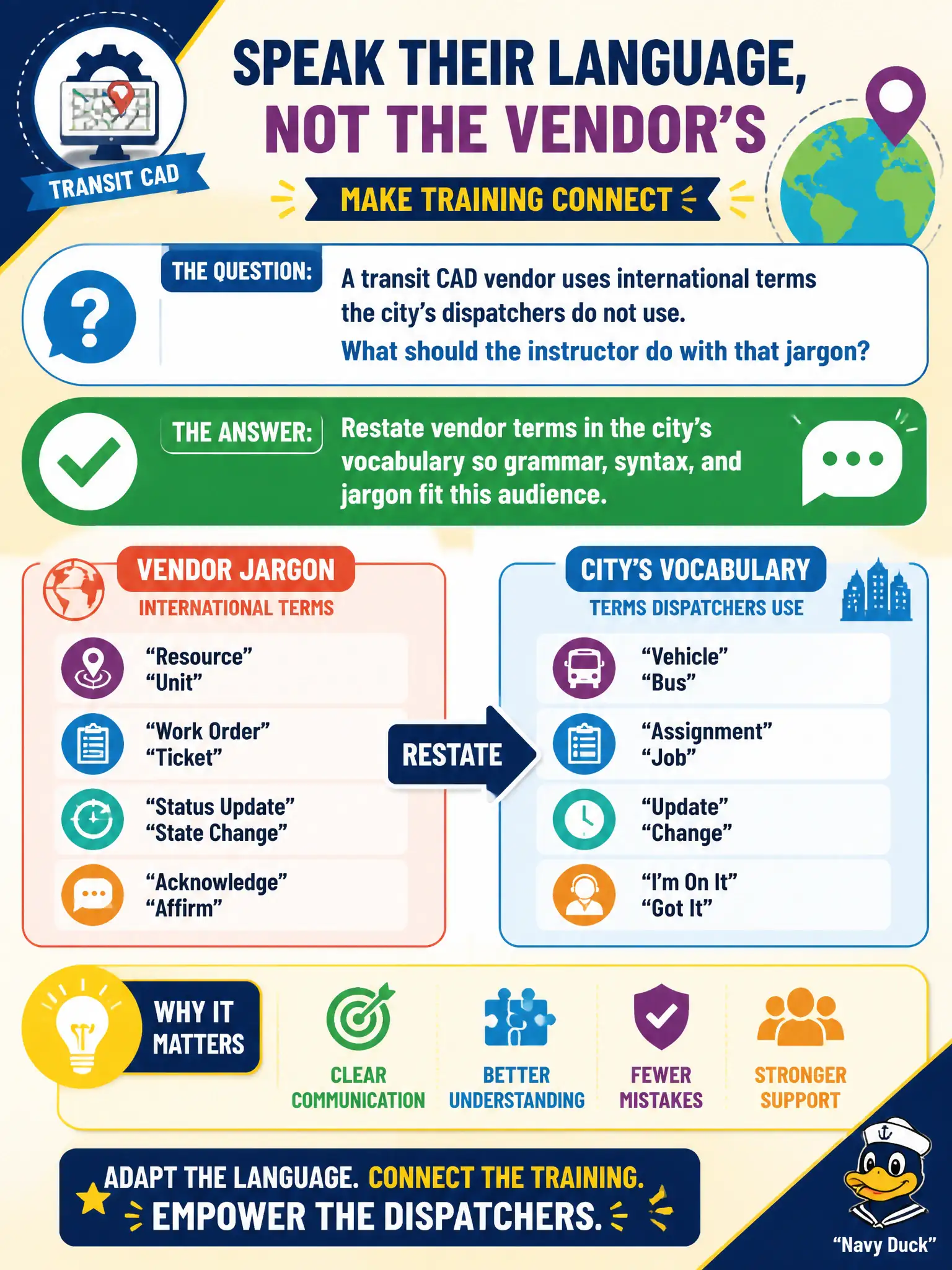
A transit CAD vendor uses international terms the city’s dispatchers do not use. What should the instructor do with that jargon?
Select an answer to reveal the explanation.
Short Explanation
Vendor-speak is a foreign menu. Translate it into the city’s dish names so dispatchers can order on the job. Mocking the glossary or dumping a standard overnight does not make the words usable tonight.
Full Explanation
Instructors adjust grammar, syntax, and jargon to the learners’ organizational vocabulary so communication fits the audience. When a transit CAD vendor uses international terms city dispatchers do not use, the instructor should restate those terms in the city’s vocabulary. Translation of vendor-speak into local operational language is a communications skill, not disloyalty to the vendor, and it prevents mis-keying and miscommunication on live municipal consoles.
Keeping only vendor terms so clerks learn “real” industry language fails by concept when those terms block comprehension of the city’s actual CAD practice and radio habits. Mocking the vendor glossary as useless fails as unprofessional and still leaves learners without a usable language bridge. Assigning extra overnight reading of the international standard fails by offloading the language gap instead of teaching in usable terms during class time.
Exam caveat: CTT+ audience-language items favor restating vendor jargon into the organization’s working terms during delivery.
Operational check: when a vendor term appears, give the city synonym immediately; post a two-column term map; have a dispatcher use the city term in the next practice call before leaving the segment.