
After a hard question in municipal ethics training, the room goes silent. How should the instructor use that silence?
Select an answer to reveal the explanation.
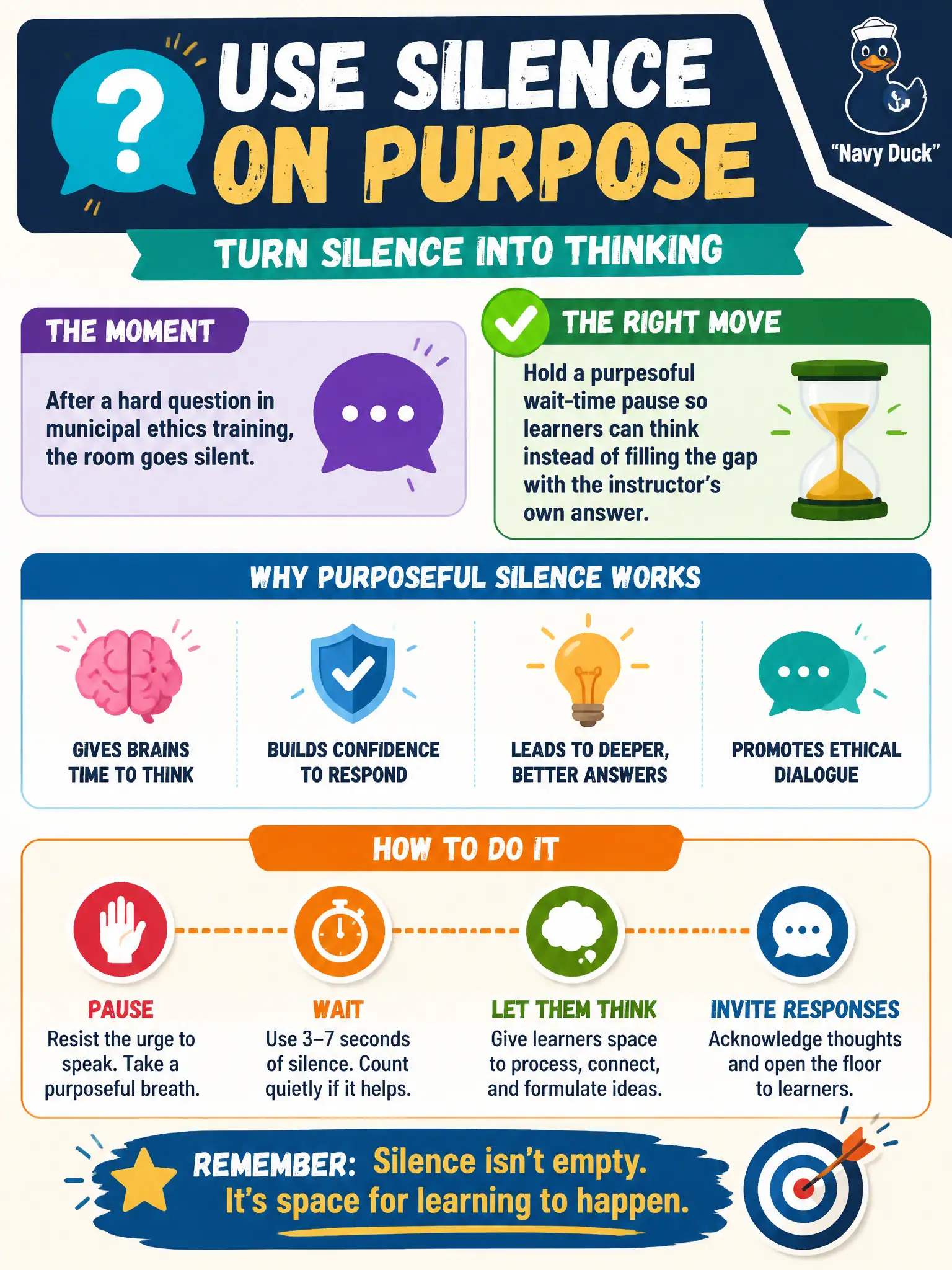
Short Explanation
Silence after a hard ethics question is think time, not a pothole. Let the pause work. Jumping in with the answer, a joke, or a snap cold-call steals the thinking the question was for.
Full Explanation
Silence after a hard question can be purposeful wait time that lets learners think before speaking. In municipal ethics training, holding that pause instead of immediately filling it with the instructor’s answer supports learner cognition and participation. Wait time is a facilitation skill, not an awkward void that must be erased for the instructor’s comfort, and it often surfaces better reasoning from city staff.
Immediately answering so nobody feels uncomfortable fails by concept: it converts a thinking prompt into a rhetorical question and reduces learner processing of the ethics dilemma. Filling the pause with a joke until someone speaks fails by substituting entertainment for cognitive space the silence was creating. Cold-calling the quietest clerk within one second fails as high-pressure interruption of the very think-time the silence could provide.
Exam caveat: CTT+ questioning technique includes wait time after questions. Discomfort with silence is not a reason to abort it instantly in adult municipal classrooms.
Operational check: after a hard ethics question, wait several seconds with open body language; if still silent, rephrase once; only then invite a volunteer or use a low-risk prompt—do not joke-fill the first pause.