
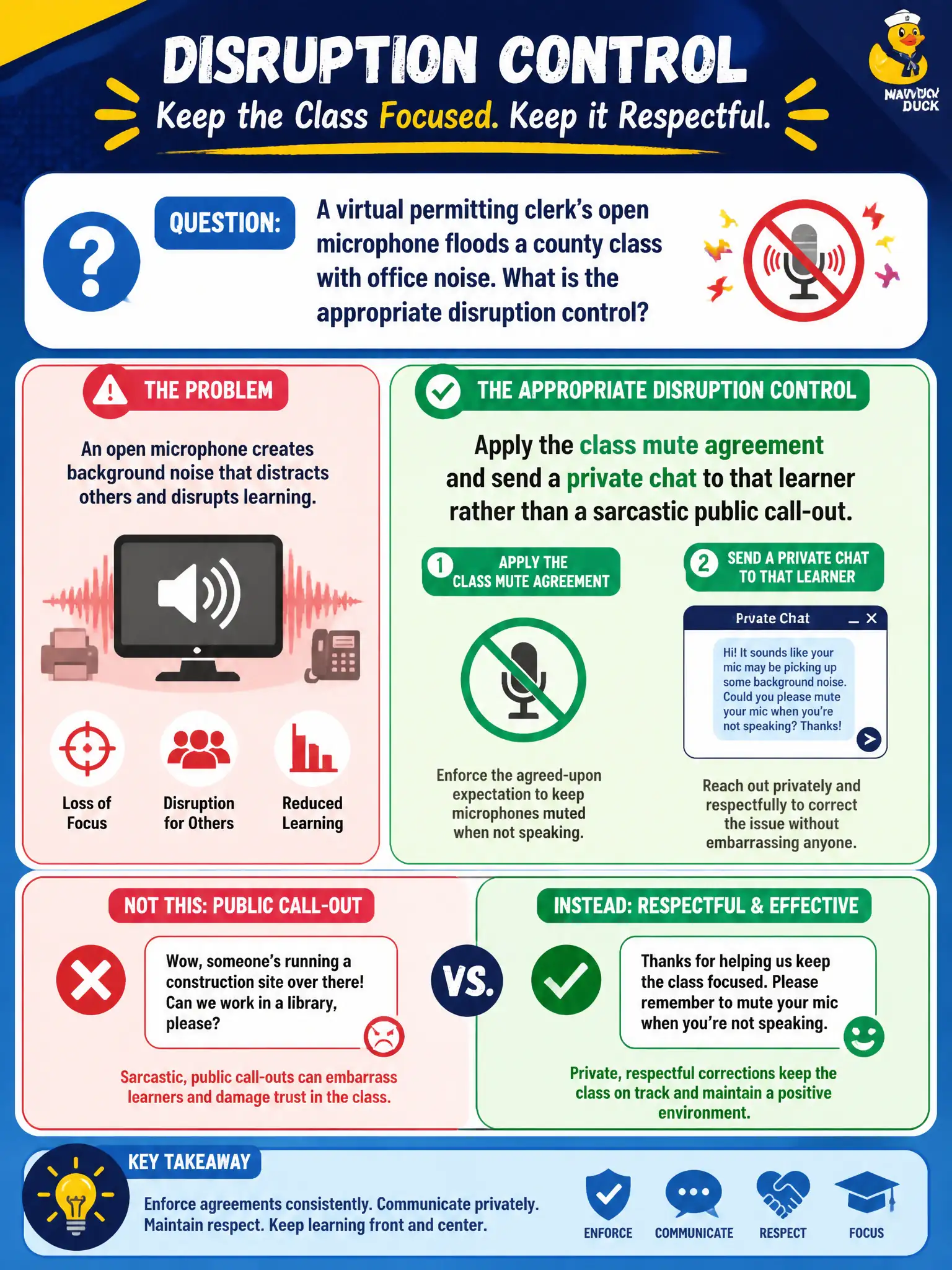
A virtual permitting clerk’s open microphone floods a county class with office noise. What is the appropriate disruption control?
Select an answer to reveal the explanation.
Short Explanation
An open mic is a leaf blower in the meeting. Mute by the agreement you already set, then ping the person privately. Sarcasm on the main channel just adds a second disruption.
Full Explanation
Virtual disruption control should be discreet and aligned with class agreements so municipal learners keep dignity while the room returns to work. When a permitting clerk’s open microphone floods a county class with office noise, the instructor should apply the class mute agreement and send a private chat to that learner rather than a sarcastic public call-out. That restores an environment conducive to learning, protects the individual from public embarrassment, and models the same composure clerks need with the public.
Mocking the clerk on the open channel so others mute fails by concept: public sarcasm is not discreet management and damages climate across the cohort. Ending the session until every learner buys a headset fails as a disproportionate stop for a recoverable mute issue when agreements and private redirects can fix audio now. Adding the clerk’s name to a shared “noise hall-of-fame” slide fails as humiliation theater that has no instructional value for permitting skills.
Exam caveat: CompTIA CTT+ virtual facilitation favors private redirects and agreed mute norms over public shaming when one microphone disrupts the class.
Operational check: mute per agreement if available, send a private chat with a clear mute request, confirm audio clears, then continue the permitting objective without naming the clerk aloud to the room.