
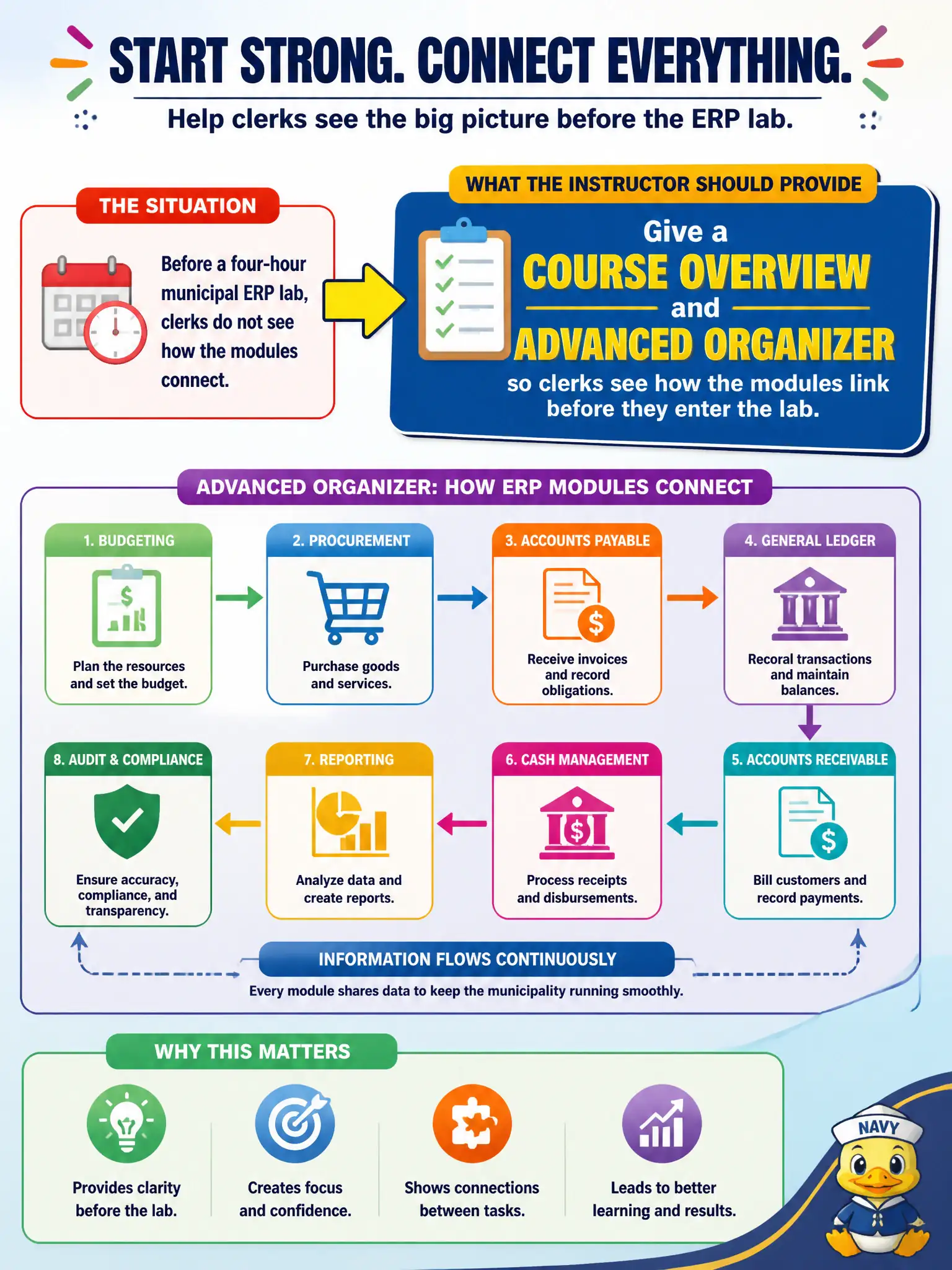
Before a four-hour municipal ERP lab, clerks do not see how the modules connect. What should the instructor provide at the start?
Select an answer to reveal the explanation.
Short Explanation
A four-hour lab without a map is a warehouse with the lights off. Show the floor plan first—overview plus organizer—so each module has a hallway. Clicking blind wastes the hours you were trying to save.
Full Explanation
Adult learners benefit from a course overview and advanced organizer that shows how parts connect before detailed practice begins. Before a four-hour municipal ERP lab, clerks who do not see how modules link need that organizer at the start so navigation and purpose are visible. Orientation is not wasted time; it is the map that makes lab clicks meaningful and reduces random wandering through screens that look alike.
Skipping orientation to maximize clicking fails by concept: activity without a mental map produces busywork, errors, and frustration in complex city systems. Handing out the full vendor manual for silent skimming fails as dumping volume rather than organizing attention around today’s path. Saving any overview for a surprise last-five-minute recap fails because the organizer’s value is upfront, before clerks enter the lab sequence.
Exam caveat: CTT+ opening and structure items reward advanced organizers early—especially for multi-module municipal systems training where modules must be seen as a whole.
Operational check: spend a few minutes showing the module map and today’s path through the ERP; confirm clerks can state how two modules connect; then open the first lab with that shared map still visible.