
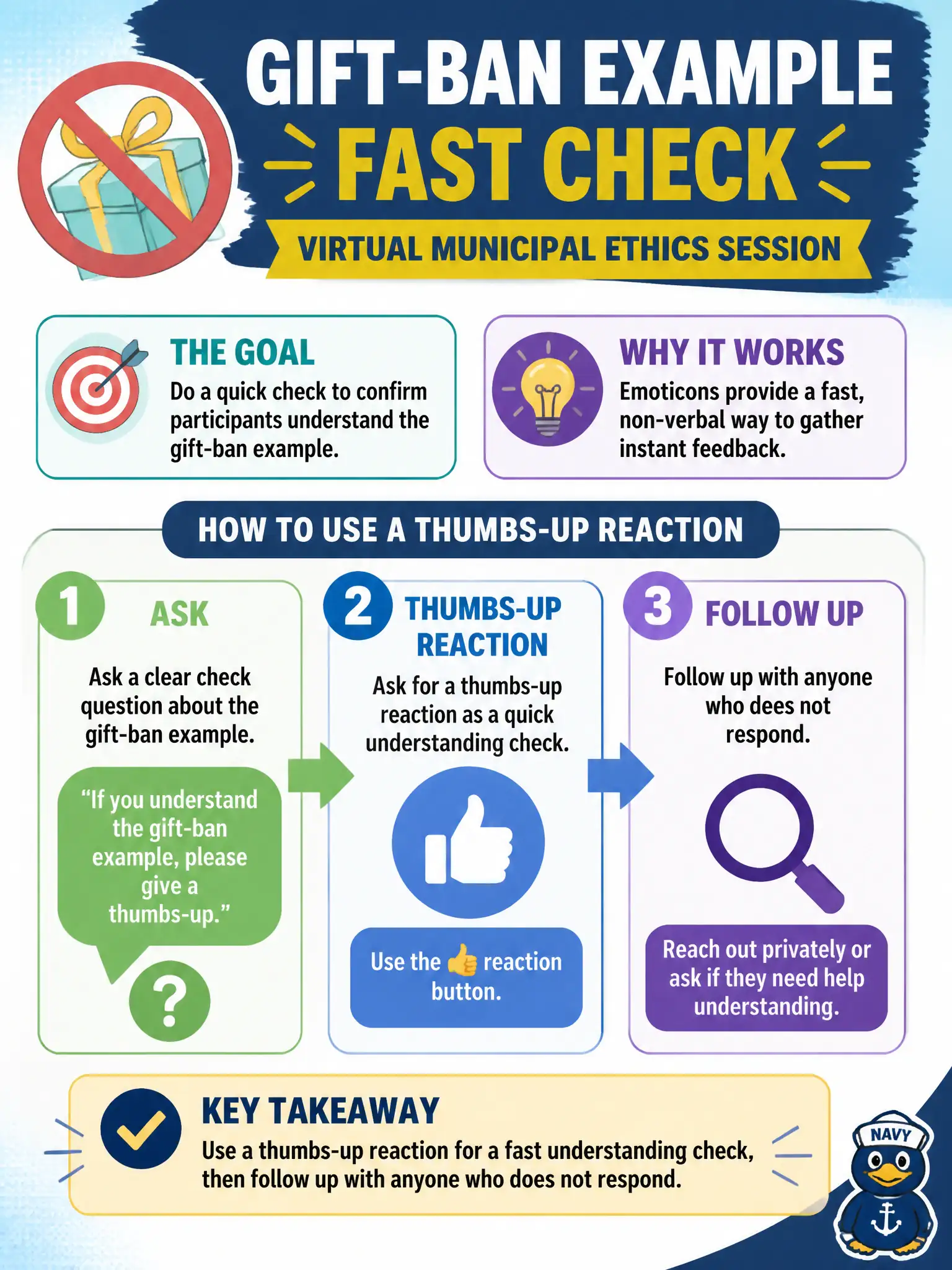
In a virtual municipal ethics session, the instructor wants a fast check that clerks understood a gift-ban example. How should a technical non-verbal tool such as an emoticon be used?
Select an answer to reveal the explanation.
Short Explanation
A thumbs-up is a nod you can see through a webcam. Use it to check understanding, then chase the silent tiles. Spamming GIFs is clutter, not communication.
Full Explanation
Technical non-verbal tools such as reactions or emoticons in virtual class can provide quick formative checks when used purposefully. In a municipal ethics session, asking for a thumbs-up reaction as a fast understanding check on a gift-ban example, then following up with anyone who does not respond, turns a lightweight tool into instructional evidence. The tool serves assessment of understanding, not decoration or competition among clerks.
Flooding chat with animated reactions after every sentence fails by concept as noise that dilutes signal and tires learners. Disabling all reactions so every check must be a full written paragraph fails by over-formalizing a quick check and slowing the municipal session unnecessarily. Posting a public emoji leaderboard fails by gamifying reaction volume instead of checking gift-ban comprehension across the cohort.
Exam caveat: CTT+ virtual-tool items reward purposeful, low-friction checks with follow-up—not constant reaction spam or leaderboard theater.
Operational check: after the gift-ban example, request thumbs-up; note non-responders in a private list; ask one clarifying question in chat or breakout before advancing to the next ethics scenario.