
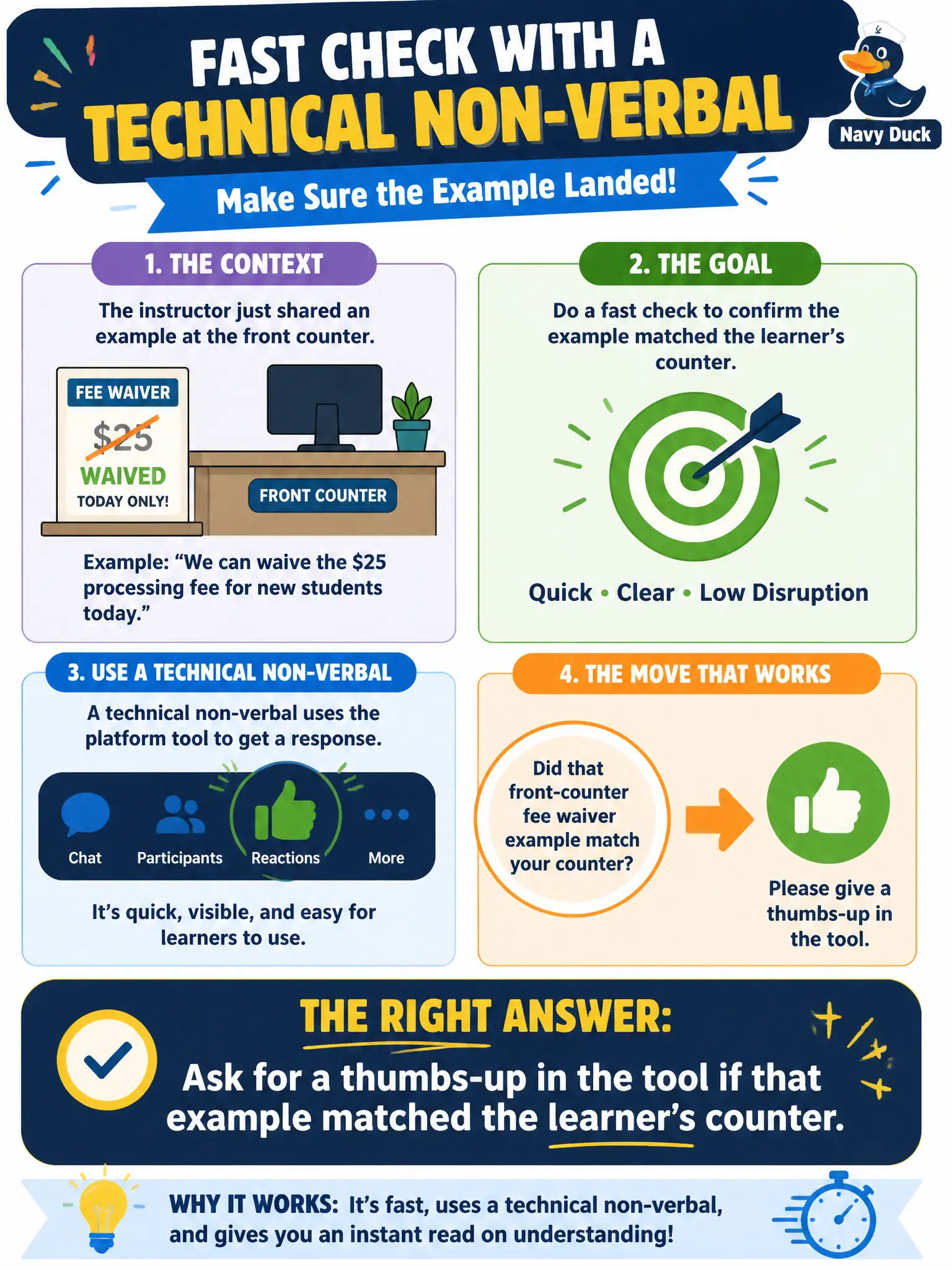
After offering a front-counter example of a fee waiver, the virtual instructor wants a fast check that the example landed. Which move uses a technical non-verbal for that purpose?
Select an answer to reveal the explanation.
Short Explanation
Thumbs-up is a cheap, honest meter. If the waiver example matched their counter, they tap it. If not, there is still time to try a different case.
Full Explanation
Virtual fee-waiver examples must connect to front-counter reality for equitable resident service. Asking for a thumbs-up in the tool if the example matched the learner's counter uses a technical nonverbal for a fast check that the example landed. Platform gestures are efficient formative signals in virtual civic classes.
Requiring a three-paragraph chat essay before unmute fails by concept: it is too heavy for a fast example check. Advancing and assuming silence means success ignores the absence of evidence. Asking only the supervisor to restate the entire fee schedule over-samples one voice and overshoots the example-check purpose.
Exam caveat: technical nonverbals (thumbs-up, reactions, green checks) complement—but do not fully replace—open checks and performance tasks. Use them for speed, then probe if signals are mixed.
Operational check: request thumbs-up for example fit, count the reactions, and if many withhold, solicit one chat contrast case and adjust the next example to the counter context. Fee-waiver examples must feel true to the counters where residents ask for relief. Thumbs-up reactions are a fast virtual pulse check on that relevance. If reactions are sparse, solicit a contrasting real case in chat and adjust the next example so virtual clerks can transfer the waiver logic to their desks.