
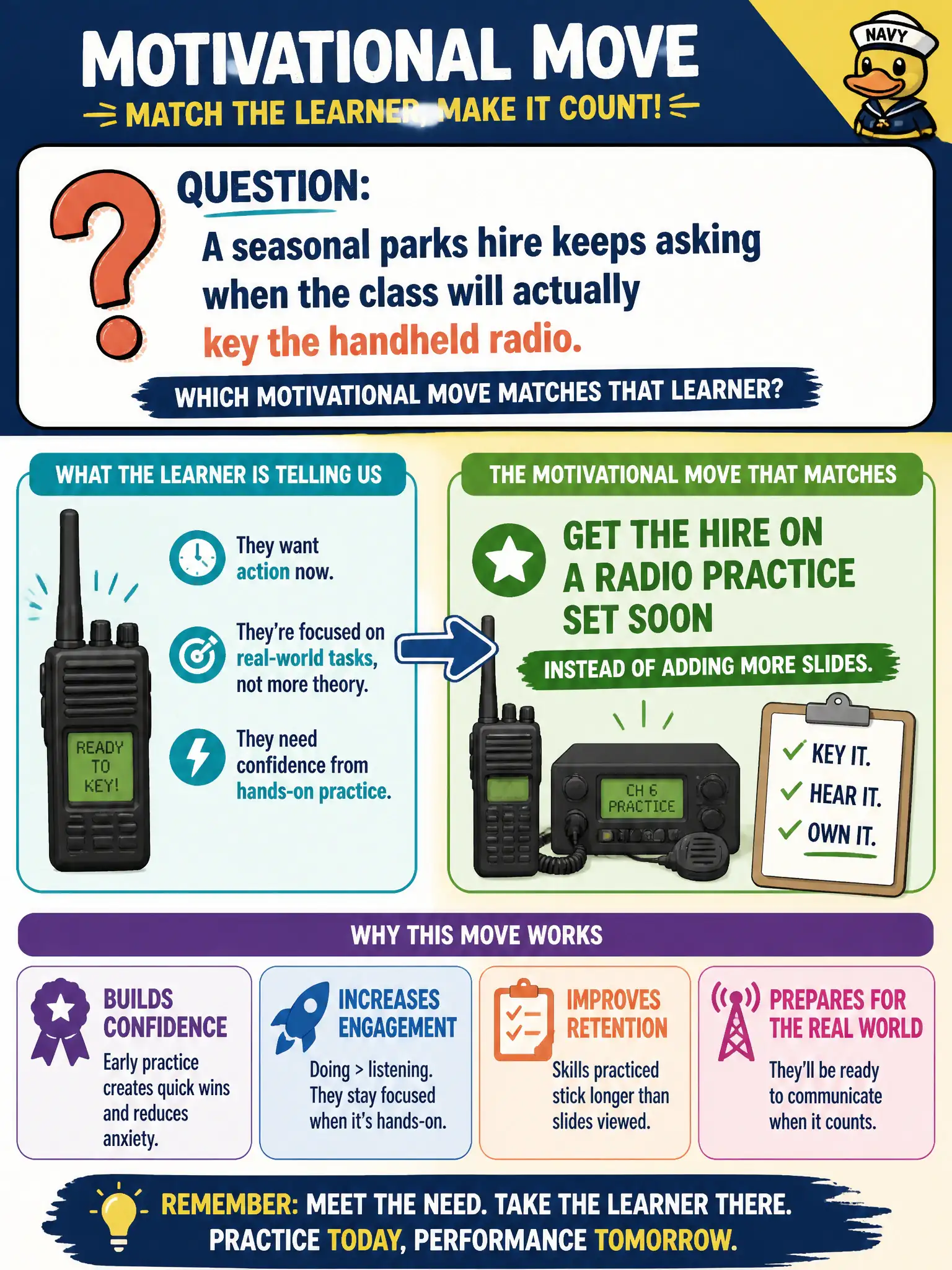
A seasonal parks hire keeps asking when the class will actually key the handheld radio. Which motivational move matches that learner?
Select an answer to reveal the explanation.
Short Explanation
Some people wake up when their hands are on the radio, not when slide 40 appears. That parks hire already named the hook. Hand over a practice unit before piling on more theory.
Full Explanation
Seasonal parks hires must operate handheld radios for public events and emergencies; activity-oriented learners engage when doing the task. Getting the hire on a radio practice set soon instead of adding more slides matches that motivational need. Motivation techniques should align with learner orientation—activity, goal, or learning.
Assigning extra radio theory reading before touch time fails by concept for an activity-oriented learner: more abstraction increases frustration. Promising a certificate only for quiet lecture endurance uses compliance carrots that ignore the stated need to key the radio. Ignoring the request because such learners 'should adapt to lecture first' dismisses a valid adult learning preference the exam expects you to accommodate.
Exam caveat: activity-oriented adults want early application; goal-oriented want clear outcomes tied to their aims; learning-oriented want the why. Identify the orientation and respond accordingly without abandoning objectives.
Operational check: pause the slide stack, hand over a practice radio with a short checklist call, let the hire key a correct identifier, then resume only the theory still needed for safe radio use. Seasonal parks radio use is operational public safety, not a lecture elective. Activity-oriented hires tell you what will engage them—hand them supervised practice early while still enforcing correct identifiers and etiquette. After the first successful keyed call, add only the minimum theory required for the next safe practice set.