
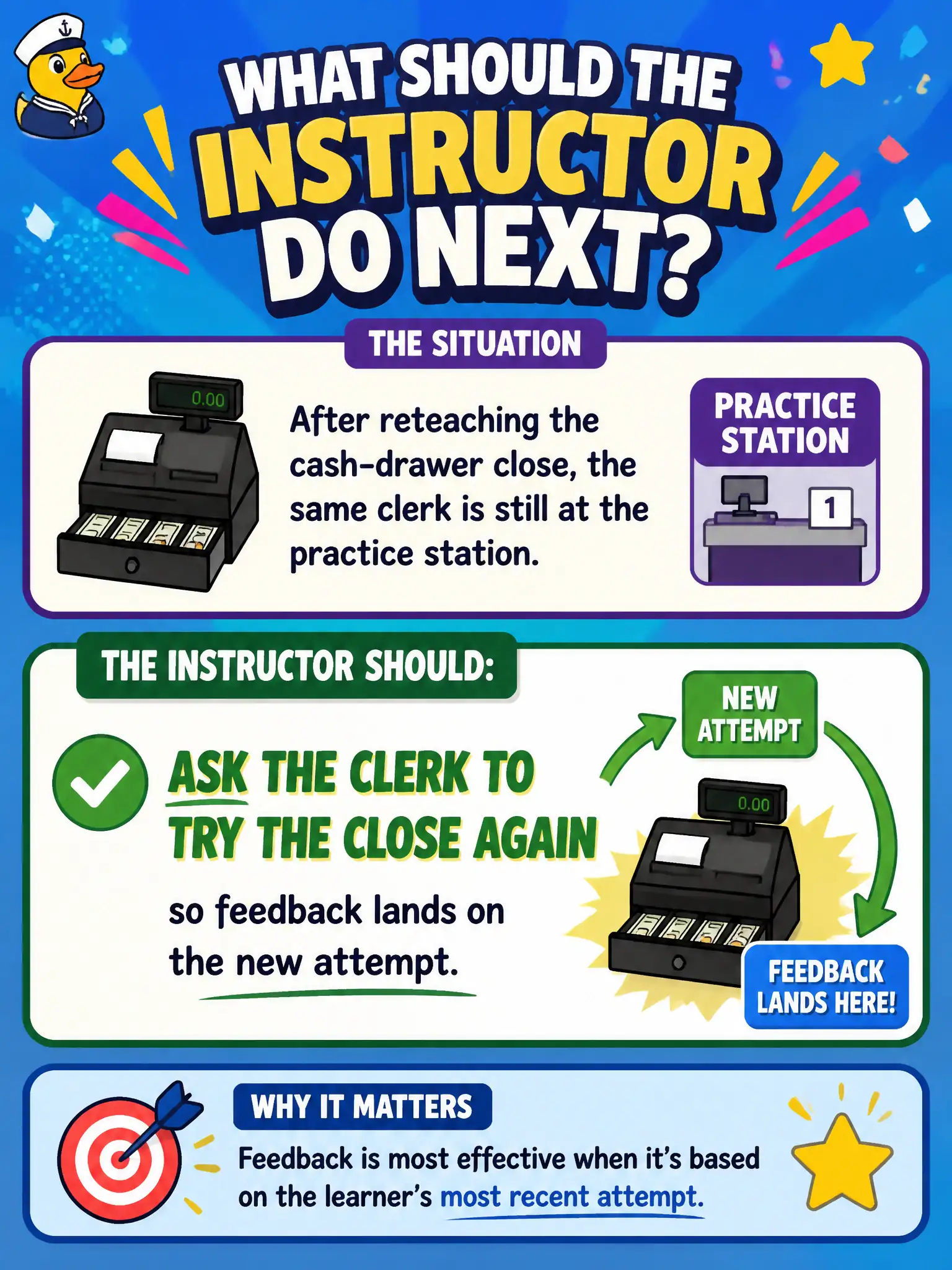
After reteaching the cash-drawer close, the same clerk is still at the practice station. What should the instructor do next?
Select an answer to reveal the explanation.
Short Explanation
Reteaching without a second try is a speech, not a check. Have the clerk close the drawer again. Feedback on the new attempt is the only way to know the reteach stuck.
Full Explanation
Cash-drawer close procedures protect public funds at city counters. After reteaching, ask the same clerk to try the close again so feedback lands on the new attempt—practice-plus-recheck completes the correction cycle. Reteaching without a second performance is incomplete facilitation.
Moving the clerk to an observer seat fails by concept: observation after failure denies the needed successful attempt. Giving a perfect score for sitting through reteach confuses attendance with performance. Filing the first failed attempt as the official record and moving on locks in failure without measuring improvement.
Exam caveat: instruct, practice, feedback, and retry is the loop—especially after remediation. Formative retries are expected before summative judgments.
Operational check: after the reteach, have the clerk perform a full practice close against the checklist, give field-specific feedback, and confirm a successful close before starting the next module. Public-funds drawer closes must be performed correctly, not merely re-explained. The retry after reteaching is the evidence that remediation worked. Use the same checklist as the original attempt, give field-level feedback on the new try, and withhold module completion until a successful close is observed.