
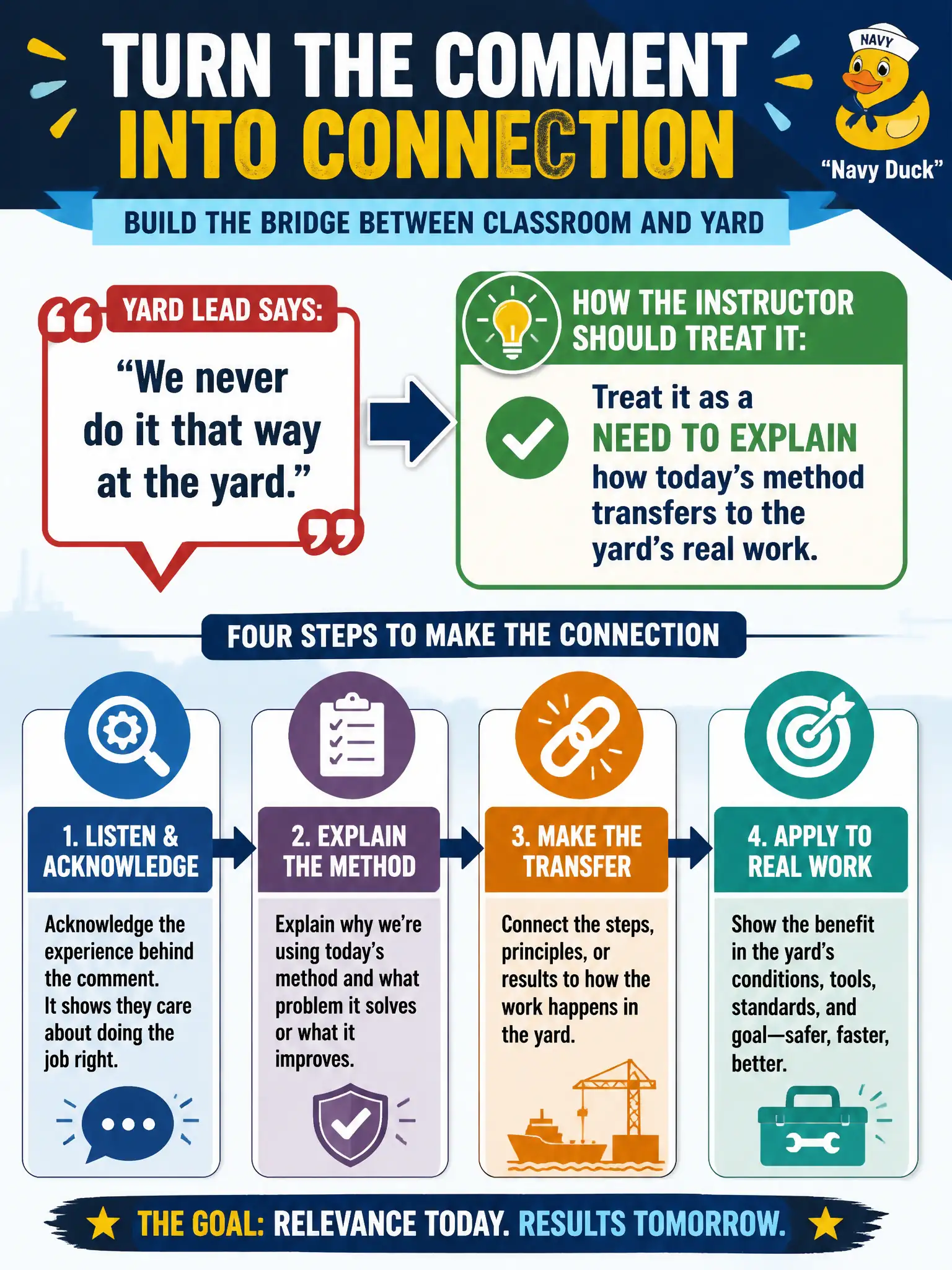
In a public-works lab, a yard lead says, “We never do it that way at the yard.” How should the instructor treat the comment?
Select an answer to reveal the explanation.
Short Explanation
“We never do it that way” is usually “show me the on-ramp,” not a mutiny. Explain how the new step shows up on a real truck day. Punishment teaches silence, not transfer.
Full Explanation
Public-works procedure training must transfer from classroom method to yard reality for consistent public service. When a yard lead says they never do it that way at the yard, treat it as a need to explain how today's method transfers to real work—not as mutiny. Resistance often signals transfer gaps or unclear relevance.
Writing the lead up for challenging official procedure fails by concept: punitive framing suppresses the transfer conversation the class needs. Joking that the yard must catch up without explanation dismisses operational knowledge and skips teaching transfer. Dropping the official method to teach only the workaround may entrench noncompliant practice.
Exam caveat: acknowledge workplace reality, map the official method to yard conditions, and escalate true policy conflicts to the right owner—while still teaching the required standard. Do not shame experienced staff for naming constraints.
Operational check: ask the lead to describe the yard constraint, show where the new step appears in a real work order or truck day, practice that on-ramp, and document any unresolved policy conflict for supervisors. Yard leads name constraints that classroom designers miss; treating those comments as transfer needs keeps experienced staff engaged while still teaching the official method residents and auditors expect. Map the method onto a real truck-day artifact, practice the on-ramp, and escalate true policy conflicts in writing rather than improvising noncompliant training.