
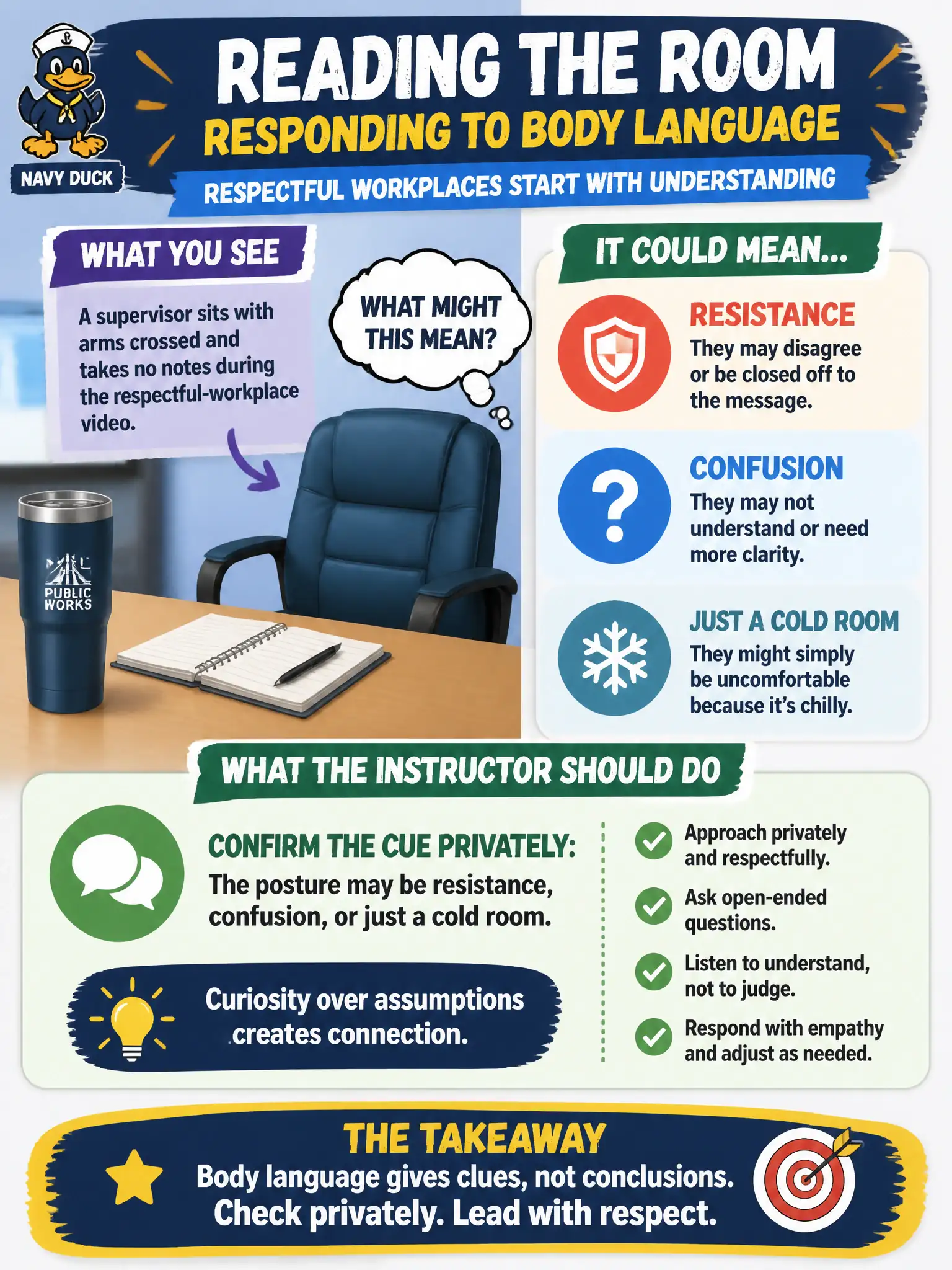
During a respectful-workplace video, one public-works supervisor sits with arms crossed and takes no notes. What should the instructor do with that body language?
Select an answer to reveal the explanation.
Short Explanation
Crossed arms are a maybe, not a confession. Cold room, tough day, or real confusion all look similar from the front. Check in quietly before writing a story about the supervisor.
Full Explanation
Respectful-workplace training for public-works supervisors supports lawful, dignified civic workplaces. When one supervisor sits with arms crossed and takes no notes, confirm the cue privately—the posture may be resistance, confusion, or simply a cold room. Body language is a signal to investigate, not a verdict.
Announcing that crossed arms mean rejection of city policy fails by concept: it mind-reads publicly and may be wrong, damaging trust. Stopping the video to force a scene-by-scene oral summary escalates without confirmation and can feel punitive. Ignoring posture because only spoken comments 'count' discards a useful nonverbal channel.
Exam caveat: nonverbal cues warrant a discreet check-in; do not diagnose character from a single posture. After confirmation, address the real need—clarification, climate, or temperature.
Operational check: during a pause, privately ask whether the content is clear and whether they are comfortable; adjust facilitation (example, question, or environment) based on the actual answer. Respectful-workplace content can trigger resistance or discomfort that looks identical from the back row. Private confirmation prevents false accusations and finds the real barrier—concept, climate, or environment. Act on what you learn: clarify policy, adjust discussion norms, or fix the room—then re-observe whether the cue changes.