
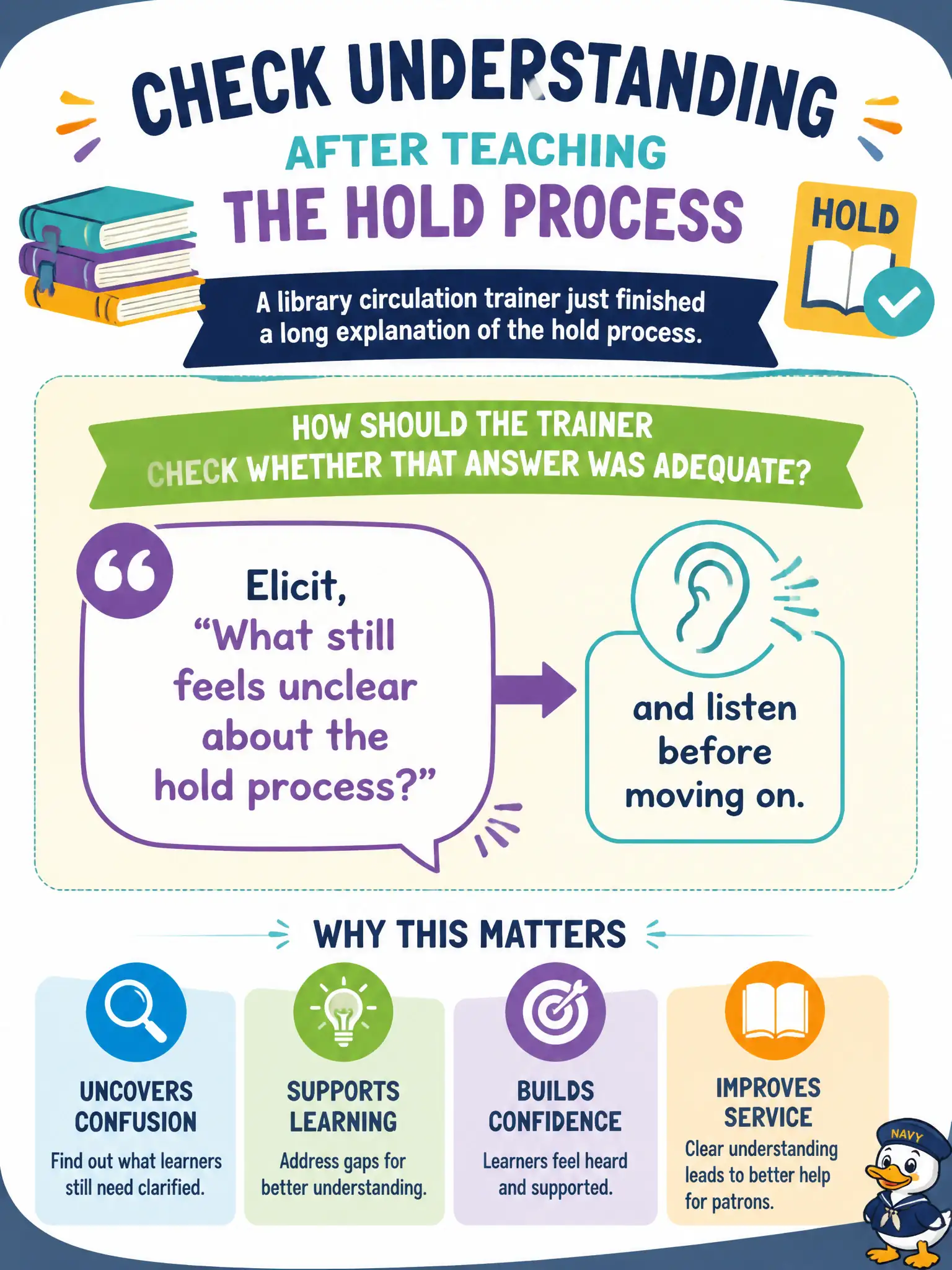
A library circulation trainer just finished a long explanation of the hold process. How should the trainer check whether that answer was adequate?
Select an answer to reveal the explanation.
Short Explanation
A long answer can still miss the thing the clerk actually needed. Close the loop. “What still feels unclear?” is the dipstick after the oil went in.
Full Explanation
Library hold processes control how the public receives reserved materials; unclear explanations create service failures. After a long explanation, elicit what still feels unclear about the hold process and listen before moving on—checking whether the answer was adequate. Adequacy confirmation is part of closing the facilitation loop.
Moving immediately to the next module fails by concept: length of explanation does not equal clarity for the learner. Asking a different clerk a brand-new topic abandons verification with the people who just received the long answer. Repeating the same monologue blindly doubles airtime without diagnosing what was missing.
Exam caveat: after answering, ask a confirmation or residual-clarity question; adjust based on the reply rather than assuming the monologue worked. This pairs with active listening principles.
Operational check: ask what still feels unclear, address one residual point, then have a clerk demonstrate placing a hold on a test record to prove the explanation landed. Circulation holds are promises to the public; long explanations that are not checked can leave clerks unable to fulfill them. Adequacy questions reopen the floor for residual confusion without forcing learners to interrupt. Follow confirmation with a demonstrated hold on a test patron record so verbal clarity and system performance both check out.