
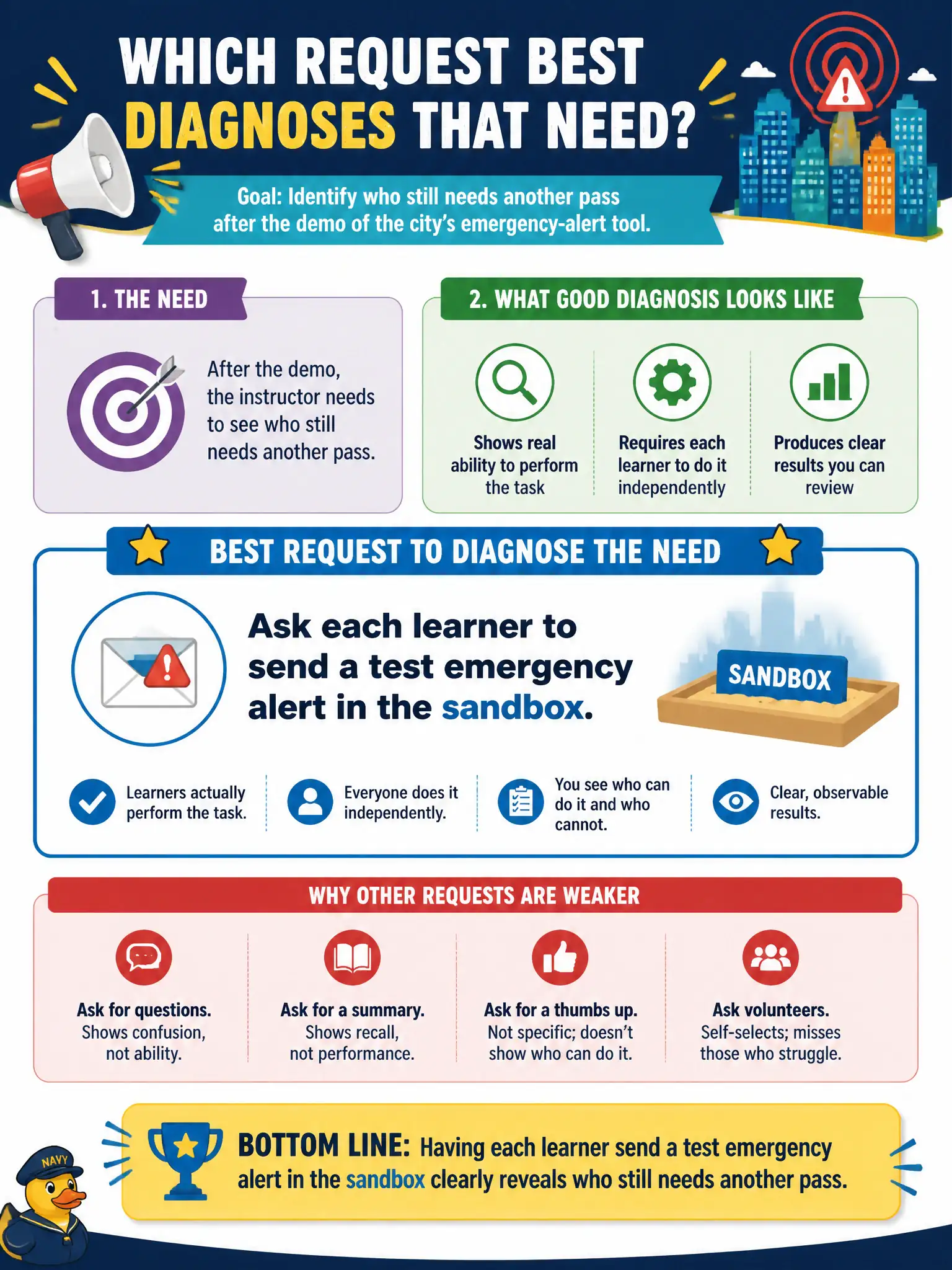
After a demo of the city’s emergency-alert tool, the instructor needs to see who still needs another pass. Which request best diagnoses that need?
Select an answer to reveal the explanation.
Short Explanation
Nodding is cheap. Hitting send in the sandbox is the truth. If the alert never leaves the practice queue, that person needs another demo—no speech required.
Full Explanation
City emergency-alert tools notify the public during crises; readiness requires doing, not nodding. Asking each learner to send a test emergency alert in the sandbox best diagnoses who still needs another pass after the demo. Performance tasks reveal competence that agreement gestures hide.
Asking the cohort to nod if the demo made sense fails by concept: nods are weak, socially pressured evidence. A multiple-choice recap of vendor marketing tests brochure literacy, not alert-sending skill. Highlighting the user-guide table of contents proves they can mark paper, not operate the tool.
Exam caveat: after demos of critical civic systems, prefer authentic practice in a safe sandbox over self-report. Use results to target who gets a second pass.
Operational check: require a sandbox test alert from each learner, checklist the required fields, and immediately reteach anyone whose alert fails validation before closing the module. Emergency alerts that staff cannot actually send are a hollow civic capability. Sandbox sends are the honest diagnostic after a demo. Checklist each required field and audience setting, remediate failures immediately, and retain who needed a second pass so supervisors know where follow-up coaching belongs.