
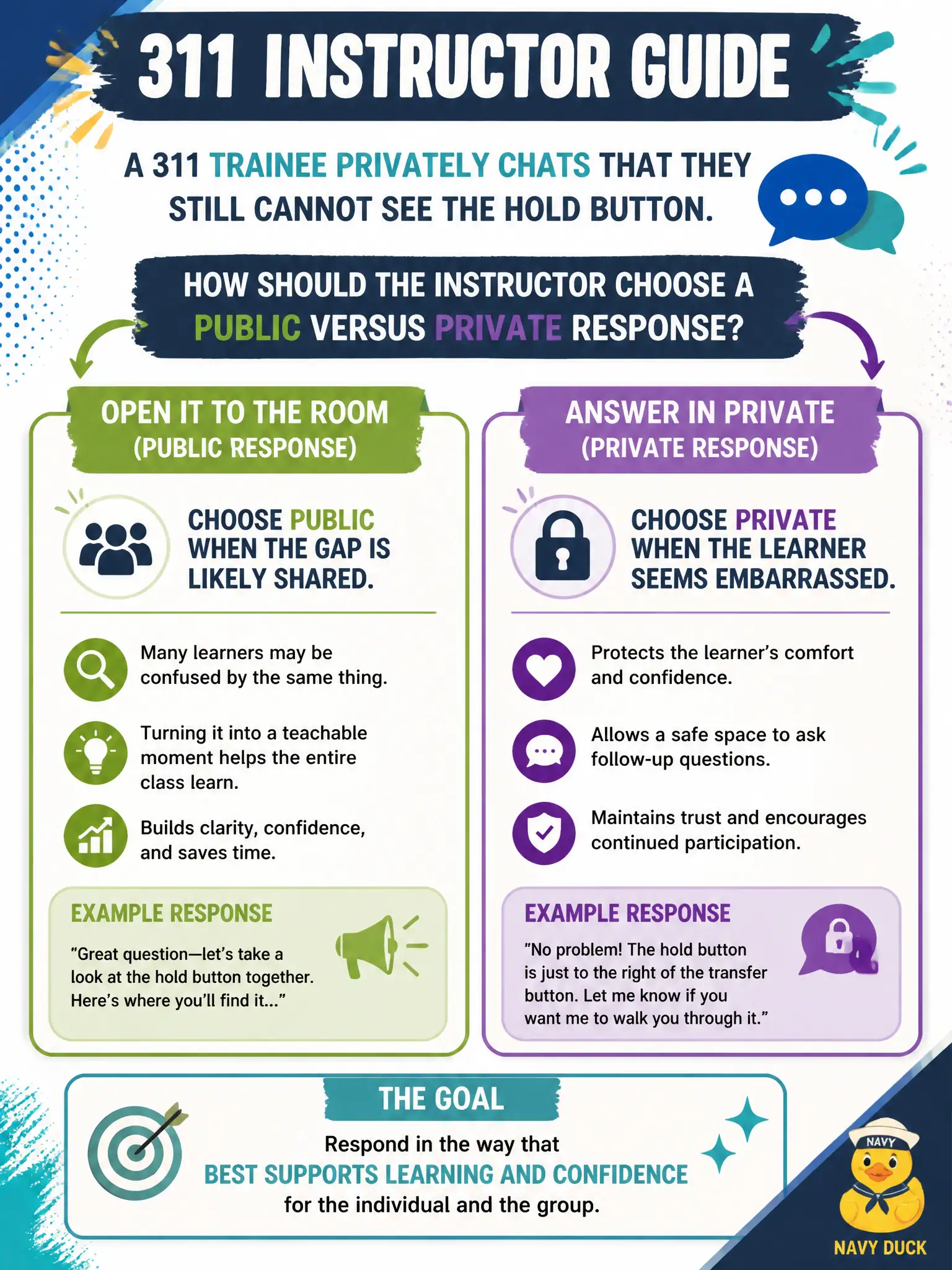
A 311 trainee privately chats that they still cannot see the hold button. How should the instructor choose a public versus private response?
Select an answer to reveal the explanation.
Short Explanation
Private chat is a side door, not a trash can. If the trainee is embarrassed, fix the hold button there. If half the room is lost, bring the same gap out so everyone gets the light.
Full Explanation
311 trainees represent the city to residents; privately admitting they cannot see a hold button may signal embarrassment or a shared UI gap. Answer in private if the learner seems embarrassed, or open it to the room if the gap is likely shared—choosing public versus private response by learner need and likelihood of common confusion. Sensitive facilitation balances dignity with efficient group teaching.
Always reading private chats aloud fails by concept: forced transparency can shame and deter future help-seeking. Ignoring private chat because questions 'must be public' discards a valid channel. Ending the session to send a recording later abandons immediate performance support.
Exam caveat: default toward protecting dignity on personal struggles; elevate to the group when many will benefit and the learner consents or the issue is clearly widespread (for example, many '+1' messages).
Operational check: reply privately first—'Want me to show you off-main, or shall we walk it for everyone?'—then either screenshare privately or demo the hold button path to the cohort based on their preference and chat signals. Choosing private versus public responses protects dignity while still serving the cohort when a 311 UI gap is widespread. Ask permission before elevating a private struggle, and elevate without naming the original asker when chat already shows many similar confusions. Either way, finish with the learner successfully locating the hold button on their own screen.