
After demonstrating a zoning overlay, what designed opportunity uses instructor silence well?
Select an answer to reveal the explanation.
Short Explanation
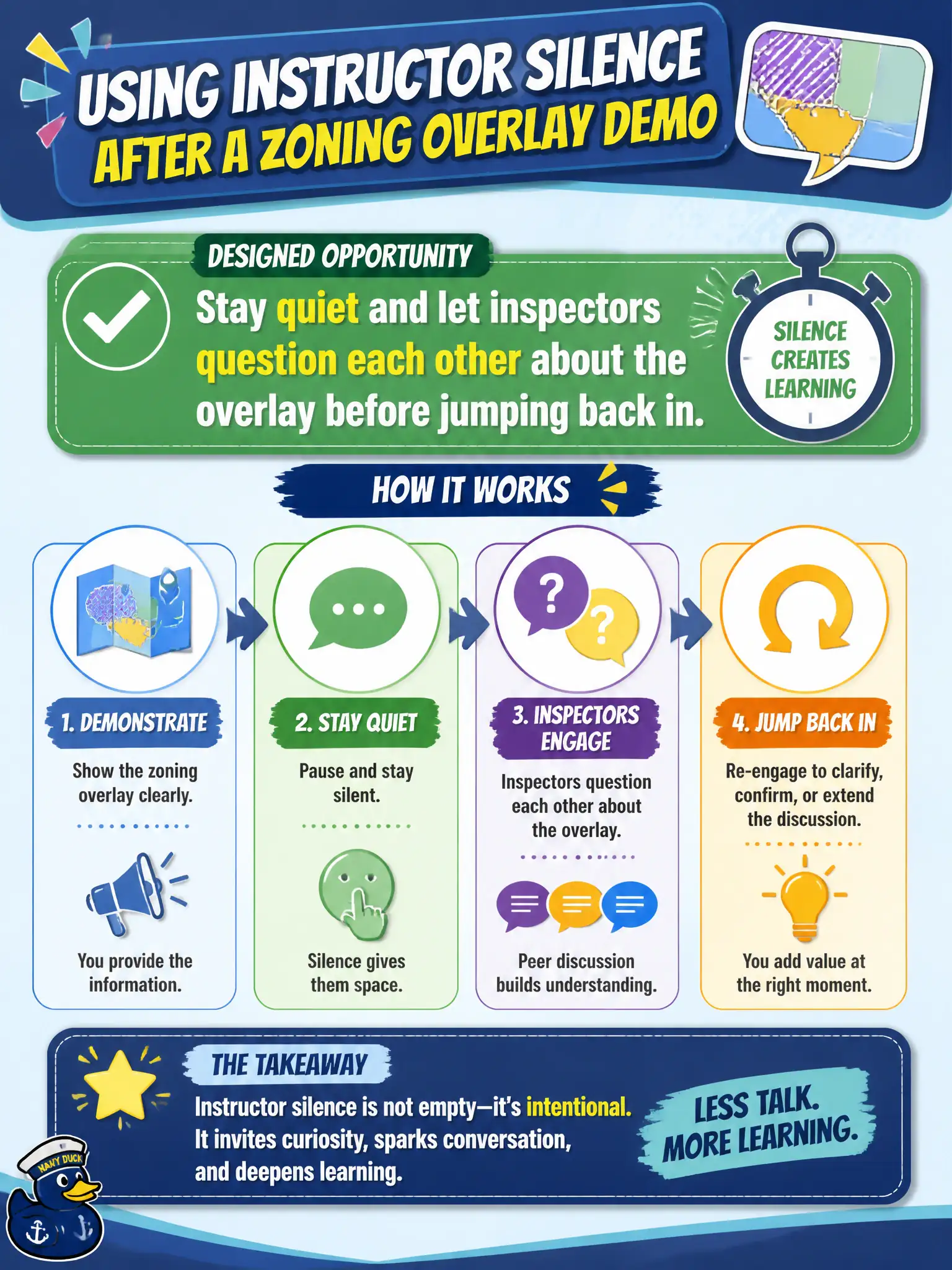
Silence can be a tool, not a gap. After the overlay demo, let inspectors quiz each other. Jumping back in too soon steals the chance they were supposed to have.
Full Explanation
Zoning-overlay demonstrations prepare inspectors who apply land-use rules affecting property owners and neighborhoods. Staying quiet and letting inspectors question each other about the overlay before jumping back in is a designed use of instructor silence that fosters peer processing. Silence can be a facilitation tool, not an empty gap.
Narrating every click again so no silence occurs fails by concept: constant instructor talk blocks peer questioning opportunities. Ending class immediately after the demo abandons processing time. Collecting phones so inspectors cannot look anything up may be a policy choice but does not create the peer-question design; it can also block legitimate reference use.
Exam caveat: planned silence works after learners have enough content to discuss; it is not passive neglect. Monitor for accuracy and rejoin to correct misconceptions.
Operational check: after the overlay demo, announce two minutes of peer questions, listen without intervening unless safety/policy error appears, then harvest one misconception to clarify before the lab. Peer questioning after a zoning-overlay demo builds inspectors who can challenge and refine each other’s map reading before public hearings. Instructor silence is purposeful space, not abandonment: listen for illegal or unsafe advice and re-enter to correct. Close the silent window by surfacing one strong question and one misconception for whole-group clarification.