
In a parks-permit class, one ranger has been silent but has completed every lab correctly. Another ranger is visibly lost. How should the instructor direct a recap question?
Select an answer to reveal the explanation.
Short Explanation
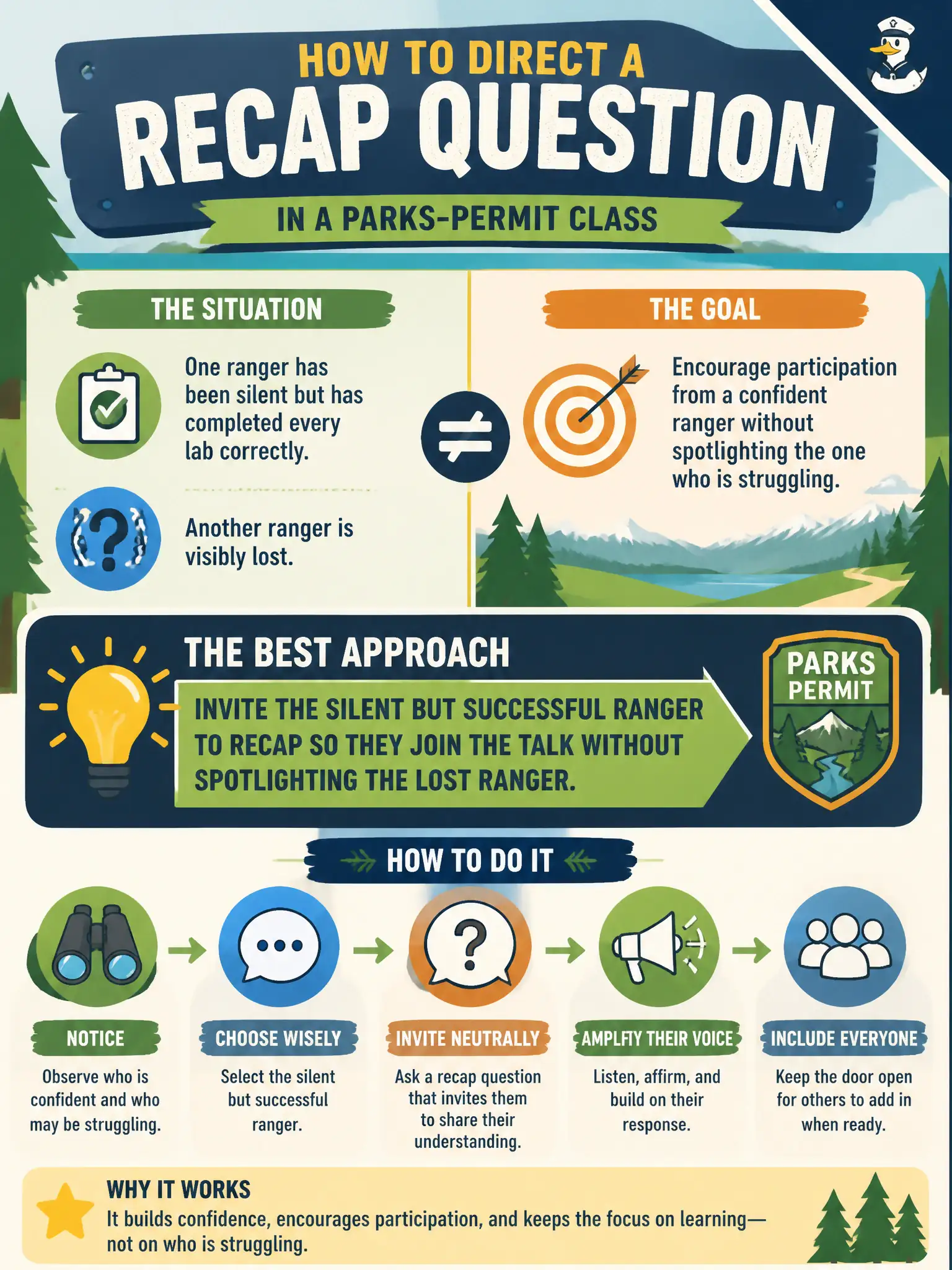
Inclusion is a smart toss, not a trap. The quiet ranger who already nailed the labs can recap without shame. Putting the lost ranger on stage just for being lost is a spotlight, not a recap.
Full Explanation
Parks-permit classes prepare rangers who serve the public under consistent rules. Inviting the silent but successful ranger to recap includes them in discussion without spotlighting the visibly lost ranger—directing that matches learner needs. Silence is not always confusion; successful quiet learners can contribute productively when invited.
Cold-calling the lost ranger to recap so they 'catch up in public' fails by concept: it uses public exposure as remediation and may shame rather than teach. Never calling on quiet learners assumes silence always means 'leave me alone,' which can exclude capable contributors. Asking only the most vocal ranger again concentrates contribution unfairly.
Exam caveat: directing should consider readiness, confidence, and topic sensitivity—invite strength to model, support struggling learners with private or scaffolded help. Differentiate inclusion from spotlight punishment.
Operational check: ask the successful quiet ranger to recap the permit step; meanwhile, privately check in with the lost ranger and offer a side-by-side retry before the next scenario. Inclusive directing in parks-permit classes builds a bench of rangers who can explain rules to the public, not only execute clicks silently. Invite capable quiet performers to model; support struggling rangers with private coaching so public recap is not used as exposure therapy. After the quiet ranger’s recap, pair the lost ranger for a guided redo away from the main spotlight.