
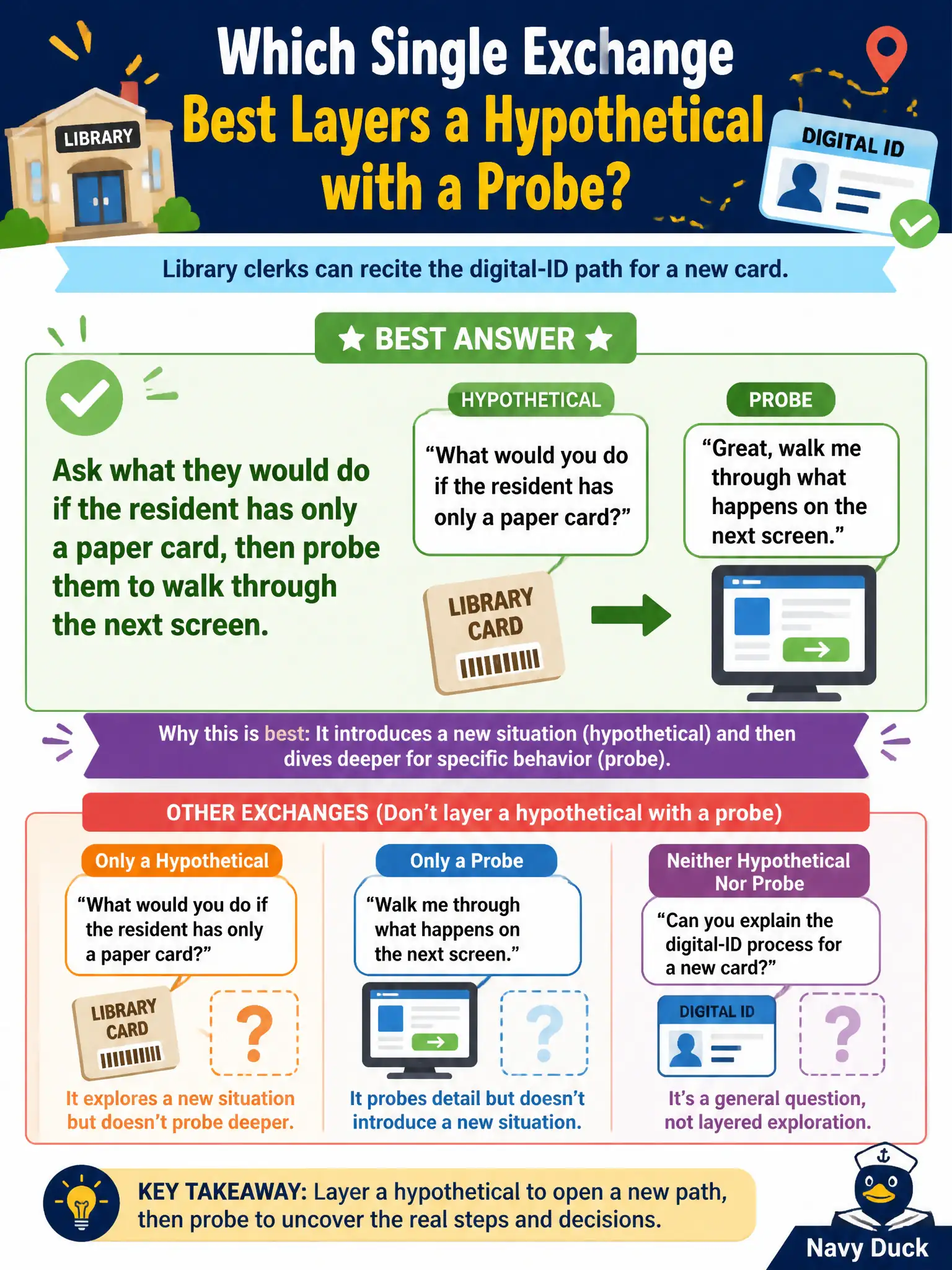
Library clerks can recite the digital-ID path for a new card. Which single exchange best layers a hypothetical with a probe?
Select an answer to reveal the explanation.
Short Explanation
Stack the tools. First paint the paper-card resident, then ask them to walk the next screen. That combo is a hypothetical plus a probe, not a yes-or-no shrug.
Full Explanation
Library digital-ID paths affect patron access to public digital resources and must handle edge cases like paper cards. Asking what they would do if the resident has only a paper card, then probing them to walk through the next screen, layers a hypothetical with a probe in one exchange. Combining techniques lets clerks rehearse a rare case and articulate the click path.
Asking only whether they know the paper-card rule then stopping fails by concept: a closed check does not create the hypothetical-plus-probe depth. Lecturing the exception without asking anything removes learner involvement. Assigning a take-home policy memo replaces live questioning with delayed writing.
Exam caveat: recognize multi-technique items—hypothetical sets the scenario; probe pushes specificity on screens or decisions. Both must stay tied to the taught digital-ID procedure.
Operational check: pose the paper-card hypothetical, require a next-screen narration, and have the clerk perform that path in the staff system while you confirm each step. Paper-card edge cases test whether library staff can uphold access without breaking digital-ID policy. Layering hypothetical plus probe mirrors real desk improvisation under rules. After the spoken walkthrough, require the path on the staff console and verify that privacy and identity checks still occur—no shortcut that would leave an unverified patron in the digital system.