
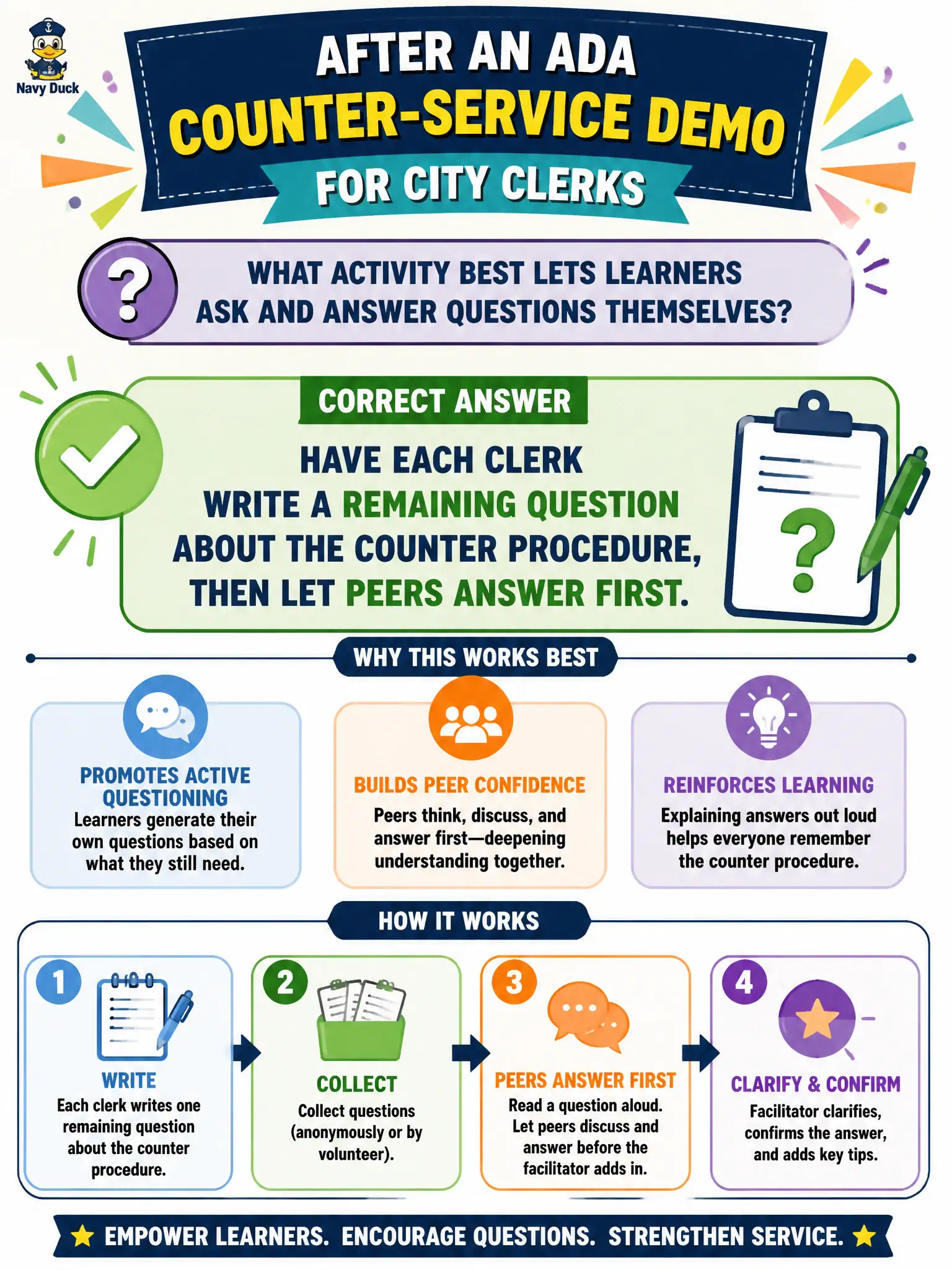
After an ADA counter-service demo for city clerks, what activity best lets learners ask and answer questions themselves?
Select an answer to reveal the explanation.
Short Explanation
Peer question time is a potluck, not a lecture encore. Clerks write what still itches about the ADA counter, then classmates take the first pass. The trainer steps in only if the table gets a dish wrong.
Full Explanation
ADA counter-service training ensures equitable public access for residents with disabilities. Having each clerk write a remaining question about the counter procedure, then letting peers answer first, creates a designed opportunity for learners to ask and answer among themselves. Peer Q&A deepens understanding while the instructor remains the accuracy backstop.
Collecting remaining questions and answering every one from the podium fails by concept: it recenters contribution on the instructor after the demo. Skipping remaining questions assumes the demo produced mastery without evidence. Sending questions only to the ADA coordinator after class removes in-room practice and peer learning.
Exam caveat: peers answer first, instructor corrects as needed—especially on ADA legal obligations where folklore is dangerous. Never let an incorrect peer answer stand as policy.
Operational check: gather written questions, have pairs attempt answers for five minutes, then spot-audit two answers against the city's ADA counter procedure and revise publicly if wrong. ADA counter procedures are legal and ethical obligations to the public, not optional courtesy tips. Peer-first answers increase engagement, but the instructor must immediately correct any guidance that would deny access or invent barriers. End with a quick compliance check: each clerk states one counter adjustment required by the procedure and where it appears in the job aid.