
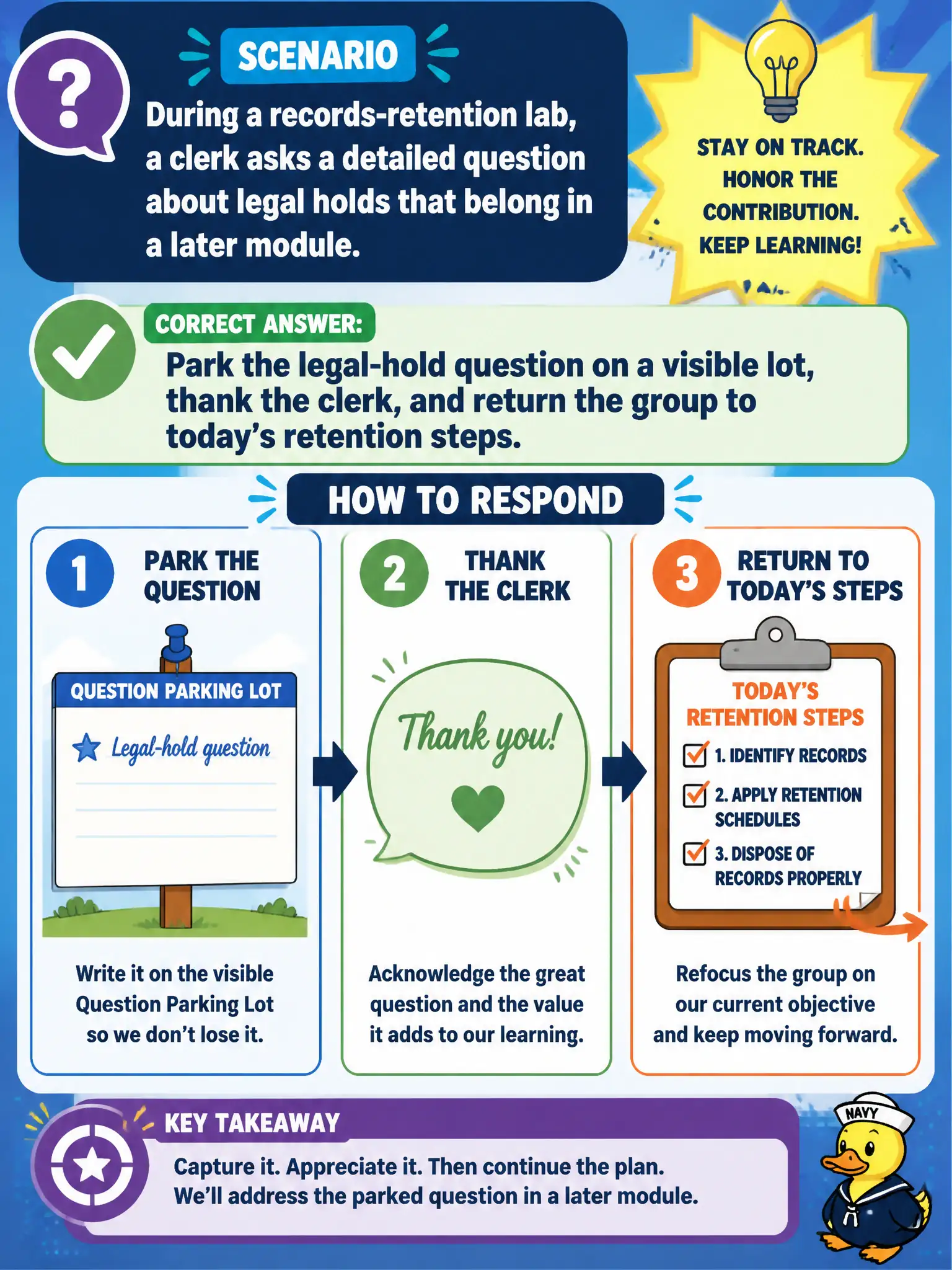
During a records-retention lab, a clerk asks a detailed question about legal holds that belong in a later module. How should the instructor acknowledge the contribution without derailing today's objective?
Select an answer to reveal the explanation.
Short Explanation
A parking lot is a sticky note with respect. The clerk gets heard, the legal-hold item gets a home, and today's retention lab keeps rolling. Ignoring the asker or chasing the rabbit both miss.
Full Explanation
Records-retention labs protect lawful custody of public records; legal holds are important but may belong in a later module. Parking the legal-hold question on a visible lot, thanking the clerk, and returning to today's retention steps acknowledges contribution without derailing the objective. Parking lots are a facilitation control for valuable off-objective input.
Answering the legal-hold question in full now fails by concept when it consumes the retention objective's time and confuses today's scope. Dismissing the question as out of scope without writing it down disrespects the contributor and loses the item. Ending the lab early to debate holds abandons the planned retention practice.
Exam caveat: acknowledgment plus capture plus return is the pattern—thank, park, resume. Follow through later or the parking lot becomes a trust breach.
Operational check: write the legal-hold question on a visible parking lot, initial a follow-up owner/time, then immediately resume the next retention step on the practice set and confirm the room is back on task. Legal holds and retention schedules both protect public records, but today’s objective may be only the retention path. Parking lots honor the clerk’s contribution while defending the session design. Photograph or save the parking-lot item, assign a follow-up channel, and—critically—return to it on time so civic staff learn that captured questions are not discarded.