
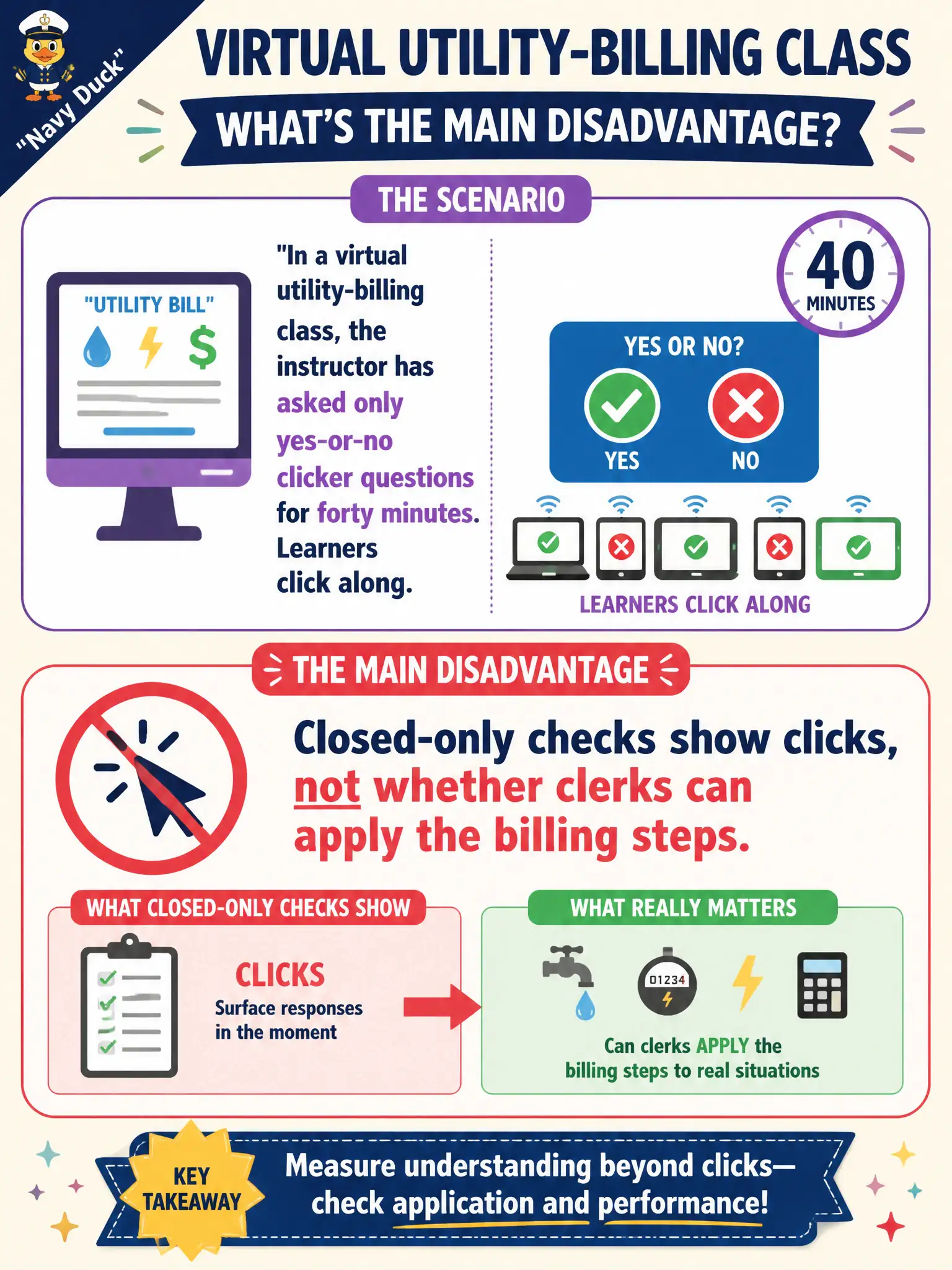
In a virtual utility-billing class, the instructor has asked only yes-or-no clicker questions for forty minutes. Learners click along. What is the main disadvantage of that pattern?
Select an answer to reveal the explanation.
Short Explanation
A clicker parade looks busy and proves almost nothing. Yes-or-no is a light switch, not a road test. Application still needs a chance to do the billing work.
Full Explanation
Utility-billing clerks handle resident accounts where errors create hardship and city revenue risk. Forty minutes of only yes-or-no clicker questions mainly shows clicks, not whether clerks can apply billing steps—the core disadvantage of closed-only patterns in a virtual class. Engagement theater is not application evidence.
Claiming closed questions are forbidden virtually fails by concept: they are allowed and useful, just insufficient alone. Assuming yes-or-no clicks prove application confuses compliance clicking with job performance. Asserting virtual tools can only do yes/no ignores chat, breakouts, whiteboard, and sandbox tasks.
Exam caveat: closed questions remain appropriate for quick factual monitors; the exam targets overreliance that never checks explanation or application. Plan a mix across the virtual hour.
Operational check: insert an open billing scenario in chat and a sandbox adjustment task; compare results to the prior clicker streak and reteach any step clerks cannot perform. Utility billing errors become resident disputes and trust failures. Closed-only virtual patterns create an illusion of pace while clerks never show they can adjust an account correctly. Replace a stretch of clicker items with one chat explanation and one sandbox adjustment, then use mismatches to target reteaching before the next billing topic.