
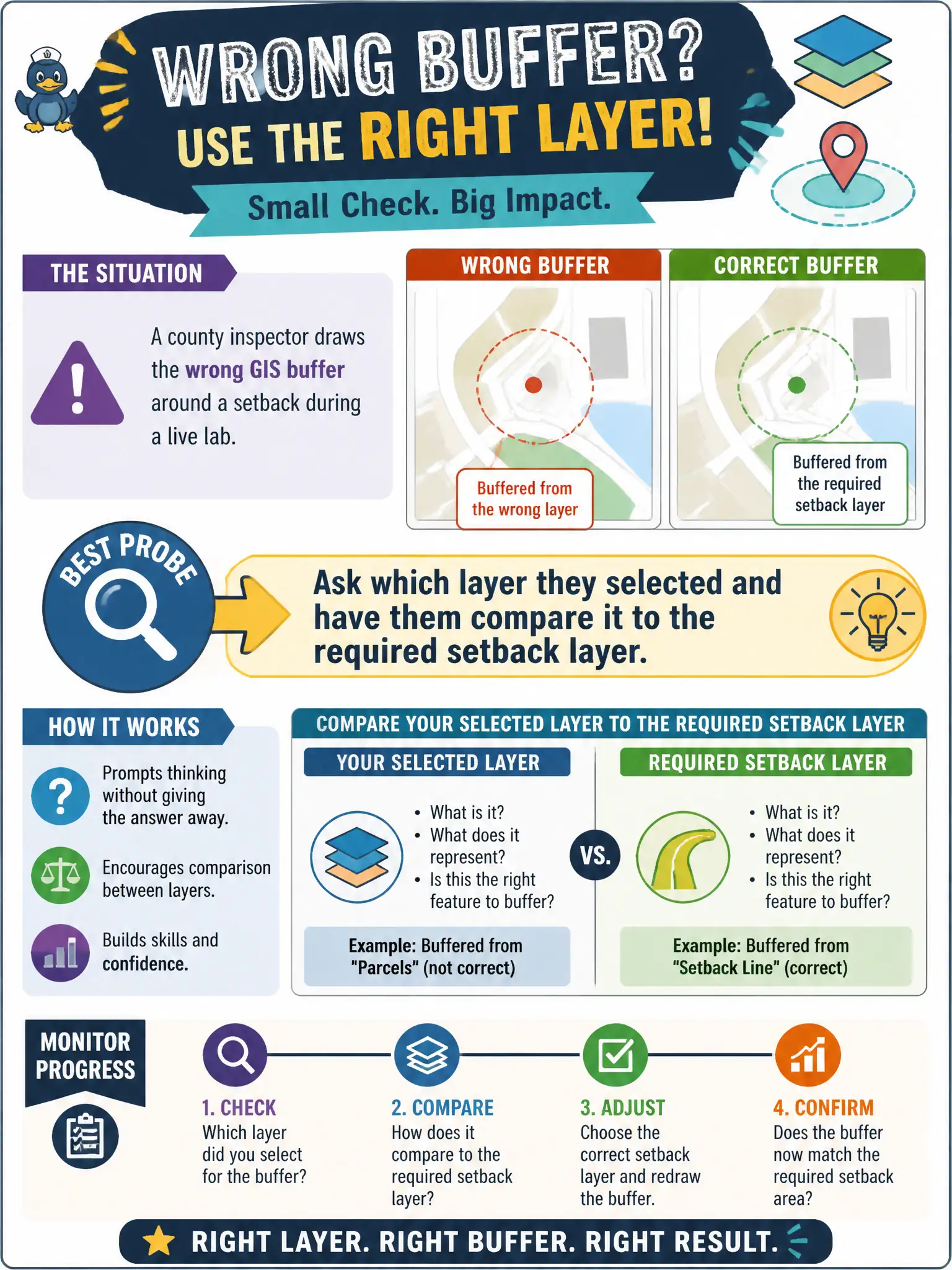
A county inspector draws the wrong GIS buffer around a setback during a live lab. Which probe best involves the learner and monitors progress without handing over the whole answer?
Select an answer to reveal the explanation.
Short Explanation
A probe is a nudge, not a takeover. Asking which layer they picked makes the inspector find the wrong buffer. Grabbing the mouse just turns the lab into a show.
Full Explanation
County GIS setback buffers inform permitting decisions that affect neighbors and due process. Asking which layer the inspector selected and having them compare it to the required setback layer is a probe that involves the learner and monitors progress without handing over the whole answer. Probes guide discovery while keeping cognitive work with the learner.
Taking the mouse and completing the correct buffer fails by concept: it converts the lab into an instructor demonstration and removes practice opportunity. Announcing the buffer is wrong and displaying the answer-key map likewise gives the product without the diagnostic thinking. Skipping the error to protect confidence leaves an incorrect civic map skill uncorrected.
Exam caveat: probing sits between silence and takeover—enough guidance to continue, not so much that the learner becomes a spectator. In safety-critical errors you may intervene more directly; for recoverable GIS mistakes, probe first.
Operational check: ask the layer question, wait for the comparison, and only if the inspector remains stuck offer a narrower prompt (units, layer name) while leaving the mouse with them until the buffer is correct. Setback buffers that are wrong can mislead permitting decisions affecting adjoining owners. Probing keeps the inspector in control of the mouse while making the diagnostic thinking visible—which layer, which units, which rule. If two probes fail, escalate to a short guided comparison still without finishing the map for them, then require an independent correct buffer before lab sign-off.