
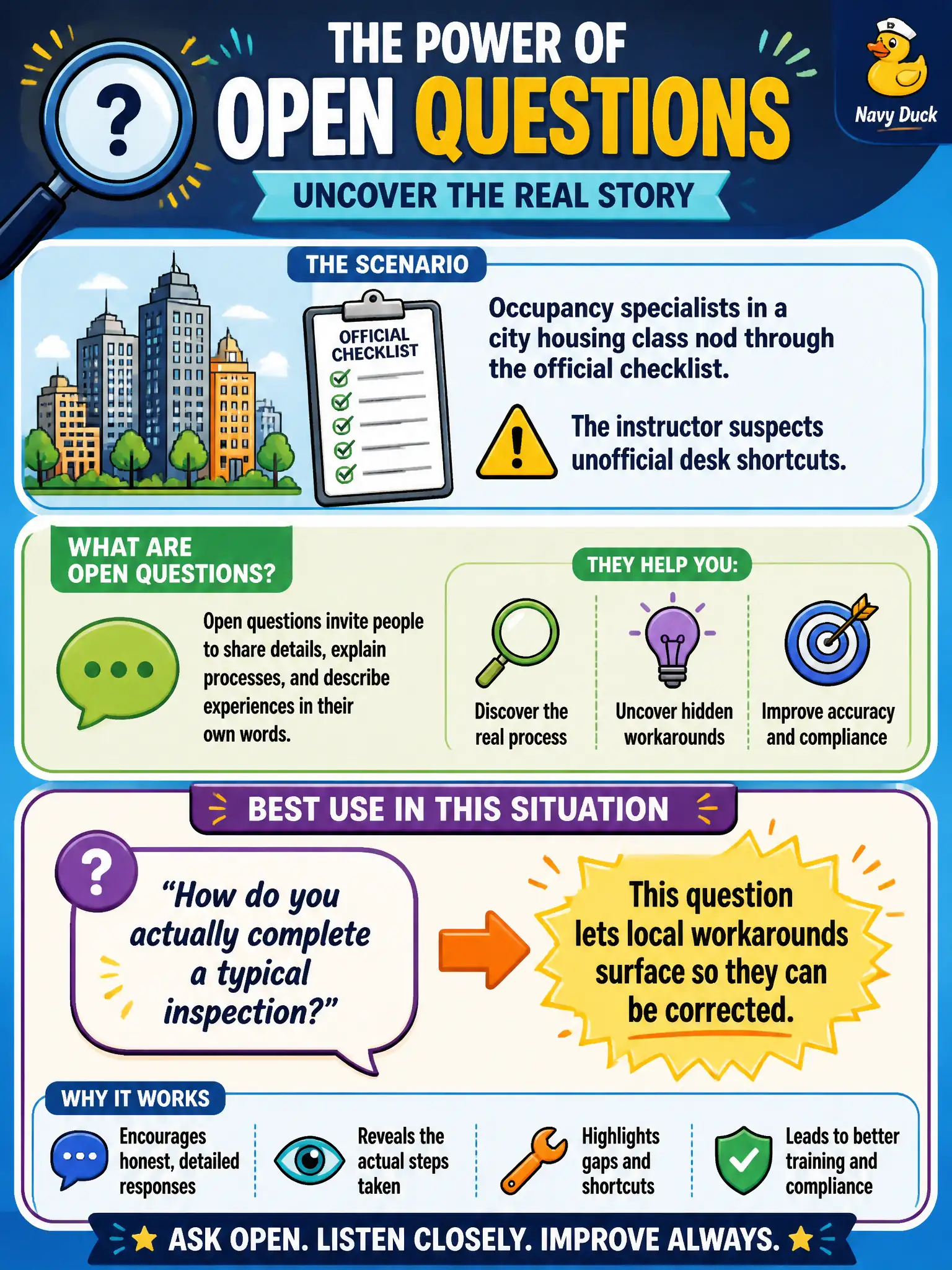
Occupancy specialists in a city housing class nod through the official checklist. The instructor suspects unofficial desk shortcuts. Which use of open questions best takes advantage of that question type?
Select an answer to reveal the explanation.
Short Explanation
An open question is a flashlight under the desk, not a pop quiz. When occupancy specialists narrate how they really work a file, homemade shortcuts crawl out where the trainer can fix them. Yes-or-no clicks just hide the mess.
Full Explanation
City housing occupancy inspections protect habitability for residents and compliance for the jurisdiction. Asking how specialists actually complete a typical inspection uses open questions to surface unofficial desk shortcuts so they can be corrected against the official checklist. That is the distinctive power of open questions in facilitation: they reveal real practice, not just recited policy.
Firing a yes-or-no poll on each checklist line fails by concept: closed items let unofficial workarounds stay unspoken while looking like compliance. Reading the checklist aloud and forbidding questions until the exam suppresses the very disclosure open questions enable. Saving all discussion for a supervisor interview after class removes formative correction from the learning environment where safe practice should happen.
Exam caveat: surfacing workarounds is not endorsing them; the instructor compares local habits to the official standard and reteaches gaps. Open questions create visibility; coaching creates alignment.
Operational check: have two specialists narrate a typical inspection end-to-end, mark divergences from the checklist on a visible board, and practice the corrected sequence on a sample unit file before release.