
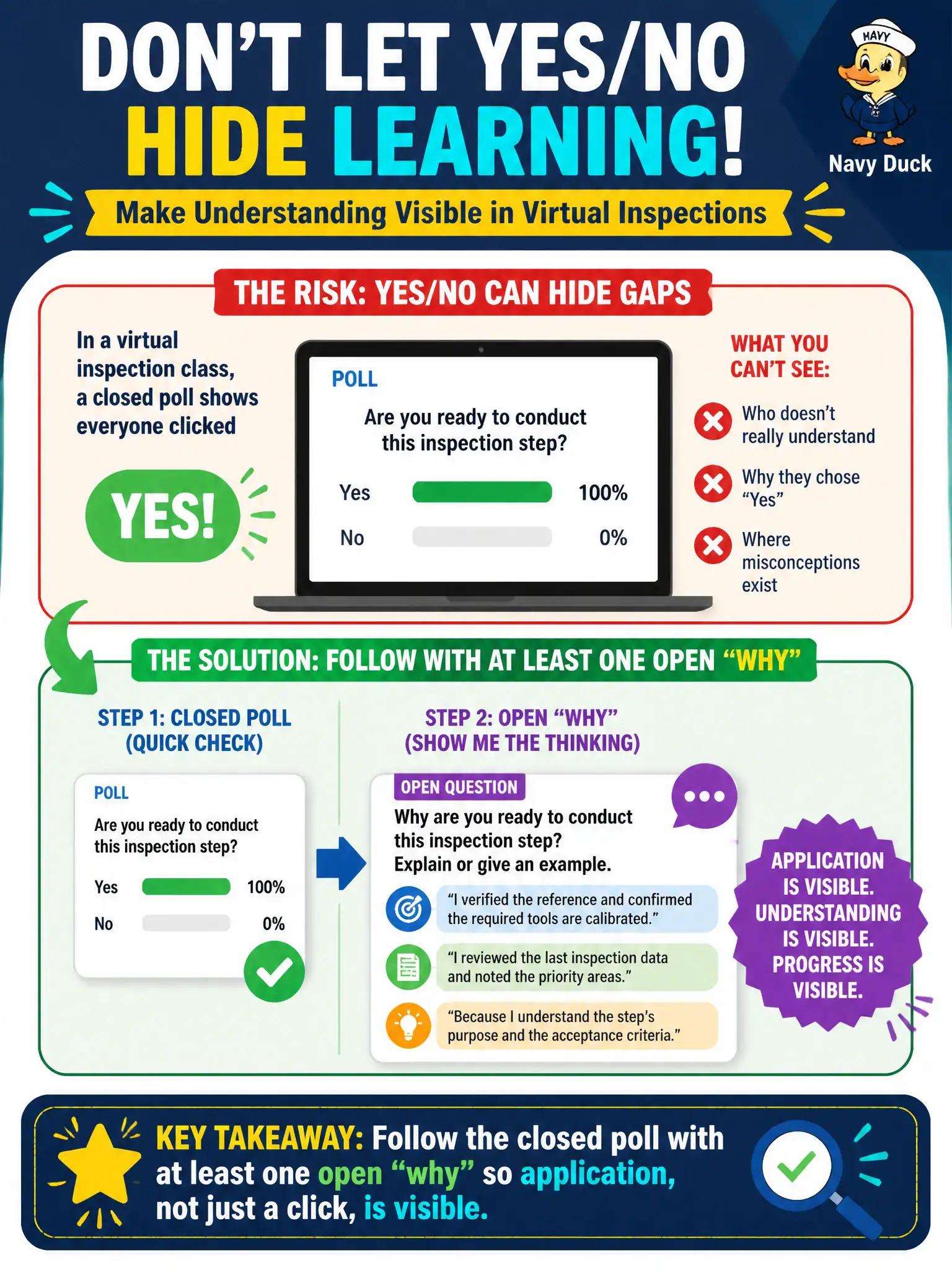
In a virtual inspection class, a closed poll shows everyone clicked yes. How should the instructor monitor progress so learners cannot hide in yes/no?
Select an answer to reveal the explanation.
Short Explanation
A show of hands can hide a crowd. Mix a closed poll with one open "why" and virtual inspectors have to show the thinking, not just the click. Unanimous yes is not a diploma, killing polls is not the fix, and dumping a 100-item exam in ten minutes is panic, not monitoring.
Full Explanation
Virtual inspection classes must verify that inspectors can apply procedures, not merely click yes on polls. When a closed poll shows everyone clicked yes, follow with at least one open 'why' so application—not just a click—is visible. Mixing question types prevents hiding in unanimous compliance clicks.
Treating unanimous yes as mastery fails by concept: closed polls are weak evidence of application and are easy to fake or echo. Disabling polls because virtual tools 'cannot monitor learning' throws away a useful quick check instead of complementing it. Replacing the remaining ten minutes with a graded 100-item exam is disproportionate and may not target the just-taught skill.
Exam caveat: virtual monitoring combines tools—polls, chat, breakout deliverables, sandbox tasks—not any single clicker pattern. Closed polls are fine starters; they are incomplete finishers.
Operational check: after the yes poll, ask two learners to type why a step is required, then have everyone complete one sandbox inspection action. Use mismatches between clicks and performance to reteach immediately. Virtual inspection credentials affect whether field staff apply city standards consistently. Unanimous poll clicks are a weak proxy for that competence and are easy to echo. Follow every critical closed poll with an open rationale and a sandbox action, then compare the three data sources; reteach wherever performance lags the clicks before advancing the agenda.