
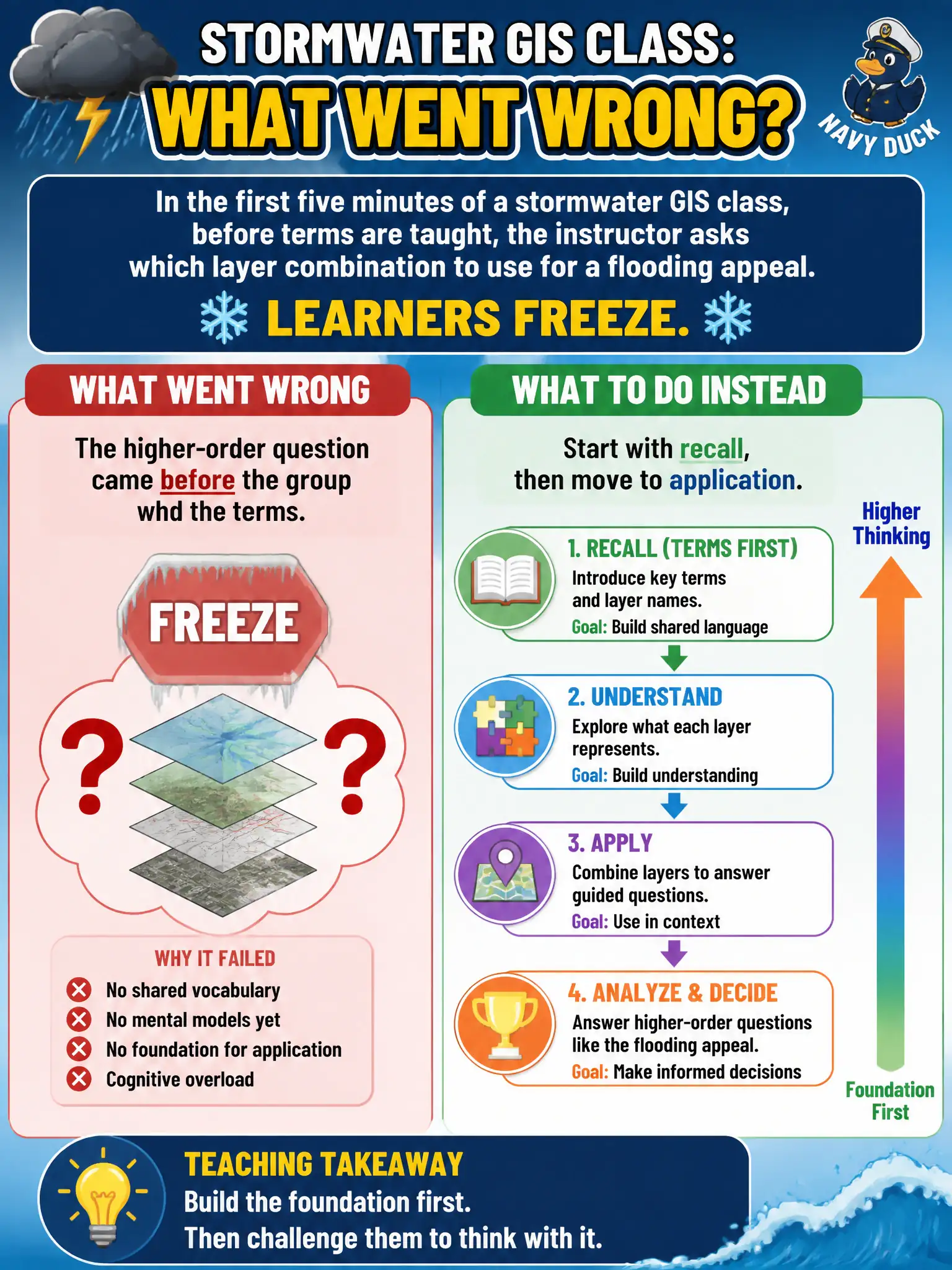
In the first five minutes of a stormwater GIS class, before terms are taught, the instructor asks which layer combination to use for a flooding appeal. Learners freeze. What went wrong?
Select an answer to reveal the explanation.
Short Explanation
Asking for a game plan before anyone knows the positions is how a huddle goes quiet. Layer-combo analysis is higher-order; names and meanings come first. Recall, then application—do not treat a freeze as a clever opener, a doomed class, or a reason to quit asking.
Full Explanation
Stormwater GIS supports flooding appeals that affect property owners and public drainage decisions. Asking which layer combination to use for a flooding appeal in the first five minutes—before terms are taught—explains the freeze: the higher-order question arrived before the group had the vocabulary. Start with recall of layer names and meanings, then move to application and analysis.
Treating the freeze as a successful shock tactic fails by concept: higher-order questions require prerequisite knowledge; confusion is not engagement. Declaring the group unteachable after one freeze misreads sequencing failure as learner defect. Abandoning questioning for the rest of the day overcorrects; fix the sequence instead.
Exam caveat: Bloom-style progression matters—recall and comprehension before application and evaluation. Opening with analysis can work only when prior knowledge is already established.
Operational check: teach and check three layer names with closed/recall items, then re-ask the flooding-appeal combination question. If answers improve, the original freeze was sequencing, not ability. Flooding-appeal GIS work influences property outcomes; asking for layer strategy before vocabulary is taught produces freeze that looks like inability but is really sequencing. Rebuild the runway: name layers, check recall, then reintroduce the higher-order combination question. If the room still freezes after terms are solid, scaffold with a worked example before a second independent attempt—not with cancellation or blame.