
A wastewater operator says the lab PC cannot reach SCADA. What active-listening technique should the instructor use before offering a workaround?
Select an answer to reveal the explanation.
Short Explanation
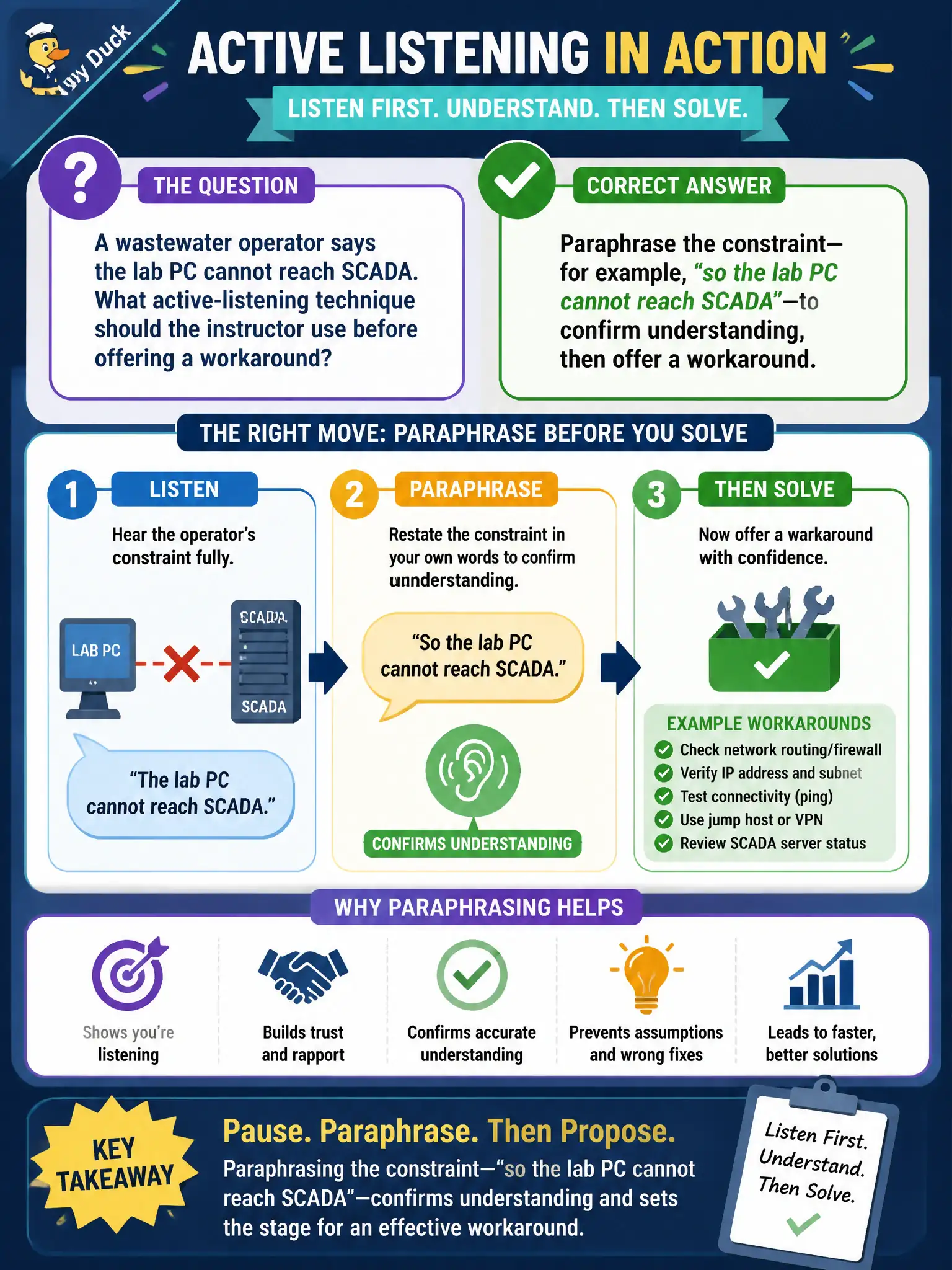
Repeat the outage in plain words before you pitch a fix—like reading back a radio call. "So the lab PC cannot reach SCADA" proves the constraint landed, then the workaround can land too. Jumping to a patch, shutting the topic down, or sending the operator to a ticket queue skips the listen.
Full Explanation
Wastewater operators depend on SCADA visibility for plant safety and environmental compliance. Before offering a workaround, paraphrase the constraint—for example, that the lab PC cannot reach SCADA—to confirm understanding. Active listening prevents fixing the wrong problem and shows the operator their report was heard.
Immediately prescribing a workaround without confirming the constraint fails by concept: you may solve a different outage than the one described. Declaring network design out of scope and stopping listening abandons facilitation mid-need; even out-of-scope items deserve acknowledgment and a handoff. Telling the operator only to write a ticket and remain silent ends listening without confirmation or interim guidance for class continuity.
Exam caveat: paraphrase then respond—listening is not endless delay, and responding without paraphrase is a common failure mode. If the issue is truly IT-owned, confirm understanding, park it, and provide a class-safe interim path.
Operational check: restate the SCADA reachability constraint, get a yes from the operator, then either demo a documented workaround or escalate with a clear owner—while keeping the lab's safety objective on track.