
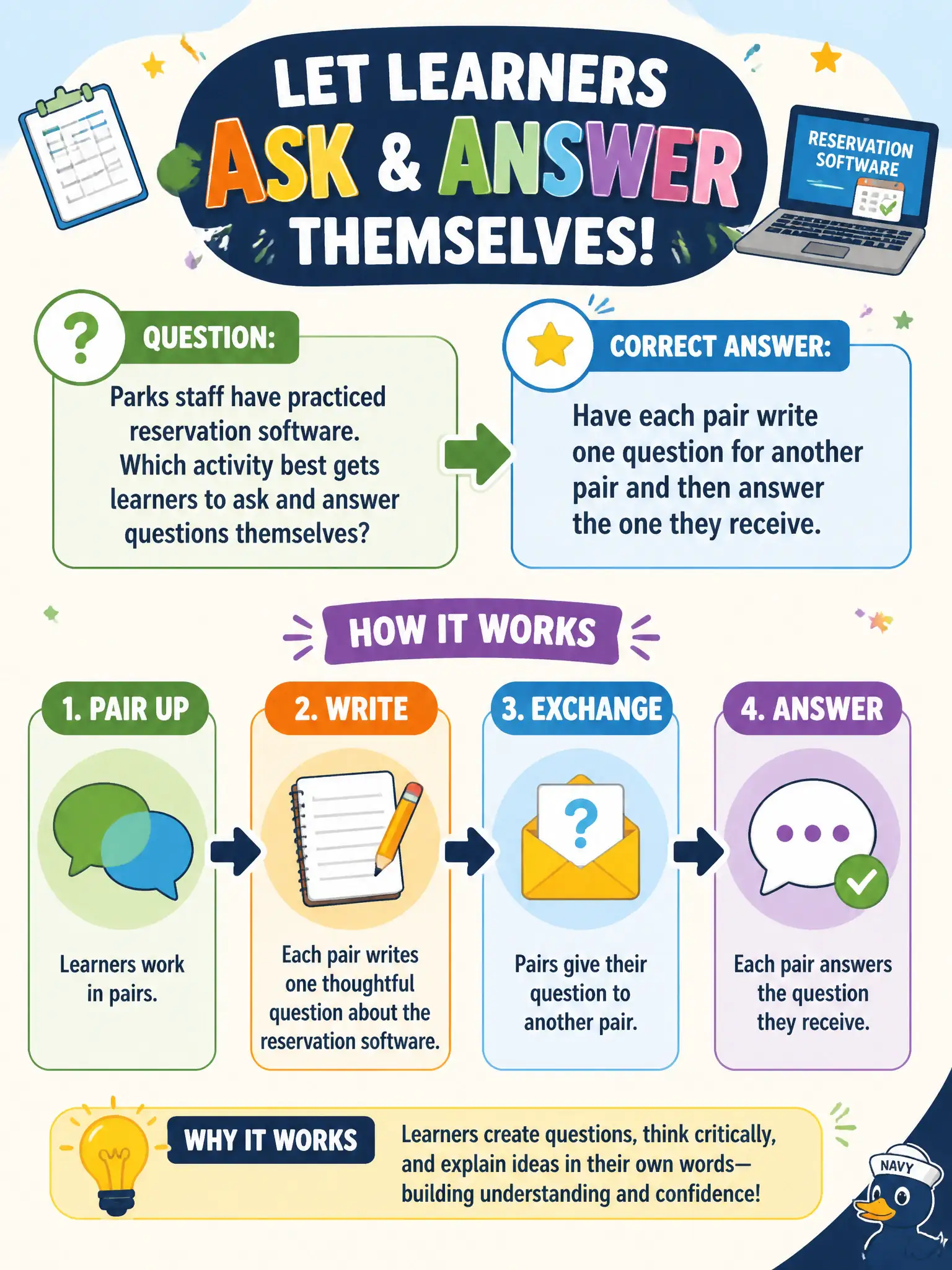
Parks staff have practiced reservation software. Which activity best gets learners to ask and answer questions themselves?
Select an answer to reveal the explanation.
Short Explanation
Kids who write the quiz for the next table learn twice—once making the item, once answering. Parks pairs doing a peer quiz on reservations get that loop. If only the trainer asks, or if the room goes silent with a help file or a sales video, learners never question each other.
Full Explanation
Parks reservation practice should produce staff who can help the public book facilities correctly. Having each pair write one question for another pair and then answer the one they receive gets learners asking and answering themselves—peer questioning that deepens understanding. Learner-generated questions reveal misconceptions and shift cognitive work onto the group.
Having the instructor keep all questions fails by concept: quality control from the front still leaves learners as answer machines rather than inquirers. Silent reading of the help file with no discussion removes interpersonal questioning practice. A vendor marketing video with no pause likewise denies question-and-answer cycles.
Exam caveat: peer Q&A still needs instructor monitoring for accuracy—especially on fees, refunds, and accessibility rules that carry civic risk. Correct wrong peer answers promptly and kindly.
Operational check: collect the peer questions, spot-check two answers for policy accuracy, and have pairs revise any incorrect guidance before closing the activity. Peer-written questions about parks reservations often expose fee, refund, and accessibility misconceptions that vendor help files bury. Instructor monitoring remains essential because incorrect peer answers can become unofficial policy at the public desk. Collect two questionable peer answers, correct them against the fee schedule, and have those pairs rewrite the answer before the activity closes.