
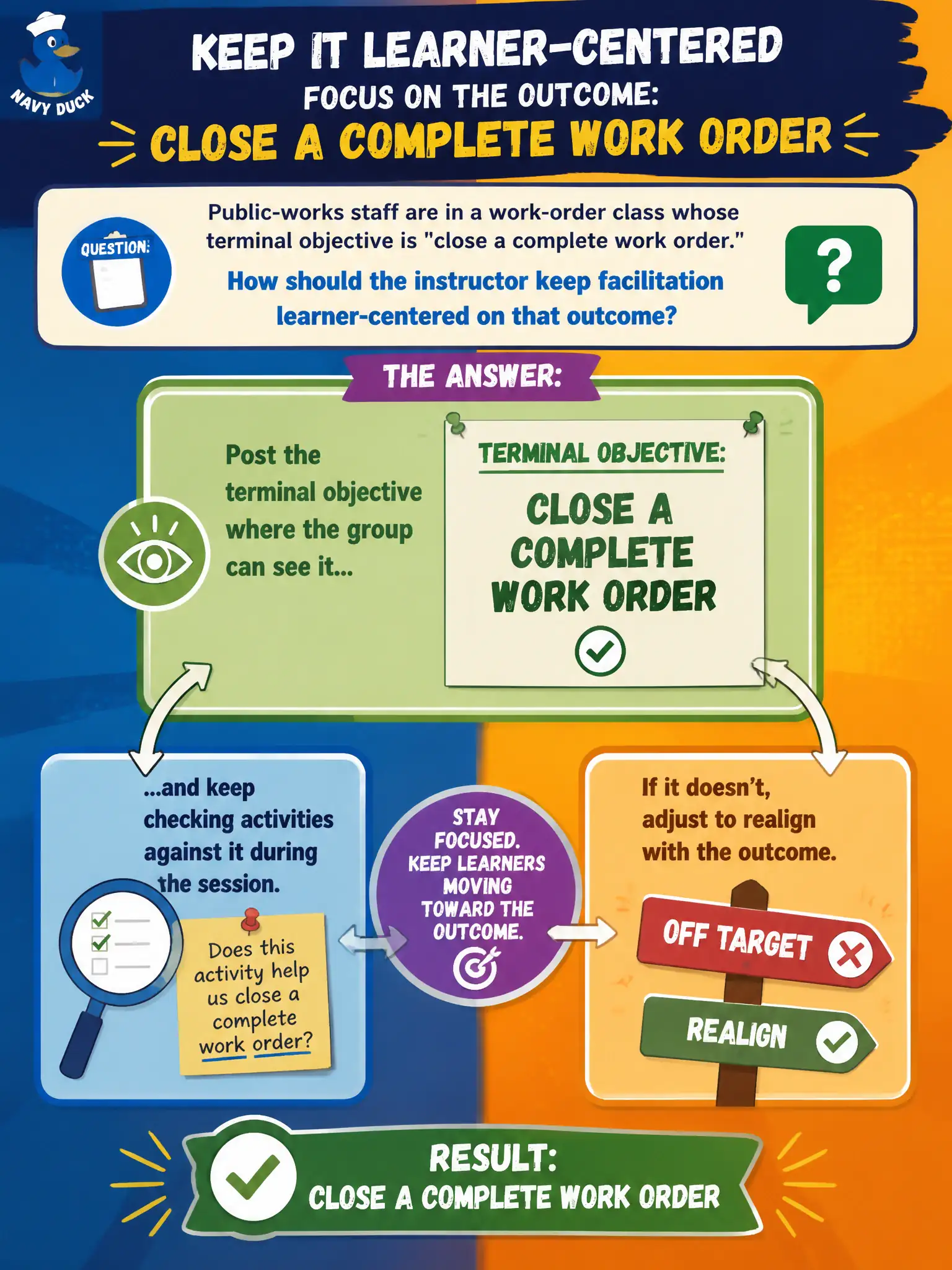
Public-works staff are in a work-order class whose terminal objective is "close a complete work order." How should the instructor keep facilitation learner-centered on that outcome?
Select an answer to reveal the explanation.
Short Explanation
Think of the terminal objective as a scoreboard everyone can see, not a secret in the coach's pocket. Post "close a complete work order" and keep checking the drills against it. If the room drifts into war stories, the posted outcome is the north star that pulls you back.
Full Explanation
Public-works staff closing work orders affect street safety, service equity, and resident trust. Keeping facilitation learner-centered on the terminal objective means posting 'close a complete work order' where the group can see it and continually checking activities against that outcome. Visible objectives anchor discussion, demos, and practice so stories and side trips do not replace the civic performance the city needs.
Hiding the objective until the final quiz fails by concept: surprise is not adult learning design, and learners cannot self-regulate toward an unseen standard. Replacing the terminal objective with whatever outage stories the senior crew chief wants to tell recenters facilitation on anecdotes instead of the posted performance goal. Grading only attendance severs assessment from the objective and cannot confirm that staff can close a complete work order for the public.
Exam caveat: learner-centered facilitation still allows relevant examples, but examples must serve the terminal objective rather than become the agenda. If a war story does not advance closing a complete work order, park it and return to the posted goal.
Operational check: after each activity, ask aloud whether the drill practiced a step required to close a complete work order. If the room cannot map the activity to the posted objective, redesign or cut the activity before continuing.