
A new emergency-operations-center software cohort has never worked together. People sit silent and avoid eye contact. The facilitator guide starts at Module 5. What should the instructor do given this early-group stage?
Select an answer to reveal the explanation.
Short Explanation
A brand-new EOC cohort is a pickup team, not a championship lineup. Give them names, roles, and a simple first pass before Module 5. Diving straight into the deep end because the binder says so is how you get a quiet, useless room.
Full Explanation
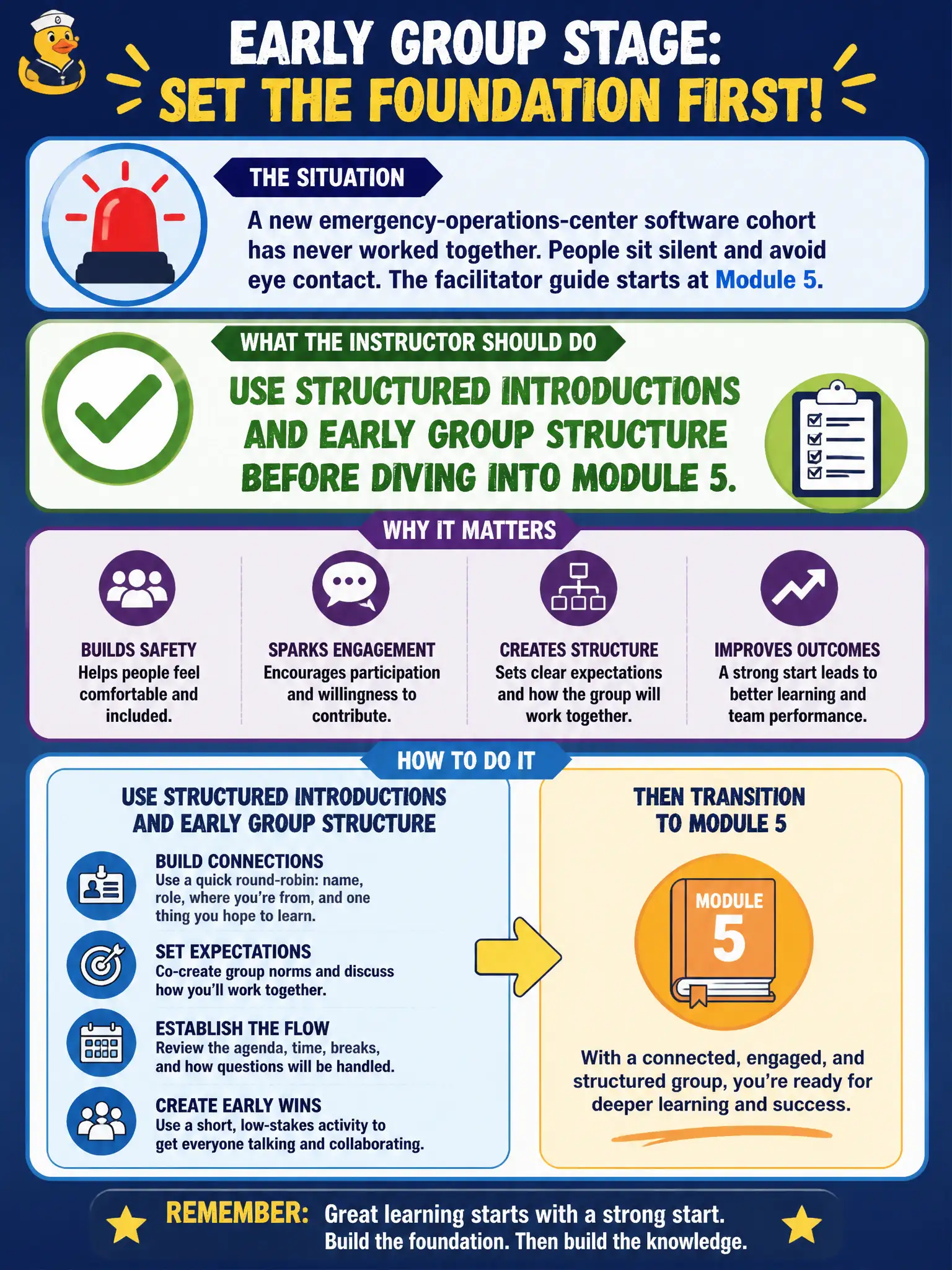
Early-group stages need structure and community-building before diving into advanced modules. When a new emergency-operations-center software cohort sits silent and avoidant, and the facilitator guide starts at Module 5, the instructor should use structured introductions and early group structure first. Forming needs are instructional conditions, not delays to ignore in multi-agency municipal training.
Skipping community-building and diving into Module 5 because silence equals readiness fails by concept: silence often signals under-formed group trust, not mastery. Sending learners back to agencies until they already function as a seasoned EOC team fails by abandoning the class’s purpose—to build that capacity. Lecturing on development-phase names and withholding software until someone labels the stage fails by substituting theory labels for facilitation.
Exam caveat: CTT+ group-development items reward matching facilitation to early stage needs before advanced content pushes.
Operational check: run structured introductions with agency and role; set interaction norms; complete one low-risk shared task; then enter Module 5 with names and norms established. In civic public-training settings, that judgment protects both learner dignity and the municipality’s duty to leave staff actually able to perform the job after class—not merely to finish slides or keep a schedule looking tidy.