
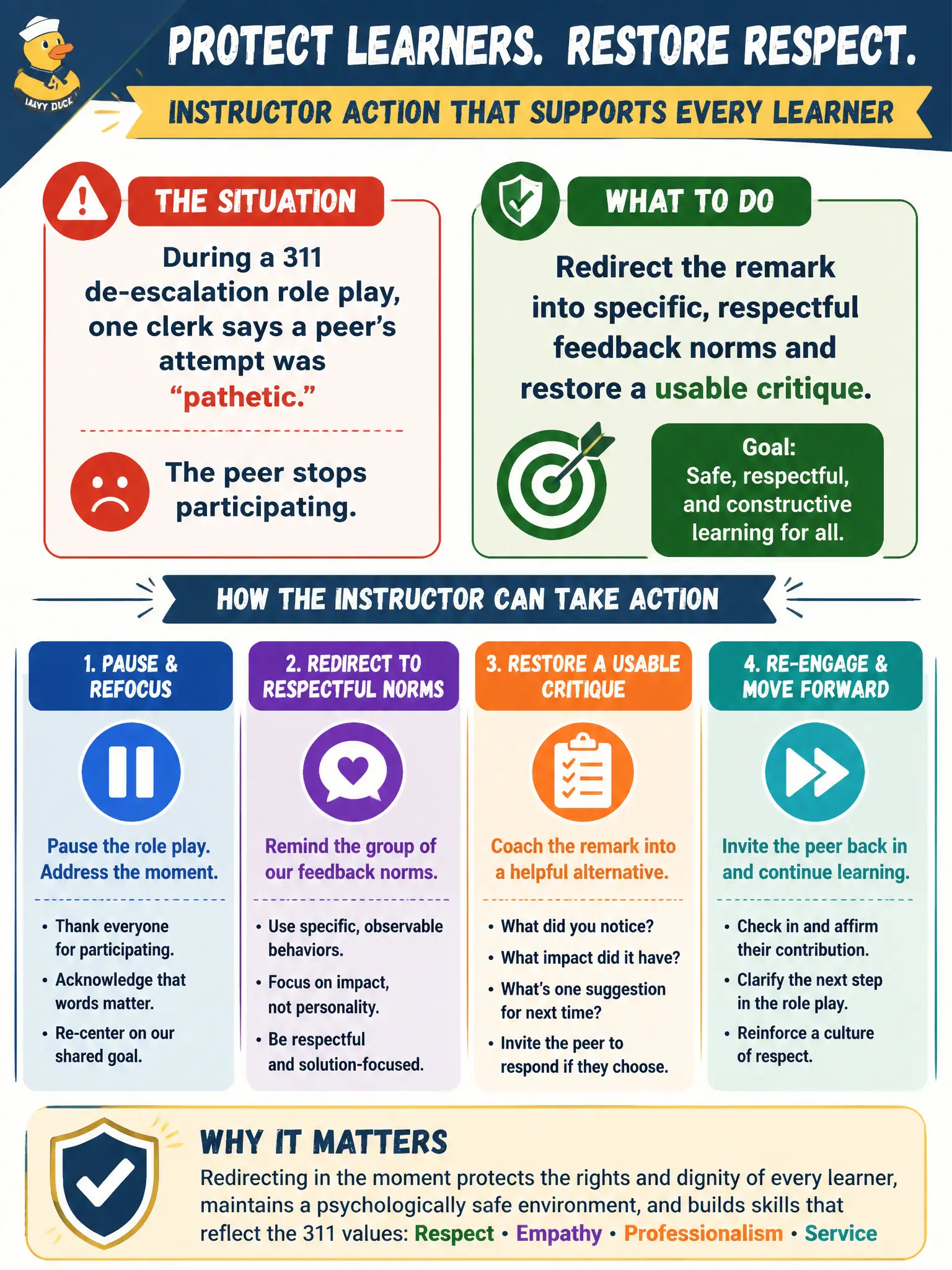
During a 311 de-escalation role play, one clerk says a peer’s attempt was “pathetic.” The peer stops participating. What should the instructor do to protect the rights of individual learners?
Select an answer to reveal the explanation.
Short Explanation
“Pathetic” is a brick, not a note. Catch it, swap it for a specific respectful comment, and keep the role play useful. Letting the insult stand—or killing practice entirely—teaches the wrong lesson about how 311 staff talk to each other.
Full Explanation
Protecting the rights of individual learners includes stopping disrespectful peer remarks and restoring usable, respectful feedback norms. During a 311 de-escalation role play, when one clerk calls a peer’s attempt “pathetic” and the peer stops participating, the instructor must redirect into specific, respectful critique so practice can continue safely. Public insults are not “toughness training” for municipal customer service.
Laughing along so the insult is humor fails by concept: joining the put-down endorses a hostile climate. Ignoring the comment because peer toughness is part of public-facing work fails by confusing workplace resilience myths with classroom rights. Ending all role plays for the rest of the day fails by over-correcting—removing practice instead of repairing feedback norms.
Exam caveat: CTT+ learner-rights/climate items require intervening on personal attacks during practice activities.
Operational check: stop the activity briefly; restate feedback rules (specific, behavior-focused, respectful); have the speaker rephrase; invite the peer back into a retry; monitor tone for the next round. In civic public-training settings, that judgment protects both learner dignity and the municipality’s duty to leave staff actually able to perform the job after class—not merely to finish slides or keep a schedule looking tidy.