
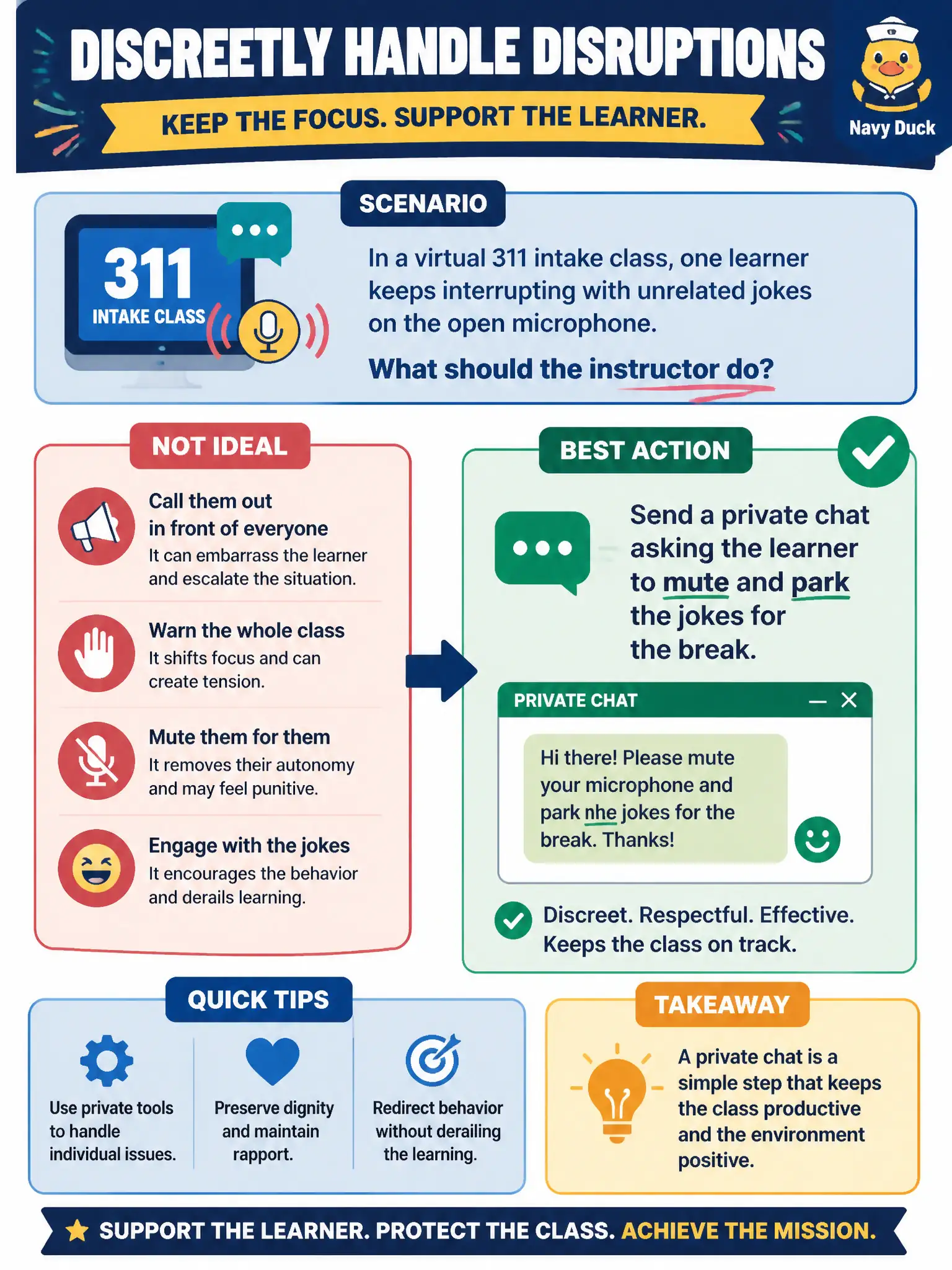
In a virtual 311 intake class, one learner keeps interrupting with unrelated jokes on the open microphone. The instructor needs to handle the disruption discreetly. What should the instructor do?
Select an answer to reveal the explanation.
Short Explanation
Public shaming on a live mic is a spotlight, not a redirect. A private “please mute—we will take that at break” chat is the virtual equivalent of walking over quietly. Fix the noise without turning the joker into the lesson.
Full Explanation
Virtual disruptions should be handled discreetly—private chat and mute agreements—rather than sarcastic public call-outs. In a virtual 311 intake class, when one learner keeps interrupting with unrelated jokes on the open microphone, a private chat asking them to mute and park jokes for the break restores focus without humiliating them on the main channel. Discretion protects climate and keeps intake practice moving for municipal clerks.
Calling the learner out on the main channel with sarcasm so the class laughs fails by concept: public sarcasm is not discreet handling and models disrespect. Ignoring interruptions for the rest of the morning fails when disruption keeps blocking learning. Ending the session immediately and reporting to HR before any redirect fails as over-escalation for a joke pattern that private mute guidance can often stop.
Exam caveat: CTT+ disruption items emphasize discreet first responses in virtual as well as classroom settings.
Operational check: send the private mute request; confirm the mic is quiet; briefly restate the intake task for the room without naming the joker; escalate only if private redirects fail. In civic public-training settings, that judgment protects both learner dignity and the municipality’s duty to leave staff actually able to perform the job after class—not merely to finish slides or keep a schedule looking tidy.