
After a demonstration of a four-step city records search, clerks still look unsure. The instructor has time for one activity that must hit the search objective and build individual confidence. What should the instructor do?
Select an answer to reveal the explanation.
Short Explanation
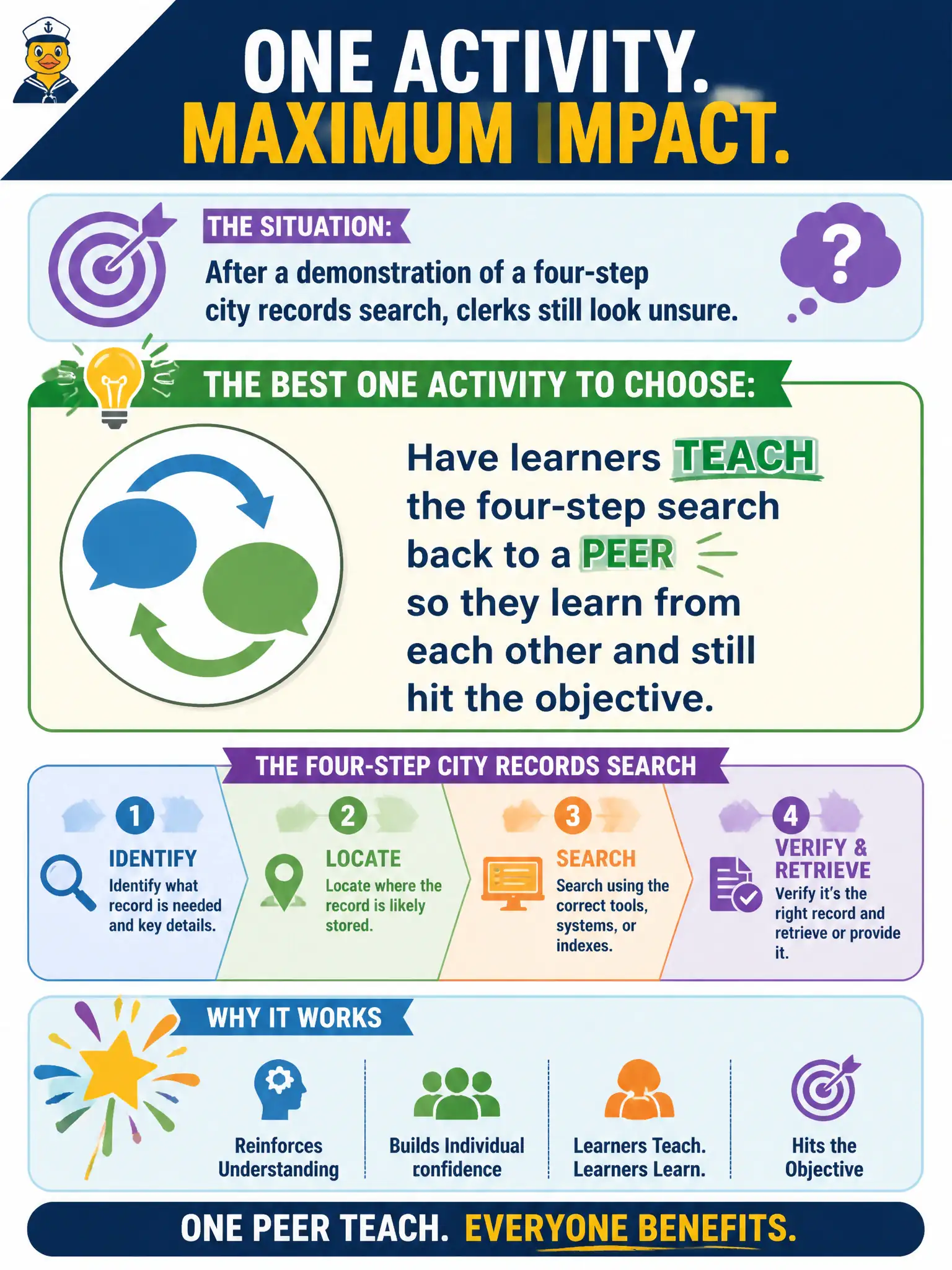
Watching a search three times is like watching someone else pump gas and then claiming you can fill the tank. A peer teach-back puts each clerk’s hands on the four steps. That is how confidence and the objective show up together—not from another icebreaker.
Full Explanation
After demonstration, activities that have learners teach peers can hit the objective and build individual confidence through retrieval and explanation. When clerks still look unsure after a four-step city records search, having them teach the search back to a peer uses peer learning while each person still practices the steps. Teaching back is practice, not a substitute for the objective.
Repeating the same demonstration twice more while clerks watch silently fails by concept: more instructor talk without learner performance rarely builds confidence. Filling minutes with an unrelated icebreaker fails by abandoning the search objective. Having one senior clerk complete every search while others copy file numbers fails as spectating and favoritism rather than individual competence building.
Exam caveat: CTT+ peer-learning items often pair “learn from each other” with continued progress on the stated objective.
Operational check: pair clerks; require each to teach all four search steps once; spot-check one pair with a fresh record; confirm both partners can perform without reading from the senior’s notes. In civic public-training settings, that judgment protects both learner dignity and the municipality’s duty to leave staff actually able to perform the job after class—not merely to finish slides or keep a schedule looking tidy.